
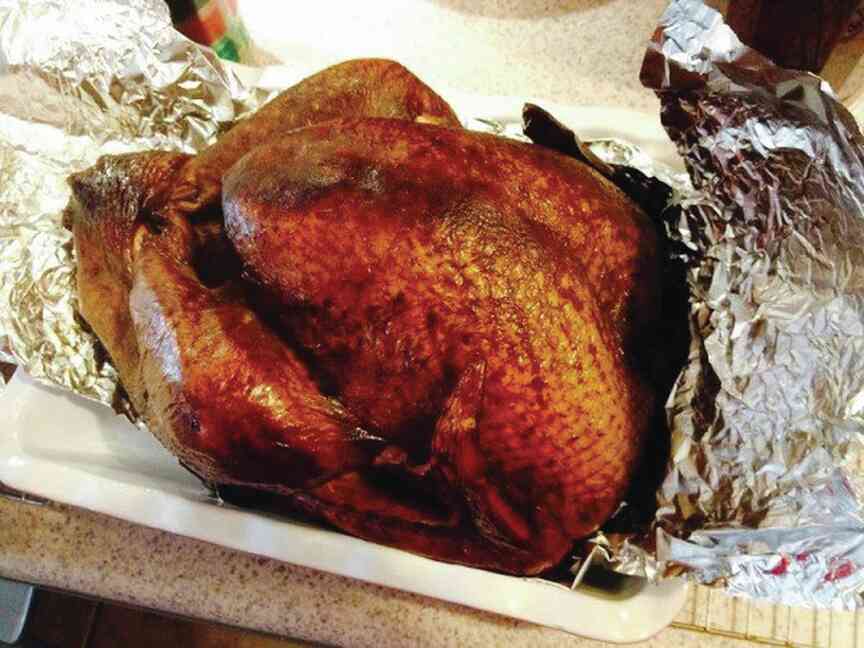
Festive food plays an important, joyful role during holiday gatherings. But the increased volume of food prepared during this season — along with bigger crowds gathered to enjoy it — can lead to a heightened risk of foodborne illness. Extension experts stress the importance of handling, cooking and storing food safely to avoid health risks.
According to the U.S. Centers for Disease Control and Prevention, there are about 48 million cases of foodborne illness each year, or 1 in 6 Americans who become sick. With increased food preparation during the holiday season, the risk for foodborne illness increases.
Quad Whitson, extension culinary nutrition program associate for the University of Arkansas System Division of Agriculture, said thinking logistically is key to prioritizing food safety when dealing with large gatherings.
“When you’re cooking for 10, 20 or 30 people, you have large batches of food and many different dishes, without much oven room or space to keep things separate,” Whitson said.
Pregnant women, children and individuals with compromised immune systems are at higher risk for developing foodborne illness.
Independent reporting for Pine Bluff & Jefferson County since 1879.
Teresa Henson, extension assistant professor of the Extended Food and Nutrition Education Program for the Division of Agriculture, said these groups of people should be carefully considered while working in the kitchen.
“You have to consider individuals with compromised immune systems,” Henson said. “If they get food poisoning or a foodborne illness, it can really harm them. Taking time to slow down while preparing food, and remembering to cook and store foods properly, can help everyone stay safe.”
Whitson and Henson said common issues that can lead to foodborne illness include undercooked poultry, which can harbor harmful bacteria such as salmonella; cross-contamination, which occurs when raw meat comes into contact with other foods or surfaces; and improper storage, which can lead to bacterial growth.
“Understanding these risks is crucial for preventing illness and ensuring that holiday meals are safe,” Whitson said. “By recognizing the potential hazards and implementing safe food handling practices, individuals can protect themselves and their loved ones during the festive season.”
CLEAN, SEPARATE, COOK, CHILL
Many holiday kitchen veterans know to start with a clean work surface, rinse produce and wash hands regularly throughout the preparation and cooking process, especially after handling raw meat. But when it comes to the Thanksgiving turkey or any other raw animal flesh, it’s not necessary to wash the meat before cooking.
“One of the most persistent myths in food preparation is the belief that washing raw poultry, such as turkey, removes bacteria,” Henson said. “According to the U.S. Department of Agriculture, washing poultry can spread bacteria through water droplets that contaminate surrounding surfaces, utensils and other foods. This practice increases the risk of foodborne illness rather than reducing it.”
It’s also important to store and thaw the turkey properly. Whitson said another common misconception is that it’s safe to thaw a turkey on the kitchen counter or in the sink.
“This method allows the outer layers of the turkey to reach temperatures where bacteria can grow, while the inner parts remain frozen,” Whitson said. “The safest way to thaw the turkey is in the refrigerator, in a pan to catch any drippings, and on the bottom shelf. This keeps temperatures low and consistent, preventing bacterial contamination.”
Once it’s time to season the bird and prep the side dishes, use separate cutting boards for raw meat to avoid cross-contamination with other foods. Then, cook the turkey to an internal temperature of 165 degrees Fahrenheit, inserting a food thermometer into the thickest part to verify doneness.
Storing leftovers safely is also key to preventing bacterial growth and illness.
“After the meal, it can be easy to get caught up in celebrations and leave food out longer than it should be,” Henson said. “While it’s important to let hot foods cool down at room temperature before refrigerating, they should be refrigerated within two hours. If food is not consumed within the time frame, it should be discarded. Remember: ‘When in doubt, throw it out.'”
Learn more at https://uaex.uada.edu/life-skills-wellness/food-safety/ or contact Quad Whitson at qwhitson@uada.edu. To learn about extension programs in Arkansas, contact your local Cooperative Extension Service agent or visit www.uaex.uada.edu.
Rebekah Hall is with the University of Arkansas System Division of Agriculture.