
The closest the Olympic Games have ever come to Arkansas was St. Louis in 1904, and that’s only because, according to history, the city originally selected to host the third Olympiad — Chicago — would have faced a scheduling conflict with the World’s Fair in the Gateway to the West.
While Arkansas may not have stood a chance to host the Olympics, the Summer Games have hosted seven athletes from the southeastern corner of the state, including four who were born or raised in Pine Bluff. Three of the Pine Bluff natives, as well as one athlete from Dumas and another from Hamburg, have won gold.
As this year’s Olympiad begins today in Paris, here’s a rundown of southeast Arkansans who performed where the Olympic flame burned brightly:
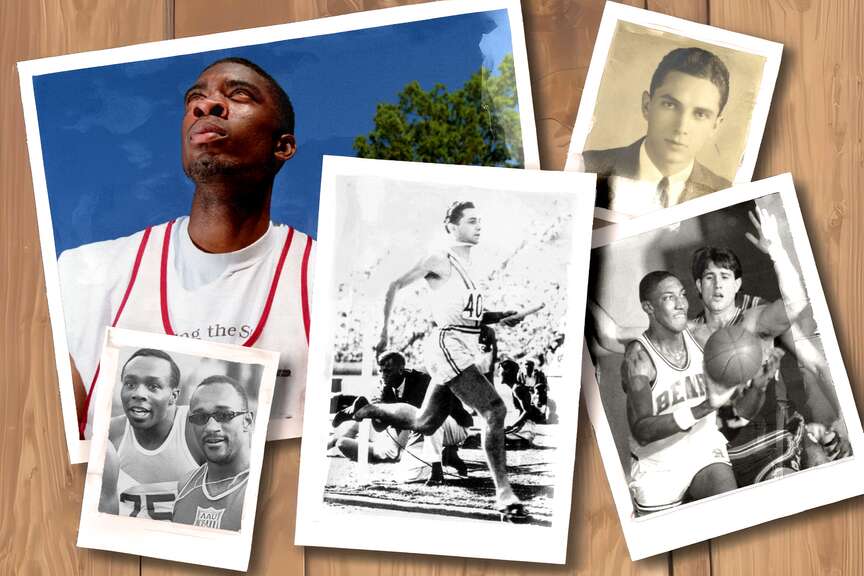
Bill Carr, track and field, Los Angeles 1932 (2 golds): Born in Pine Bluff, 5-foot-6 Carr won state championships in the high jump and long jump for Pine Bluff High School in 1927, but took second in the 100- and 220-yard sprints. He set the state record in the 100-yard sprint at 10.0 seconds earlier in the season.
Carr accepted an athletic scholarship to Mercersburg Academy, a Pennsylvania prep school for Ivy League academics, and won state titles in the 100 and 200 meters in 1929. He was accepted into the University of Pennsylvania, where he was sophomore class president and never lost a race. In fact, he was considered the best collegiate athlete on the East Coast and would eventually take on West Coast star Ben Eastman of Stanford University at a meet in Berkeley, Calif. Carr beat Eastman at his specialty, the 400 meters, to win and topped Eastman on his home track in the 1932 Olympic trials.
Independent reporting for Pine Bluff & Jefferson County since 1879.
In the Los Angeles Olympics on Aug. 5, Carr passed Eastman on the last curve by a foot and ran side-by-side with him down the stretch before pulling away for the win by a 2-yard margin. Carr set a world-record time of 46.2 seconds. Two days later, Carr took over a leg of the 4×400-meter relay for an injured teammate and helped the U.S. beat favored Great Britain with a world-record 3 minutes, 8.14 seconds.
A Navy officer in World War II, Carr died of a heart attack in Tokyo in 1966 at age 56. At the time of his death, according to Penn archives, he was the only Arkansan to win two Olympic golds.
The Pine Bluff Library has a room devoted to Carr’s memory.
Dallas Long III, track and field, Rome 1960 and Tokyo 1964 (1 gold, 1 bronze): Long before Ryan Crouser began his current dominance in the shot put, Pine Bluff-born Dallas Long established himself as a gold-medal favorite in the event.
Long moved to Phoenix at a young age and set a national high school record, earning Track and Field News magazine’s High School Athlete of the Year in 1958. While attending the University of Southern California, he equalled fellow American Parry O’Brien’s world record of 63 feet, 2 inches in 1959 and would top the world record on six occasions through 1964, when he won gold in Tokyo with a mark of 20.33 meters (66 feet, 8 ½ inches). Long earned silver in the 1959 Pan American Games in Chicago and took bronze in Rome the next year as part of an American medal sweep with Bill Nieder (gold) and O’Brien (silver).
Long went on to become a dentist and emergency physician. The 84-year-old is a member of the U.S. Track and Field Hall of Fame.
Charlie Greene, track and field, Mexico City 1968 (1 gold, 1 bronze): Greene’s mother was a junior at Coleman High School in Pine Bluff when she gave birth to him. They moved to Seattle when Greene was 2, and it was there he became a state champion sprinter in the 100 and 200 yards at O’Dea High School, a Catholic campus. At the 1963 Golden West Invitational, Greene earned the ranking as the top sprinter in the nation after winning the 100-yard dash in 9.4 seconds. He missed out on the 1964 Tokyo Games after pulling a hamstring in the trials and settling for sixth place, but won NCAA titles in the 60-yard indoor and 100-yard outdoor races each of the next three years while attending the University of Nebraska.
On June 20, 1968, Greene and five other men each ran 10.0 seconds in the first wave of 100-meter heats at the AAU championships in Sacramento, Calif. Three men — Greene, Ronnie Ray Smith and Jim Hines — then ran 9.9 in the semifinals, and Greene beat Hines in a photo finish to win the national title. The date has become known as the “Night of Speed.”
Greene was stunned in the Olympic 100-meter final, settling for bronze after pulling his hamstring. He then ran the first leg on the 4×100-meter relay team that ran a world-record 38.19 seconds for gold.
Greene retired as an Army major in 1989. He died in 2022 at age 77.
Jim Hines, track and field, Mexico City 1968 (2 golds): The Carr-Eastman rivalry captivated the nation 36 years earlier, but Greene’s rivalry with Hines set track and field on fire.
Hines was born in Dumas and raised in Oakland, Calif. A three-time NAIA champion (100 yards in 1966 and 1967, and 220 yards in 1967) at Texas Southern University, he lost to Greene in their first five races together.
Hines became the first person to break the 10-second mark (via hand timing) in a 100-meter semifinal at the Night of Speed, with Smith and Greene matching the mark.
Hines overcame his long struggle to beat Greene in Mexico City when he set a fully automated world record of 9.95 seconds in the final. The 1968 Summer Olympics were the first to use fully automated timing.
The record held for 15 years and is now 9.58 seconds, set by Jamaican Usain Bolt in 2009. (University of Arkansas great Tyson Gay holds the American record of 9.69, also set in 2009.)
Hines also ran the anchor leg on the 4×100-meter relay that won gold, teaming with Greene, Mel Pender and Ronnie Ray Smith.
Hines was drafted by the Miami Dolphins in 1968 and played sparingly with the Dolphins and Kansas City Chiefs over three seasons. He died in 2023 at age 76.
Robert Mitchell, kayaking, Munich 1972: Mitchell was born in Monticello and moved to south Louisiana shortly after. He said on the “Lure of the Lake: Lake Oconee Podcast” that he studied at Culver Military Academy in Indiana because the Louisiana town in which he was raised had “ineffective” schools and didn’t provide him with a quality education. His kayaking coach at Culver was also the U.S. Olympic coach before dying of a heart attack during Mitchell’s senior year.
Mitchell graduated from Georgia Tech (where he lettered in gymnastics for three years) with an industrial engineering degree in 1971 and was an engineer at Walt Disney World for 21 years. He was also a Navy officer at the time he competed in the Munich Olympics and turned down an opportunity to join the Navy SEALs in order to spend time with his new family.
Mitchell placed seventh in his first-round heat of the 1,000-meter, one-man kayak sprint in Munich. He will turn 75 on Aug. 10.
Scottie Pippen, basketball, Barcelona 1992 and Atlanta 1996 (2 golds): Few might have guessed during Pippen’s time at Hamburg High School (1980-83) or even during an NAIA all-America career at the University of Central Arkansas (1983-87) that he would become a six-time NBA champion with the Chicago Bulls, let alone a two-time Olympic champion. Pippen was an unrecruited high school standout when UCA Coach Don Dyer offered him a position as a student manager for the men’s basketball team. Due to several openings on the roster, according to the Encyclopedia of Arkansas, Pippen became a player as a freshman and grew from a 6-foot-1 frame to a 6-foot-7 all-American who led the Bears to two Arkansas Intercollegiate Conference championships.
Pippen quickly became one of basketball’s superstars, even playing alongside Michael Jordan, and was named to USA Basketball’s “Dream Team” in 1992, the first U.S. Olympic squad to feature NBA players. That team defeated opponents by an average of 44 points in winning the gold.
Pippen was named to “Dream Team III” in 1996, and the Americans defended their home turf in Atlanta with another undefeated run.
Pippen, who will turn 59 on Sept. 25, retired from the NBA in 2004. His son Scotty, given his father’s original spelling, is a rising star for the Memphis Grizzlies after a strong career at Vanderbilt University.
Kenny Evans, track and field, Sydney 2000: Evans possessed the high-flying athletic ability that thrilled basketball audiences inside Pine Bluff High’s McFadden Gymnasium until his interest shifted from the hardwood to the high bar. As a senior, Evans jumped a state high school record of 7 feet and 5 inches in the 1997 Texarkana Relays and went on to his second straight Gatorade Track and Field Athlete of the Year award before moving onto the University of Arkansas, where as a freshman he won the 1998 NCAA indoor championship and earned six more podium finishes in indoor and outdoor competition.
Inspired by watching the action unfold in Atlanta four years earlier, Evans made Team USA for the 2000 Games in Sydney. He placed 13th, jumping no higher than 7 feet and 4 inches in the qualifying round.
Evans, 45, has witnessed his son, Keenan, fashion a pro basketball career overseas after a four-year career at Texas Tech University (2014-18).
Information from a 2012 series of stories “From Pine Bluff to the Olympics” that appeared in The Commercial was used in this article.