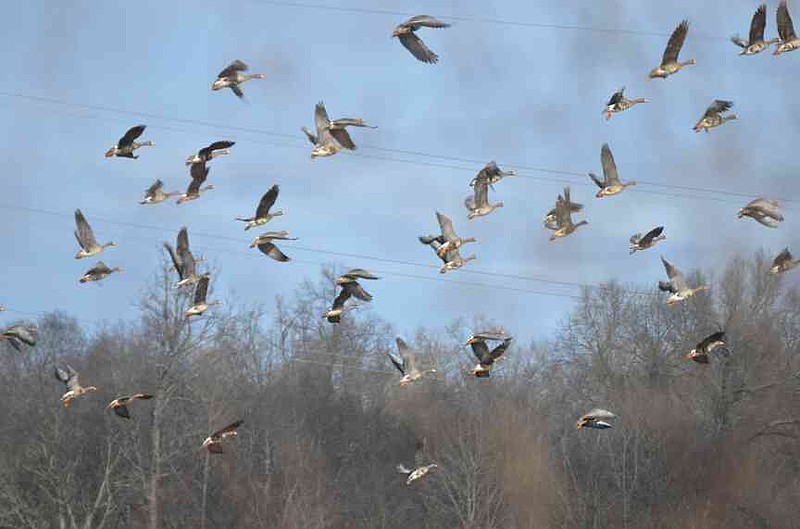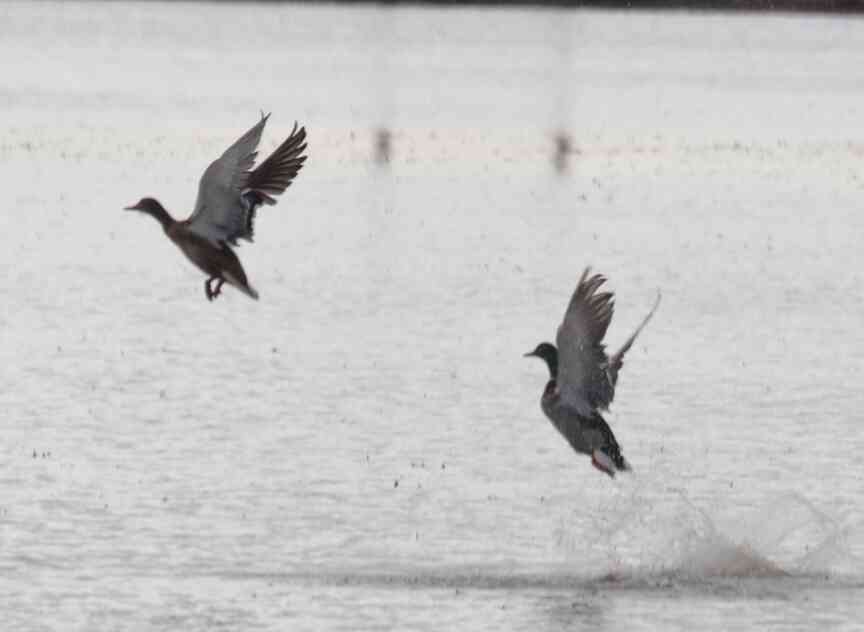
Arkansas Game and Fish Commission Wildlife Management Division staff conducted the 2026 midwinter survey in the Mississippi Alluvial Valley (the Delta), Arkansas River Valley and southwest Arkansas from Jan. 5-13.
Released Jan. 21, the latest data indicates dramatic changes in the waterfowl population since the previous survey conducted just two weeks prior. The January survey estimates 574,940 ducks in Arkansas, 351,900 of those being mallards.
The Dec. 10-23 survey showed 1,030,824 ducks in the state.
That is a 455,884 decrease in total duck numbers. The favored species of duck hunters, the mallard, showed a decrease of 143,835 in Arkansas numbers, down from the previous count of 495,735 to 351,900.
However, the deficit in current duck numbers from the December count is potentially skewed.
Independent reporting for Pine Bluff & Jefferson County since 1879.
Arkansas Game and Fish Commission Waterfowl coordinator Brett Leach stated, “We have less confidence in our December estimate because it may have been biased high due to dry conditions with large accumulations of birds around limited water sources.”
Waterfowl are counted along specific flight paths, which may fall where birds are bunched due to surface water and habitat resources.
“It is difficult to say because of varying survey methods from state to state,” Leach said, asked where the ducks that left Arkansas are.
“Mississippi and Louisiana do similar transect flyovers while Missouri is less intense concentrating only on rivers and wildlife management areas.”
Extrapolating data from other regions proves difficult at best.
“It seems like overall, most states are seeing fewer birds during the peak migration this season,” Leach said.
He further explained how a decrease in duck numbers is to be expected with drought on the Canadian prairie, where ducks hatch in the PotHole Region.
The latest AGFC report reads: “Surveys in the Delta estimated 334,110 mallards and 544,705 total ducks.
The Delta mallard population estimate was 117,908 mallards below the 2025 mid-winter survey estimate and 427,502 mallards below the 2010-2025 survey long-term average.
Total duck population estimates were 137,386 birds below 2025 mid-winter survey estimates and 640,394 birds below the long-term.
“Mallards typically account for about 63 percent of all ducks in the Delta during the MWS, and this survey period was very similar with 61 percent of the total duck estimate being mallards. Most notably, biologists estimated more than 140,000 mallards in the Bayou Meto-Lower Arkansas survey zone. This was followed by the Lower White, Black-Upper White and Cache survey zones, which had an estimated 33,000-38,000 mallards. The Bayou Meto-Lower Arkansas survey zone alone accounted for 43 percent of the (Mississippi Alluvial Valley)-wide mallard estimate and 32 percent of the total duck estimate.”
In the Arkansas River Valley, mallard estimates were 34% below the mid-winter survey long-term average, while total duck estimates were 48% below the long-term average.
“Duck population estimates in the Arkansas River Valley totaled 24,110 ducks, including 15,985 mallards,” the report reads.
“Staff performing cruise surveys in southwest Arkansas reported an estimated 6,125 ducks, with 1,805 of those being mallards.”
Regarding geese in the state, the report states: “Arctic goose population estimates totaled 1,409,809 light (lesser snow and Ross’) geese and 466,550 greater white-fronted geese in the Delta.”
“Population wise, there was a little bump in geese this season,” Leach said. “It’s a lot more difficult to get accurate goose counts because flocks tend to flush and fly before the airplane. We feel confident there are at least 300,000 to 400,000 white-fronted geese present.”
Despite drought conditions and pessimistic predictions, numerous hunters continued to experience favorable hunts of both ducks and geese in the Delta prior to the deep freeze.
Leach further shared about AGFC’s Academics Afield university hunt program.
“Delta Waterfowl provides waders and jackets for selected students from the University of Arkansas and University of Central Arkansas to participate in their first duck hunt. They are students majoring in biology and natural resources who have never had the opportunity to experience water-fowling first hand.”
Typically, five to six students from either school participate in one- and two-day duck hunts on private property, providing vital experience and exposure for a career in conservation.
Indications of bird flu continue to show up across the Delta with numerous deceased blue, snow and Ross’ geese carcasses littering fields.
While few indications of the disease are evident in ducks, speckle belly geese and raptors, they, too, are susceptible to contagion, but with far fewer fatalities.
The last waterfowl survey for the 2025-26 wintering period was scheduled to begin Jan. 18.