
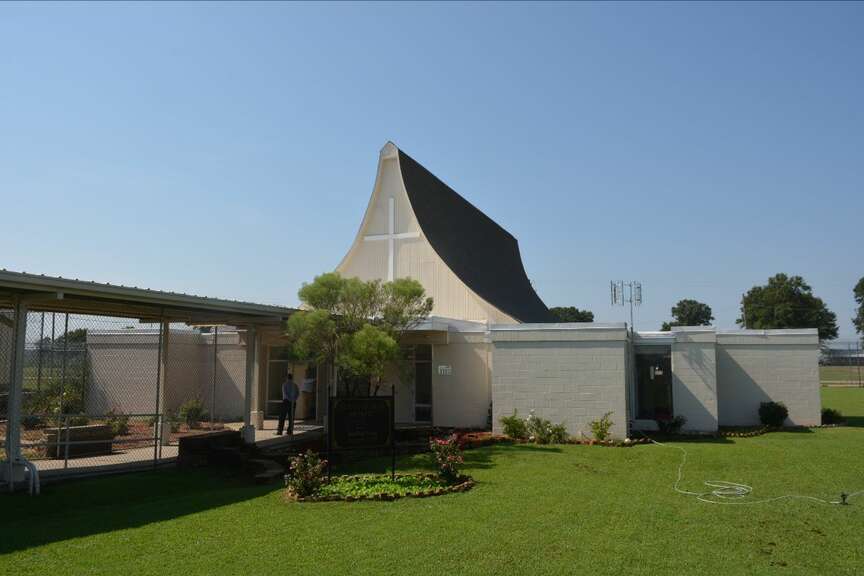
Several Arkansas properties, including two in southeast Arkansas, were recently listed on the National Register of Historic Places.
“The National Register of Historic Places is a popular project of the Arkansas Historic Preservation Program,” Arkansas Heritage Director Marty Ryall said in a news release.
Properties on the list are noted for their historical, cultural and architectural significance.
“The National Register of Historic Places is a program of the National Park Service that is administered in Arkansas by the Arkansas Historic Preservation Program,” said Ralph Wilcox, national register and survey coordinator and deputy state historic preservation officer for the preservation program.
“The National Register is the country’s official list of historic resources that are worthy of preservation. Having properties in Arkansas listed on the National Register is important for several reasons. Listing a property on the National Register documents that property’s history and its importance in the state and the local community. It helps people to learn about and understand more about the state’s history. Furthermore, if a property is listed on the National Register, it will often open up the opportunity for financial assistance, whether it is grants or state or federal tax credits,” Wilcox said.
Independent reporting for Pine Bluff & Jefferson County since 1879.
The Arkansas properties that have been added span a wide range of historic and architectural scope.
The recent Arkansas additions to the National Register of Historic Places include:
Island of Hope Chapel in Tucker (Jefferson County). The chapel, which was built in 1969 and designed by architect Raymond Branton, is an unusual and significant example of modern architecture in rural Jefferson County.
Cummins Prison Chapel in Grady (Lincoln County). The chapel was also designed by Branton and built c. 1973-77. The modern design of the chapel, with its rounded forms and central metal spire, was an unusual and significant example of modern architecture in Lincoln County when it was built in the 1970s.
St. Anthony’s Catholic Church Historic District, Weiner (Poinsett County).
Laman Plaza Gazebo, North Little Rock (Pulaski County).
Capitol-Main Historic District Boundary Increase, Little Rock (Pulaski County).
Asher Avenue Overpass, Little Rock (Pulaski County).
Magnesia Springs Campground, Magnolia (Columbia County).
Wharton Creek Roadside Park, Wharton (Madison County).
Arkansas State College Historic District, Jonesboro (Craighead County).
Centerville United Methodist Church, Greenbrier vic. (Faulkner County).
Velda Rose Tower Motor Hotel, Hot Springs (Garland County).
“The current batch of properties that has been listed on the National Register stands out to me due to the fact that they are located all over the state, illustrating that there is important history and significant properties all over Arkansas,” Wilcox said. “Also, they range in age from the turn of the 20th century to the 1970s, showing that the state’s important history isn’t just 19th-century history or antebellum history, it’s recent history as well. The properties also come from small towns and rural areas along with big cities and urban areas. Arkansas’ architectural diversity and significance is vast, which I think is impressive and important to understand and keep in mind.”
Details: arkansasheritage.com/arkansas-preservation/properties/national-registry.
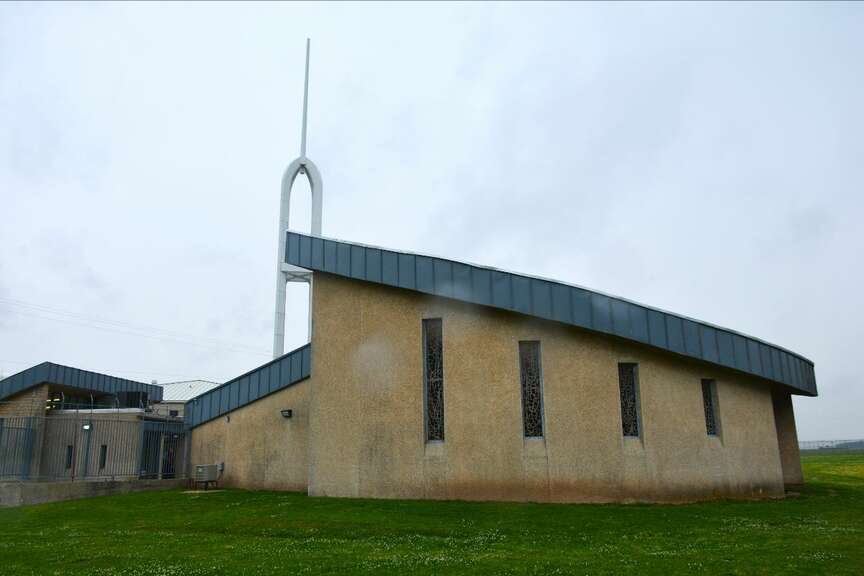 Cummins Prison Chapel at Grady in Lincoln County is on the National Register of Historic Places. (Special to The Commercial/ArkansasHeritage.com)