
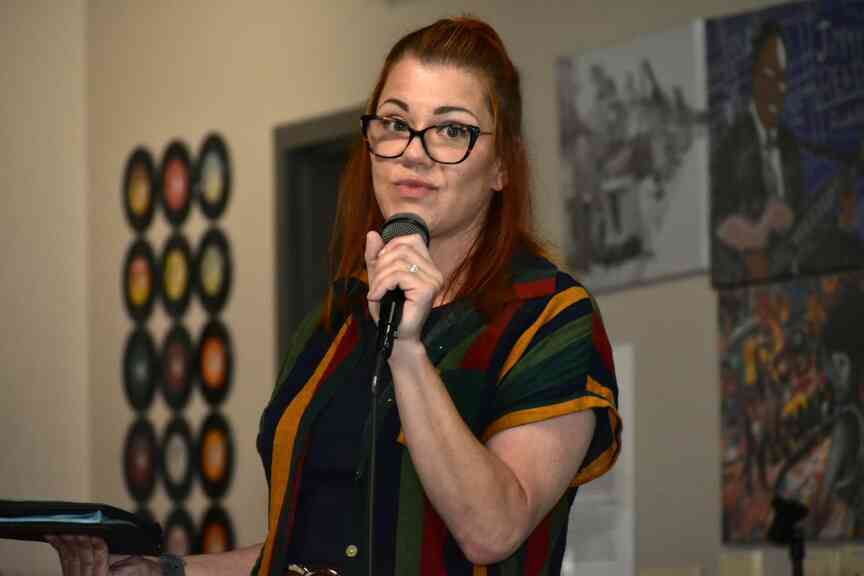
Officials with the Arkansas Department of Energy and Environment’s Division of Environmental Quality addressed patrons of the Pine Bluff Regional Chamber of Commerce’s monthly luncheon Wednesday about seeking the public’s input on updating its solid waste and recycling management plan.
The luncheon was held at the University of Arkansas at Pine Bluff’s Business Support Incubator.
The plan, according to the division’s website, addresses future needs and addresses ways to reduce landfill disposal and provide appropriate service to all Arkansans, but it has not been updated since 2014. The plan is typically updated every 10 years, according to Vanessa Kohrs, environmental program coordinator with the DEQ. The public is invited to take part in the Solid Waste Infrastructure for Recycling (SWIFR) project survey.
“In order for us to develop the most comprehensive plan, we’re hoping to gather as much information as we can,” Kohrs said. “We don’t know our shortcomings until we reach out to the community to find out what we need to improve the education and improve the infrastructure. By reaching out to all the stakeholders and people in the area, we can get a better understanding of where the lack is.”
Colbie Jones, associate environment administrator with the Department of Energy and Environment, said most states are updating their plan as well. She encouraged locals to “participate in the survey and let us know what is happening in your region and what you would like to see.”
Independent reporting for Pine Bluff & Jefferson County since 1879.
The survey asks questions including:
What are some successful recycling opportunities you have seen or been a part of in Arkansas?
What areas of the state do you believe lack recycling?
How do you believe recycling and solid waste management can be improved?
What are effective ways of educating others on how to recycle?
What would engage you and those around you to recycle more at work or at home?
The DEQ released four areas of focus on recycling based on results: educating people about it; rural access to it; benefits of it; and government action. It also identified new recycling challenges including waste solar panels, lithium-ion battery disposal and e-waste disposal.
The U.S. Environmental Protection Agency established SWIFR, which provides grants to states and tribes to improve post-consumer materials management and infrastructure, support improvements to local post-consumer materials management and recycling programs, and assist local waste management authorities in making improvements to local waste management systems.