
A proposed ordinance from Jefferson County Judge Gerald Robinson establishing and adopting procedures for the Quorum Court at its regular and special meetings failed during Monday’s Quorum Court meeting.
This ordinance, which covers meeting dates, agenda setting, committee structures, order of business and more, was voted down by Justices Brenda Bishop Gaddy, Melanie Johnson Dumas, Reginald Adams, Margarette Williams, Cedric Jackson and Alfred Carroll. Abstaining was new Justice of the Peace Richard Victorino, while Justices Patricia Royal Johnson, Roy Agee, Dr. Conley Byrd, Jimmy Fisher and Ted Harden voted in favor of the ordinance. Reginald Johnson was absent.
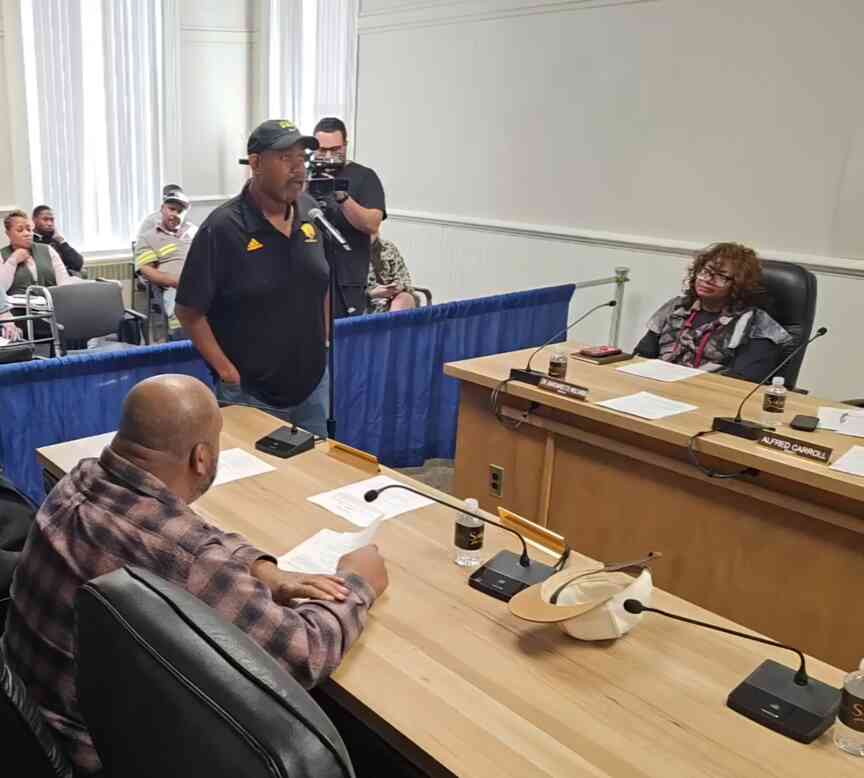
The meeting began with employee concerns, particularly regarding layoffs in the road department that happened in the summer of 2024. It was discovered that senior members of seven to eight years of experience had been laid off while others with less seniority remained employed.
Jackson questioned about the funds allocated for the laid-off workers. He also asked about a time frame for bringing the workers back in, which Robinson said was to be determined.
Independent reporting for Pine Bluff & Jefferson County since 1879.
During public comments, a former employee of the road department, Anthony Bennett, referenced a budget of $124,000 allocated for the road department for payroll and materials, but questioned how the funds were being used, especially with the layoffs occurring.
He emphasized his tenure of almost eight years and mentioned other long-term employees who were affected, contrasting them with “summer guys” who had only been there for a short time. He said a total of 10 employees felt the layoffs were unfair to senior and experienced workers.
Robinson informed the JPs that the Jefferson County Road Department was run by the county judge and if they had any questions they could come to his office.
There was a brief exchange between Carroll and Robinson regarding operational questions and procedures. Carroll attempted to ask about the manager’s communication with the laid-off workers, but Robinson stated it was an operational question and should be discussed privately.
The meeting concluded with a move to new business with two agenda items, an ordinance to adopt the policy and procedures and a resolution approving a MOU between the county and Arkansas Game and Fish Commission regarding Bayou Bartholomew.
Last week the majority of the Jefferson County Quorum Court held a special meeting after the committee meeting to discuss a proposed procedural ordinance. They also had scheduled a second meeting on Monday.
There were amendments presented last week by Johnson to their procedural ordinance, which included that a parliamentarian be appointed by the secretariat of the Quorum Court and be present for all regular and special meetings, subject to availability.
The second amendment was that the Quorum Court members may enter open session during any committee or regular or special Quorum Court meeting.
The amendment about whether Quorum Court members should be allowed to enter open sessions during any committee, regular or special Quorum Court meetings sparked concerns about transparency, potential disruptions and the overall efficiency of the court’s proceedings. The proposed amendment states “Quorum Court members may enter open session during any committee or regular special quorum court meeting,” meaning they could facilitate free debate among members without requiring recognition by the presiding officer.
Prosecuting Attorney Kyle Hunter said that amendment is opposite of Robert’s Rules of Order and would create problems.
In the procedural ordinance presented by the majority of the members, in trying to appoint all 13 members to the Budget & Finance Committee instead of seven, Hunter told them, by law, the judge has to agree.
By statute, the county judge must agree to the formation and makeup of committees. This means the judge has a significant role in determining who serves on which committee. It was also stated that it’s the judge’s “prerogative” to appoint committee members.
A revised procedural ordinance was attached to the meeting agenda called by the majority of the members, but due to not having enough members to hold a Quorum Court meeting, the remaining members could not discuss it. Only Gaddy, Dumas, Adams, Williams, Jackson and Carroll stayed for the second meeting, which was not enough for the meeting to proceed.
According to the revised procedural ordinance, they did not add the first and second amendments presented by Johnson. Still in their ordinance, items can bypass committee upon proper motion and passage to suspend the rules and go directly to the full court. It takes 9 members to suspend the rules.
Other items on the ordinance include: the Quorum Court having authority to transfer an item to another committee by motion and majority vote; the preparation of the Quorum Court agenda for all Quorum Court and committee meetings to be the duty of the County Clerk (secretariat) or designee; and committee chairs entertaining non-committee member’s questions and comments. However, only committee members can vote on items before the committee, and when five or more justices sign on to sponsor a legislative request (super sponsorship), it shall be added to the most immediate Quorum Court agenda.
Each committee will consist of seven members, however, the Finance & Budget Committee will consist of all 13 members of the Quorum Court, upon consent of the County Judge. Otherwise, it will also consist of seven members, which was added to reflect the advice of Hunter.
Other language in the ordinance included that each Quorum Court committee will select its committee chairperson and assistant chairperson, by majority vote. When a committee member is absent, the county judge may appoint a temporary member if a quorum is not present.
However, according to Robinson’s proposed procedural ordinance that was voted down, the County Judge shall create any new committee as he sees fit, appoint the committee members to all committees and appoint all chairpersons of committees.
The proposed ordinance by the majority of the Quorum Court states that a justice may serve as chairperson of only one Quorum Court committee at a time. In addition, no justice can serve on more than one additional committee than any other justice, and the quorum court reserves the right to designate a subcommittee to conduct any public hearing concerning county legislative issues, when it is determined that such a forum is in the public’s best interest.
A severability clause was added to state if any provision of the ordinance is held invalid, such invalidity shall not affect other provisions of the ordinance, which can be given effect without the invalid provision, and to this end the provisions of the ordinance are declared to be severable.
Due to the Policy and Procedure Ordinance failing, no other county business could be discussed, including the memorandum of understanding between the county and Arkansas Game & Fish Commission regarding Bayou Bartholomew.
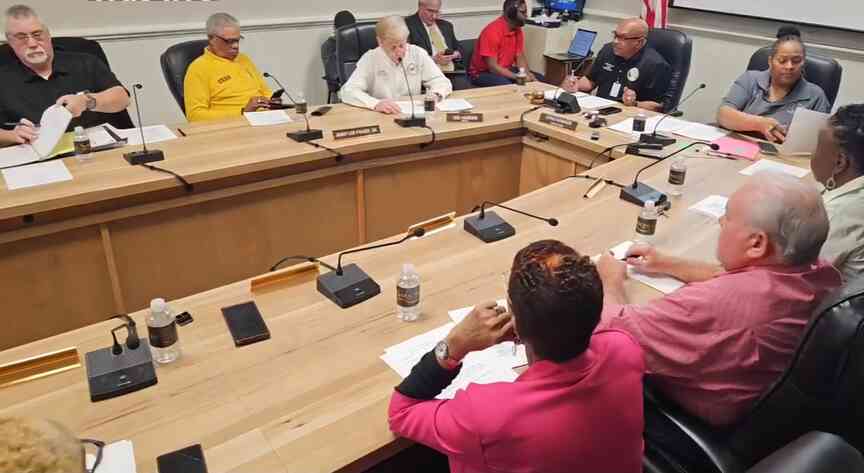 A proposed ordinance presented by Jefferson County Judge Gerald Robinson, establishing and adopting procedures for Jefferson County Quorum Court at its regular and special meetings, failed during Monday’s Quorum Court meeting. (Pine Bluff Commercial/Eplunus Colvin)