
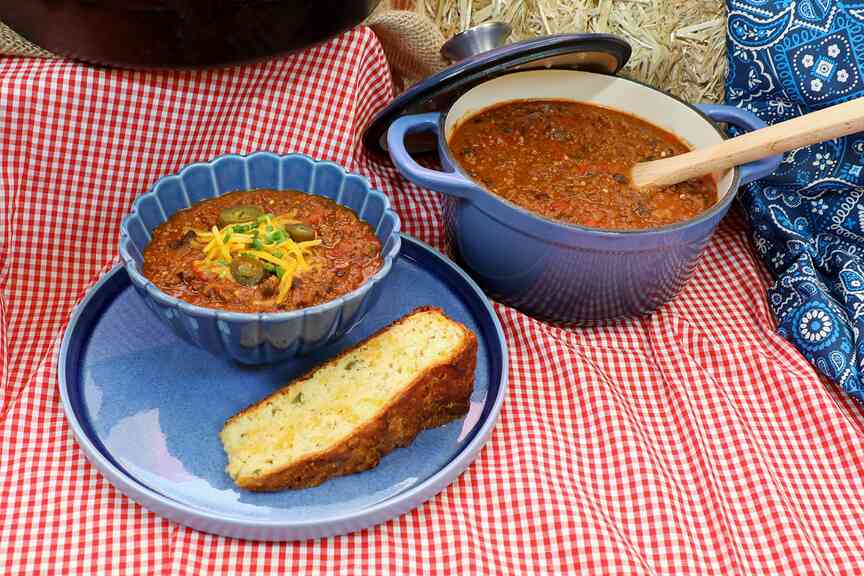
October serves as a natural culinary gateway to comfort foods, and chili is an example of that. As the weather begins to cool and seasonal ingredients like root vegetables and hearty beans become more prominent, chili fits into fall menus across the country, says W. Jinnings Burruss Jr., assistant professor of food service at the University of Arkansas at Pine Bluff.
The timing of National Chili Month also aligns with a variety of social and cultural activities — from fall festivals to harvest celebrations.
“One major reason October is ideal for celebrating chili is its overlap with football season and tailgating culture, especially in the South and Midwest,” Burruss said. “Tailgating isn’t just a pre-game ritual, it’s a full-on food-centered event that brings communities together in parking lots, backyards and on campuses.
“Chili, with its easy batch preparation and warm, satisfying profile, is a natural fit for these gatherings. It’s easy to serve from slow cookers or Dutch ovens, feeds a crowd, and can be adapted to suit a wide range of tastes — from spicy game-day bowls to kid-friendly versions with mild seasoning,” Burruss said.
In stadium parking lots and homecoming celebrations alike, chili becomes more than food. It’s part of the tradition, he said. Whether served with cornbread, on top of hot dogs, or ladled into mugs for guests, chili brings people together in celebration of sport, community and shared comfort.
Independent reporting for Pine Bluff & Jefferson County since 1879.
“Chili is a true crowd-pleaser, which makes it an ideal choice for a variety of occasions,” Burruss said. “Professionally, I think of chili as a versatile, high-yield menu item perfect for casual banquets, community gatherings and food service operations. It’s a warm, filling option that can be scaled for large groups, and it holds well over time — an important consideration in both catering and institutional settings.”
Chili is most often thought of as being served at tailgating parties, chili cook-offs and cool-weather family meals. It’s also one of the most frequently requested dishes during game days and seasonal festivals.
“On a more personal level,” he said, “I’ve served chili at culinary demonstrations, charity events and even as part of themed menus at Boy Scout camp events. Its comfort and flexibility make it suitable for nearly any setting where food is meant to bring people together.”
Burruss said that, when prepared thoughtfully, chili can be a nutritional powerhouse. It’s rich in lean protein — especially when made with ground turkey, chicken or a plant-based alternative — and it is packed with fiber from beans and vegetables. The inclusion of tomatoes, garlic, onions and peppers contributes essential antioxidants, vitamins A and C, and other phytonutrients that support immune health.
“One standout health benefit comes from capsaicin, the compound that gives chili peppers their heat. Capsaicin has been linked to increased metabolism, reduced appetite and potential anti-inflammatory effects,” he said. “For individuals managing blood sugar or cholesterol, chili can be adapted into a low-sodium, heart-healthy meal simply by choosing quality ingredients and minimizing processed additions. It’s a great example of how comfort food can still align with wellness goals.”
The beauty of chili lies in its ability to evolve based on available ingredients and personal or regional preferences.
Many proteins have made their way into a pot of chili, Burruss said. They include ground beef — the classic base for traditional chili con carne; ground turkey or chicken — leaner options that still deliver great texture and flavor; pulled pork or smoked brisket — perfect for a smoky, BBQ-style chili; venison, elk or bison — used often in game-based regional chili recipes; Italian sausage or chorizo — adds bold, spicy notes with rich mouthfeel; and seafood (like shrimp or crawfish) — for gulf coast or Creole-inspired variations.
“Each meat brings a distinct flavor profile and texture, offering endless opportunities for experimentation,” he said. “In teaching students, I often assign chili as a foundational recipe precisely because of how well it teaches adaptability, layering and balance.”
Vegetarian and vegan chilis are also popular. There are many creative variations, Burruss said. Without relying on meat, these chilis use a combination of legumes, vegetables, grains and bold spices to create a satisfying and hearty dish.
Common ingredients include black beans, pinto beans, kidney beans, lentils, sweet potatoes, corn, mushrooms and bell peppers, he said. Grains like quinoa or farro can be added to improve texture and boost protein content.
“Flavor development is key. We teach students to use umami-rich ingredients like fire-roasted tomatoes, soy sauce, miso or smoked paprika to deepen the flavor profile. A good vegetarian chili isn’t just a ‘meatless version’ of something else — it’s its own statement of creativity and balance,” Burruss said. “In our program at UAPB, vegetarian chili is often used as a case study in building satisfying plant-based meals that appeal to everyone, not just vegetarians.”
Chili is versatile when it comes to sides and pairings. Whether it’s being served in a casual buffet line or a curated tasting menu, its accompaniments can elevate the overall meal experience.
Burruss recommends the following pairings:
Cornbread or corn muffins — perfect for sopping up chili and adding sweetness.
Rice or polenta — stretches the meal and adds a neutral base.
Baked sweet potatoes — a nutritious and satisfying option that pairs well with both meat and vegetarian chili.
Tortilla chips, crackers or bread bowls — for added crunch or novelty in presentation.
Toppings — shredded cheese, sour cream, scallions, avocado, jalapeños, cilantro or lime wedges, letting diners customize each bowl to their taste.
Salad or slaw — adds brightness and contrast to chili’s rich, hearty nature.
“In institutional or banquet settings, I often recommend building a chili bar where guests can serve themselves and personalize their meal,” he said.
National Chili Month presents an opportunity not just to eat chili, but to explore its roots, variations and impact. Events can include a mix of educational, community-based and culinary-focused celebrations.
Burruss recommends the following ways to celebrate National Chili Month:
Host a chili cook-off. Invite community members, local chefs or students to compete in friendly culinary rivalry. Include categories for vegetarian, spicy and regional styles.
Highlight regional variations. Create a tasting event that showcases Texas red, Cincinnati chili, white bean chili and more.
Teach the history of chili. In culinary classrooms, take time to explore the origins of chili in Native American, Mexican and Texan foodways.
Support food access. Donate homemade chili or canned ingredients to food banks or shelters as a gesture of nourishment and community service.
Include chili in restaurant and school menus. Feature a chili special or rotate different styles each week throughout October.
These events not only promote culinary creativity but also create opportunities to gather, learn and give back, he said.
“In our curriculum at UAPB, chili is a staple. It serves as a prime teaching vehicle for several core concepts: proper use of spices, timing of ingredient additions, meat and vegetable preparation, thickening methods and slow-cooking techniques,” Burruss said. “Chili also teaches students how to taste and adjust seasoning — a vital skill for any chef.”
In UAPB’s program, students explore different regional styles and learn how to adapt recipes to specific dietary needs, such as vegetarian, low-sodium or gluten-free options, he said. Students also learn to incorporate chili into competitions, student showcases and catering events, giving students hands-on experience in recipe development and high-volume cooking.
“Chili is more than a meal — it’s a cultural experience that spans continents, communities and cuisines. Whether enjoyed around a campfire, in a competition tent or at a student showcase, it brings people together with warmth and shared tradition,” Burruss said. “As a culinary educator, I find joy in teaching dishes like chili because they allow students to experiment, express creativity and understand how food serves both body and spirit.”
National Chili Month is a reminder that comfort food can be diverse, inclusive and nourishing, he said. Whether cooking with friends or teaching in a classroom, chili is worth celebrating.
Burruss offers his chili recipe.
CHARRED BURGER REBOOT CHILI
A smoky, savory chili built around the bold flavors of leftover grilled hamburgers, layered with deep spice, roasted tomatoes and rich umami elements.
Serves: 6-8
Prep Time: 20 minutes
Cook Time: 1 hour
Ingredients:
Main components:
3-4 leftover grilled hamburger patties (about 1.5 pounds), chopped or pulsed in the food processor until fine;
2 tbsp olive oil;
1 medium yellow onion, diced;
1 red bell pepper, diced;
1 poblano pepper, diced;
3 cloves garlic, minced;
2 tbsp tomato paste;
1 (14.5 oz) can fire-roasted diced tomatoes;
1 (8 oz) can tomato sauce;
1 cup brewed black coffee or dark beer;
1 (15 oz) can kidney beans, drained;
1 (15 oz) can black beans, drained.
Spice mix:
1 tbsp chili powder;
2 tsp ground cumin;
1 tsp smoked paprika;
1/2 tsp ground coriander;
1/2 tsp dried oregano;
1/4 tsp cayenne (optional);
Salt and cracked black pepper, to taste.
Finishing touches:
1 tbsp apple cider vinegar or fresh lime juice;
1 tsp brown sugar;
Chopped cilantro, for garnish;
Shredded sharp cheddar or smoked gouda, for topping;
Sour cream or Greek yogurt (optional).
Instructions:
1. Prep the patties: Chop or crumble your grilled hamburger patties into bite-sized pieces. If there’s char on the edges — keep it! That’s flavor.
2. Sauté the base: In a Dutch oven or large heavy pot, heat olive oil over medium heat. Add onion, bell pepper, poblano and a pinch of salt. Cook until soft and fragrant, about 5-7 minutes. Add garlic and stir for 1 more minute.
3. Toast the spices: Add the tomato paste and all dry spices to the pot. Stir and cook for 2-3 minutes to deepen the flavors and lightly caramelize the paste.
4. Deglaze and build the body: Pour in the coffee or beer and scrape the bottom of the pot to deglaze. Then add diced tomatoes, tomato sauce, beans and corn if using. Stir to combine.
5. Add the burger meat: Fold in the chopped grilled hamburger pieces. Simmer uncovered for 45-60 minutes on low, stirring occasionally. Add water or broth if needed to thin.
6. Balance and finish: Right before serving, stir in apple cider vinegar (or lime) and brown sugar to balance acidity. Taste and adjust salt and spice.
Serving suggestions:
Jalapeño cheddar cornbread;
Tortilla chips and guacamole;
Pickled red onions;
Baked sweet potatoes (chili stuffed in the center).
Burruss’ tips:
Smoked paprika and poblano help mimic the grill essence throughout the chili — not just in the meat.
This chili freezes well and gets better after a day in the refrigerator.
Debbie Archer is an extension associate for communications at the University of Arkansas at Pine Bluff School of Agriculture, Fisheries and Human Sciences.