
Located in the Old and New Testaments are two familiar verses written to the faithful. Per the New American Standard Bible (NASB), Habakkuk wrote, “But the righteous will live by his faith.” Paul, when speaking to the Romans, quoted Habakkuk saying, “But the righteous man shall live by faith.”
When the verse was recorded by Habakkuk, Judah was filled with violence and wickedness. Habakkuk had become fed up with the injustices and cried out to God: How long will injustice go on unanswered? How long do I have to cry for help? Habakkuk was sick and tired of witnessing perverted justice.
However, one day in a vision, Habakkuk found out that hidden behind God’s silence, was God’s unseen plan. God knew that Judah had become a place where wicked behavior outnumbered righteous behavior. He knew that the unrighteous Judeans loved to argue and fight. He knew that the faithful couldn’t rely on the fairness of the judicial system to help them. Evil people were getting away with crimes. The system was broken. The law was whitewashed. Hab. 1:4 says, “…Therefore the Law is ignored [ineffective; turns cold]. And justice is never upheld.”
“Never” is a pretty strong word. It implies no way; no how in any form, condition, or degree. But this was not the case. God revealed to him that justice was on the way; and the tool that God would use for His judgement would be the Babylonian warriors, led by Nebuchadnezzar. Shockingly, God was going to use a fierce army to dispense judgement on Judah’s disobedience. But, not yet, God said. For now, the faithful Judeans must continue in their patience and persevere in divine delay. In a sense, God’s delay was less important than the faithfulness they needed to endure until the “appointed time” — Hab. 2:3.
Independent reporting for Pine Bluff & Jefferson County since 1879.
So, until that day, and so that the righteous will not forget during times of injustice or miss quote God’s promises, the vision needed to be documented. It was important for the faithful believers to remain faithful. They needed the mindset of God with survival skills to endure the trials ahead and bear witness to God’s words that “the righteous will live by his faith.” — Hab. 2:4.
The Hebrew word for live in Hab. 2:4 is “Chayah.” It means to live; to exist in a state of mind offered by God. God wanted them to strive wholesomely and consistently even through chaos. The righteous [just; lawful; righteous (man)] during Habakkuk’s time would never know the hope we have in Christ today. They didn’t know the One who would be born and crucified for our sins.
Habakkuk emphasizes faithful living to God and the law. Today, there is a new way to live. Justification by faith that gives us peace and reconciliation with God through our Lord Jesus Christ, Rom. 5:1. Jesus has set things right between God and man.
Paul’s quote from Habakkuk in Rom. 1:16-17 redirects us to this truth. He uses the Greek word “Zao” for live. It has a slightly different meaning: To live; spiritually and eternally together. Paul expands upon the depth of Hab. 2:4 with a new fact that is anchored eternally in Jesus Christ. He says, “For I am not ashamed of this Good News about Christ. It is the power of God at work, saving everyone who believes –the Jew first and also the Gentile. This Good News tells us how Jesus makes us right in God’s sight. This is accomplished from start to finish by faith. As the Scriptures say, “it is through faith that a righteous person has life.” Or, per the New American Standard Bible, “the righteous man shall live by faith.”
This verse is a Gospel exclamation point to Habakkuk’s vision. Paul tethered it to the fullest intentions of God’s purpose for us ‘to live by faith’ in Christ. In fact, we know that since the creation of time, God had been making things ready for us to receive this good news, Rom. 1:20. Even, 1 Pet. 1:20 says that God chose Jesus for this purpose even before the world was made.
So, what I see is this. From creation, to Habakkuk, to Paul, and until now God has been actively working for us to live by faith. It was His desire before the Law: Abraham being the example. And, His purpose at Calvary, with Jesus as our example, John 3:16.
Some may say, God is too slow. His plans allow time for us to suffer too long. But the Bible says, “God is not slow to fulfill His promise as some count slowness, but is patient toward you, not wishing that any should perish… 2 Pet. 3:9.” In His kindness, He’s giving us time to repent and return to Him. He knows that trials develop endurance which shapes our character, and brings about hope that looks expectantly to God.
It’s true that life can be difficult, but don’t give up. Learn from Habakkuk and Paul how to manage this cruel world or your challenging circumstances. Encourage yourself. Remain loyal and continue living fully alive even if it may look like the wicked has the upper hand. Even if you don’t receive immediate deliverance, or if the appointed time pertains to the end in heaven: Continue to stand on the faithfulness of the Most Holy God.
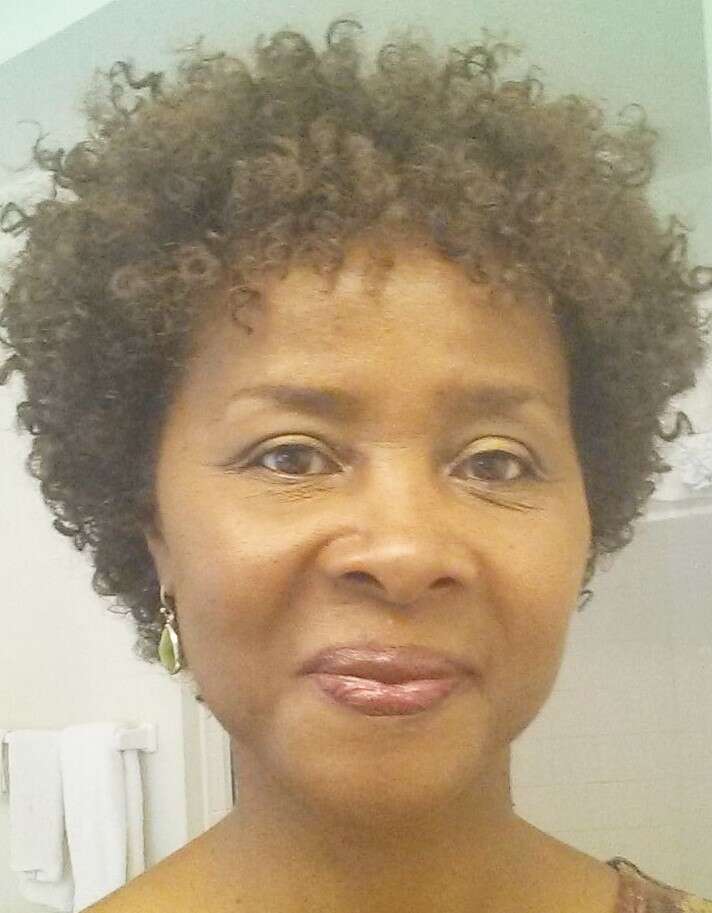
Brenette Wilder, formerly of Altheimer, Ark., is a blogger at wordstoinspire105953116.wordpress.com and author of Netted Together, https://nettedtogether.org.
Editor’s note: Pastors, ministers or other writers interested in writing for this section may submit articles for consideration to shope@pbcommercial.com or shope@adgnewsroom.com. Please include your phone number and the name and location of your church or ministry. Writers should have a connection to Southeast Arkansas.