
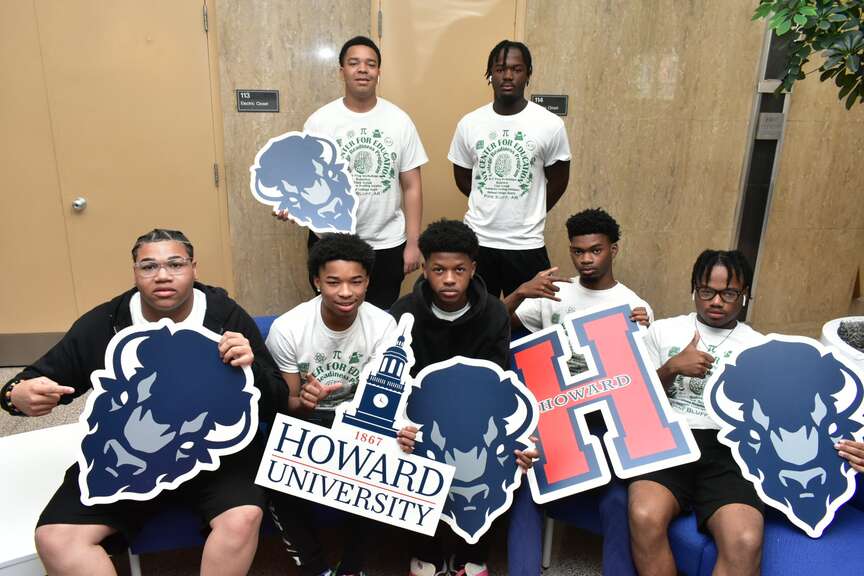
Mattie Collins listens to her young participants in the Ivy Center for Education when deciding where to take them for an annual college and cultural experience tour.
Coming from a tour across Alabama and Georgia last year, many of the Ivy Center scholars, as Collins passionately calls them, said they would like to visit Washington, D.C. and surrounding areas, given the number of universities and cultural exhibits the region offers.
“Our kids need so much culture [because] they don’t know about African American history,” said Collins, the Ivy Center’s president. “I knew Juneteenth was approaching, so I thought one of the best things to do was celebrate Juneteenth at the African American museum, so we’re going to Washington, D.C., so we can learn about our Black heritage.”
Collins, a retired high school social studies instructor, referred to the National Museum of African American Heritage & Culture, one of 17 museums and galleries operated by the Smithsonian Institution in Washington. The visit last Wednesday, which was the Juneteenth national holiday, was one of the highlights of the Ivy Center’s seven-day tour (not counting the long bus rides to and from Pine Bluff) spanning from Alexandria, Va., to Baltimore, where the 34 rising eighth- through 12th-graders and 12 adults took in the sights of Johns Hopkins University, a leading research university.
Independent reporting for Pine Bluff & Jefferson County since 1879.
The group headquartered at the Embassy Suites hotel in Alexandria and often visited malls and local eateries in and around D.C. Their first stop was June 17 at the Metropolitan Police headquarters, where Pine Bluff native and former U.S. Park Police Chief Pamela A. Smith has headed the agency for less than a year.
Smith, a former track and field standout at the University of Arkansas at Pine Bluff, reminded the students to never forget where they came from, as she reflected on mentioning her hometown when she was sworn in last July. She reunited with two of her teachers from Pine Bluff High School, retired art instructor Virginia Hymes and Collins, and met the younger generation of some of her neighbors growing up.
“She was raised by my grandmother and my family,” said Chandler Parker, 15, a rising junior at Pine Bluff High School. “They took care of the whole block, which was 28th and Ohio and Pennsylvania. It was beautiful growing up around that time. Times are hard, but there’s always somebody looking out for you, and it’s good to have somebody like that.
“Growing up and having the bloodline still continuing, we’re still doing great. It’s still a lot of love. To see what that woman (Smith) is today, it’s beautiful.”
The students and chaperones visited the National Archives later that day. The museum is home to authentic documents that shaped the United States such as the Declaration of Independence and Constitution.
Bowie State University was the first institution of higher learning the group toured June 18. Although just 27 miles south of Baltimore, it takes nearly an hour to traverse the Baltimore-Washington Parkway from Bowie, Md., to the Charm City.
Bowie State is a historically Black college/university (HBCU) that began as a teachers college. It is known for its Center for Business and Graduate Studies — which is sponsored by a number of large companies — Dionne Warwick Theater and Kevin Durant Court at its varsity gymnasium.
A longer-than-expected stay forced the group to forgo a tour of another HBCU, Morgan State University in Baltimore, to make it in time for a scheduled stop at Johns Hopkins. The private university is situated in the Charles Village neighborhood of the city and enrolls about 5,300 undergraduates and 25,000 postgraduates.
Danielle Scarborough, a rising high school sophomore from Little Rock, was very intrigued by the rigor of Hopkins. The university’s acceptance rate is only 7.3 percent, which is higher than Harvard University’s and the University of Pennsylvania’s, she mentioned.
“Being able to visit a college like this that’s Ivy League-level — because it’s not Ivy League, that’s like Brown and Yale — but to be able to do this, it’s like, so astounding to me,” Scarborough said. “I don’t want to settle for mediocrity. When I was a freshman, I didn’t want to take AP classes. I wasn’t an AP kid. In middle school, I didn’t want to take hard classes when I didn’t have to. When I took my first AP class, I took AP environmental science. That is my favorite AP class ever taken, and it really opened my eyes to show that, just because something is labeled as super-hard like a college class, as a 13- or 14-year-old, it doesn’t have to be hard if you don’t let it be.”
Environmental science, Scarborough said, is something she’s passionate about, and it’s available as a major at Hopkins. She also took a liking to Bowie State — where Watson Chapel High School rising senior Danila Haynes announced she would attend following graduation.
“I love that Bowie State, first of all, is an HBCU,” Scarborough said. “Second of all, I like that the buildings are more modern. It’s very clean. Our tour guides were super-nice. They are very friendly, like next-door neighbors. … It’s tied into the fact they’re a family-oriented college.”
Juneteenth (June 19) arrived, and so did the Ivy Center tourists at the National Museum of African American History & Culture. The museum, open since 2016, is a four-story structure located on the Capitol Mall and includes artifacts and stories about the four-century African American experience.
“I wanted them to see the Emmett Till history and how Black people came through the ranks and be all that we can be,” Collins said. Till was a Black teenaged boy from Chicago who was lynched in Mississippi in 1955 for allegedly interacting inappropriately with a white woman at a grocery.
The museum encourages scholars to rise above racism and be all they can, Collins added.
“If you go floor to floor, you can see how we’ve progressed,” she said. “We can become as great as any human being.”
Photographs from the 1995 Million Man March taken by Pine Bluff native and Washington lawyer Rod Terry are on display at the museum. Terry worked as a local prosecutor when the march took place.
“The Million Man March was very controversial at the time, if you recall,” Terry said. “And, so, my office was planning for mass arrests. As a Black man myself, I was insulted by that. I didn’t see that was going to be the case. I made a conscious decision to document the Million Man March myself. I decided to take my camera and sort of use it as a weapon like Gordon Parks and capture the beauty of the march.”
The scholars and chaperones visited Howard and Georgetown universities the next day. Howard is a private HBCU named after founder and Union Gen. Oliver Otis Howard, and is known for drawing financial support from and educating many Black celebrities. Alumni include Vice President Kamala Harris and late actor Chadwick Boseman.
Ryan Hill, a 1989 Pine Bluff High graduate, organized the Howard tour. He is an academic adviser at the school.
Kiana Cole, who graduated from PBHS in 2012 and from Howard in 2016, works as a mental health and wellness instructor in Washington. Had it not been for an Ivy Center tour to Washington in the early 2010s, Cole said she would not have applied to Howard.
“It’s because of the trip I even knew to come and experience this,” Cole said. “Honestly, the Holy Spirit told me the moment I stepped on campus. That was really it. I came, I stepped on campus, I applied and I got a scholarship.”
Georgetown is a Jesuit research university known as the alma mater of former President Bill Clinton. The peace and serenity of the campus outdoors seems to command the same from those who walk it.
Atop its residential halls, students can view a skyline of Arlington, Va., across the Potomac River from Washington.
Friday and Saturday were reserved for tours of the nation’s executive and legislative institutions, the White House and U.S. Capitol. The Ivy Center tourists also visited the National Portrait Gallery, National Museum of Natural History, Martin Luther King Jr. Memorial and Lincoln Memorial.
“I wanted them to see the White House because so many African Americans built the White House and Capitol,” Collins said, adding she was excited for the scholars to see the recently installed statue of Little Rock civil rights leader Daisy Bates.
Sunday was worship day for the scholars and chaperones at Greater Mount Calvary Holy Church in Washington. The group then visited the U.S. Holocaust Memorial Museum, where the students were challenged to compare the experience of those imprisoned in concentration camps to those who endured slavery before 1865.
Photo Gallery
Students from Ivy Center visit colleges in D.C. area
The Ivy Center was founded in 2004 for the purpose of improving educational opportunities for children in Jefferson County and has sponsored annual college and cultural tours since 2006. It is open to scholars in or going to grades 7-12. Those interested can email Collins at mattie1908@gmail.com.
Programs include ACT prep, college readiness workshops, ACT Boot Camps, Future Engineers, aviation engineering, Club Scrub for future medical professionals, literacy workshops and a speakers bureau.
Ivy Center board members on the tour included Collins, secretary Patricia Richard, treasurer Chandra Griffin, college tour evaluator Brandun Flannigan, photographer Damiccah Robertson and Karl Walker. Chaperones included Calvin Thomas, Virginia Hymes, Chanta Pulliam, Angela Martin and Mona Todd.
Other board members are Vice President Jeff Pulliam, technology specialist Marguerite Flannigan, ACT Boot Camp coordinator and facilitator Charity Smith-Allen and Latasha Carlock.
Collins said she’s considering a college tour for 2025 in either the Carolinas or Florida.
“Our number-one college choice will always be the University of Arkansas at Pine Bluff,” Collins said, mentioning many of the coming high school seniors intend to enroll there. “But we have to broaden our students’ horizons. We have to expose them to other places.”
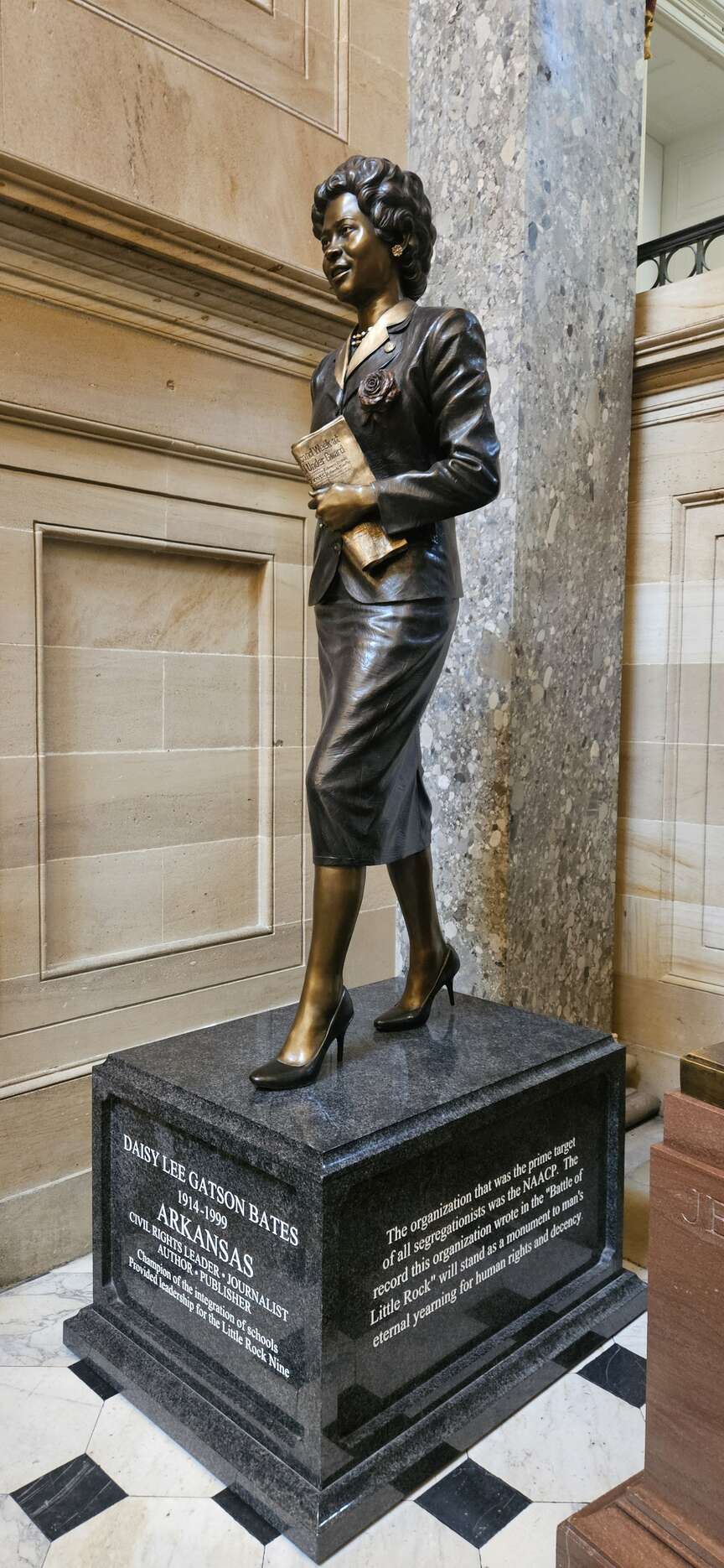 Daisy Bates, who championed the integration of Little Rock Central High School in 1957, is memorialized in a statue inside the U.S. Capitol. (Pine Bluff Commercial/I.C. Murrell)
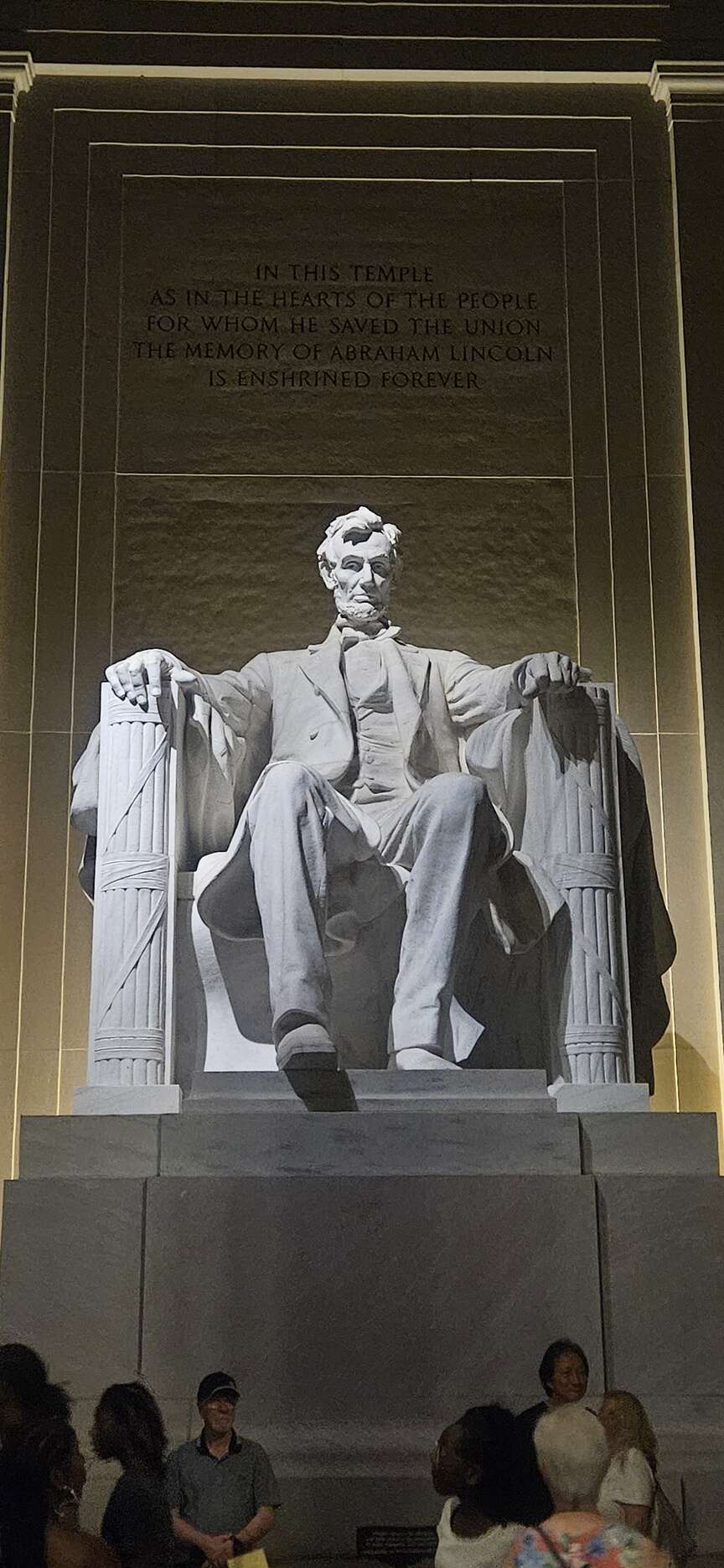 President Abraham Lincoln’s statue at his monument in Washington, D.C. on Saturday, June 22, 2024. (Pine Bluff Commercial/I.C. Murrell)
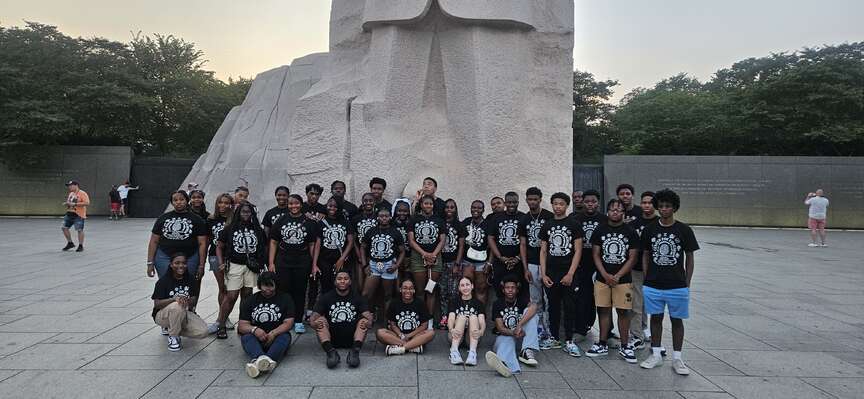 Members of the Ivy Center for Education stand outside the statue of Martin Luther King Jr. at his memorial park in Washington, D.C. (Pine Bluff Commercial/I.C. Murrell)
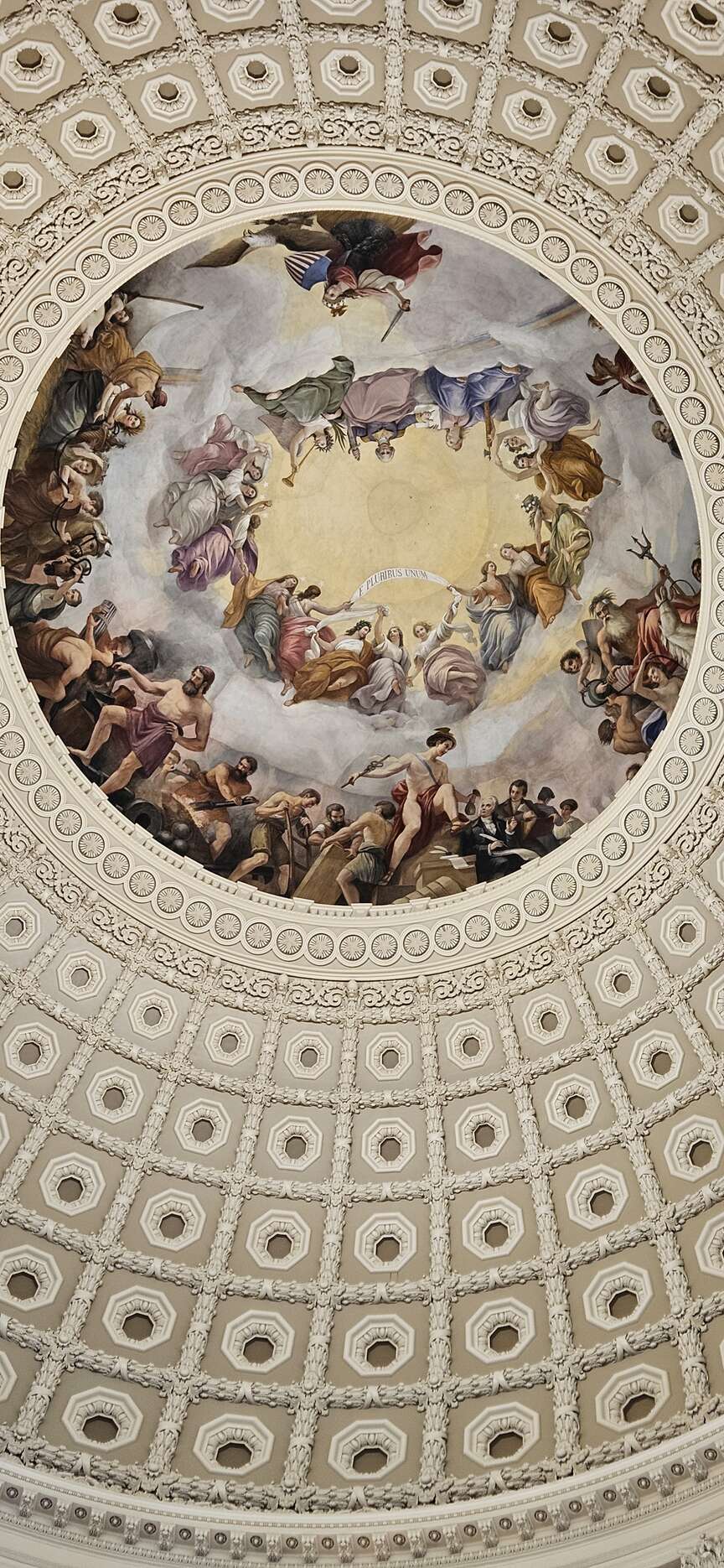 The Apotheosis of Washington, painted by Constantino Brumidi, is pictured underneath the U.S. Capitol rotunda. (Pine Bluff Commercial/I.C. Murrell)
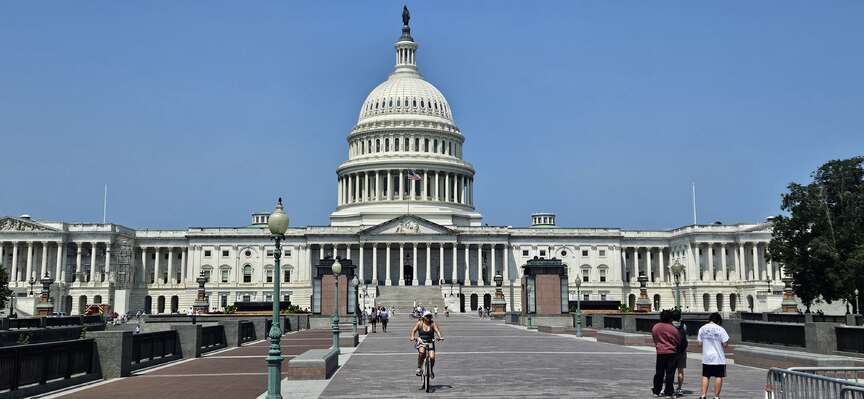 The U.S. Capitol is pictured Saturday, June 22, 2024. (Pine Bluff Commercial/I.C. Murrell)
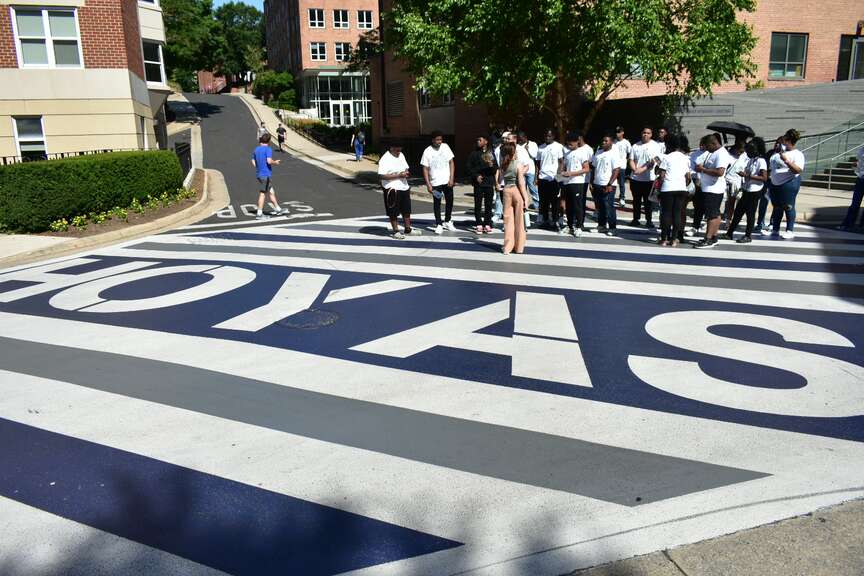 Scholars with the Ivy Center for Education approach an intersection at Georgetown University in Washington, D.C., with tour guide and students Rania Khan on Thursday, June 20, 2024. (Pine Bluff Commercial/I.C. Murrell)