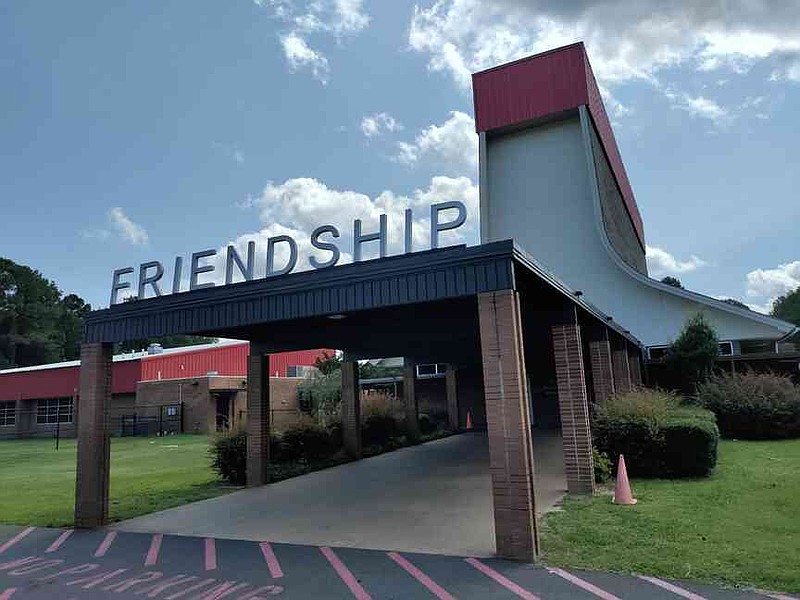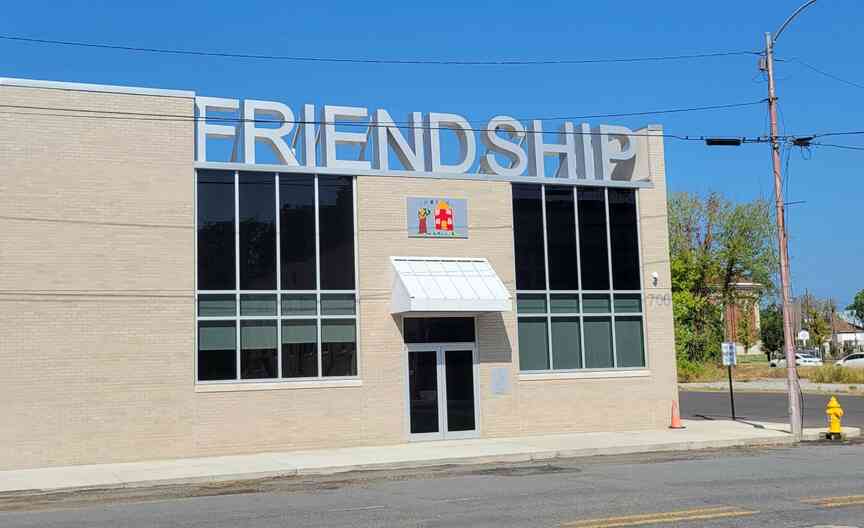
Friendship Aspire Academy Network presented a root-cause analysis for its recent state-issued failing grades to the Charter Authorizing Panel of the Arkansas Division of Elementary and Secondary Education (DESE) in its probational hearing Thursday.
The panel accepted a charter improvement statement of assurance from Friendship that measures will be taken to improve its failing grade, similar to a document from the Arkansas Board of Education the Pine Bluff and Watson Chapel school districts signed in December. The goal of the statement is for DESE to support struggling charter systems in a path to immediate improvement while honoring a clear and transparent accountability process, said Darrell Smith, assistant commissioner for the division.
“Failure to demonstrate meaningful progress toward improvement may trigger additional interventions, oversight or corrective actions as outlined in (Arkansas Department of Education) rules and the charter contract,” the statement reads.
Friendship was one of four charter systems who received an F during the first wave of school and district grades released in November under Arkansas’ education accountability formula. Four of its elementary campuses – the Hazel Street and Downtown schools in Pine Bluff, and Little Rock and North Little Rock campuses – received an F, and its principals appeared before the panel.
Friendship’s Southeast (Pine Bluff) and Little Rock middle schools each received a D and the Southeast high school was graded C.
Independent reporting for Pine Bluff & Jefferson County since 1879.
“Much like you guys, we’ve been scratching our heads at how we got here,” Friendship CEO Joe Harris told the panel. “This situation is going to give us a lot of usable information that not just for the school, but as the operator, we’ll be able to use to ensure that we’re not here again.”
Future School of Fort Smith, Garfield Scholars Academy in Benton County and Institute for the Creative Arts in Fort Smith also were graded F. Each of those systems, along with Friendship, will receive notices of concern from DESE, Smith said.
“That notice of concern will do two things. First, it will make clear that an F rating at the district level is not acceptable,” Smith said. “Improvement is required, not optional. Second, it will formally require each district to submit a comprehensive school improvement plan that will be due in April with the explicit expectation that those plans will lead to an improved district letter grade in the 2026-2027 letter grade accountability cycle.”
Smith leads DESE’s Office of School Choice and Parent Empowerment. Once the plans are submitted, he said, the office will conduct “sustained improvement monitoring throughout the rest of this and the 2026-27 school years.
“This is not the end of the process, but it’s the beginning of a more structured oversight period,” Smith said.
The letter grades for each campus, district and charter system, are based on student achievement on the Arkansas Teaching, Learning and Assessment System (ATLAS), academic growth, and graduation and readiness. The new accountability formula was updated under the state ACCESS Act of 2025.
The F grades represent sharp declines from a C the Hazel Street campus and a B the Downtown campus received in the fall of 2023. DESE did not assign letter grades in 2024 due to a switch to the Arkansas Teaching, Learning and Assessment System as Arkansas’ test battery.
Friendship officials blamed the root causes for its downturn on staffing and personnel, instructional model and instructional systems. Superintendent Phong Tran said the charter system hired a “high concentration” of novice teachers amid leadership transitions, which led to inconsistent Tier I instruction, intervention, coaching and feedback.
“An F rating is serious, and we do not minimize its significance,” Tran said. “Ultimately the district is responsible for students’ performance, instructional system, leadership stability and outcomes, and we acknowledge that our students deserve stronger and more consistent results.”
Too many initiatives aimed at bettering Friendship schools were “installed too frequently,” Tran said, and the charter system has focused on curriculum implementation, strengthening professional learning communities (PLCs) and data analysis of student performance.
Toni Dickerson, Friendship’s director of academics, told the panel the charter system prioritized its instructional focus on what she called four key levers to help it move back into achievement status quickly: internalizing standards to help teachers deliver rigorous standards and aligned instruction; observation and coaching cycles; PLCs and data meetings to foster collaboration; and pacing calendars for core content and common formative assessments, or interim standardized tests, across all contents in grades 3-11.
Tran said each principal is now required to visit every classroom and provide feedback to the teacher every two weeks.
Downtown Principal Ashley Williams said her school is improving Tier 2 intervention by conducting a 60-minute intervention block, and a math instructional coach is co-teaching with a novice teacher to build skill capacity while another teacher has been out on maternity leave. A state literacy coach was also assigned to the campus, Williams said.
She added Friendship was intentional in hiring third grade teachers to strengthen instructional outcomes, given her campus’ score is based solely on the performance of then-third graders. (The Downtown campus enrolls students in grades K-3.)
Hazel Street Principal Carol Redfield-Mims said her priority areas for improvement include making sure data are timely, accurate and accessible to teachers and leaders; making sure data meetings are focused on action; and ensuring intervention for students is aligned to their need, not random or optional.
“Although this is my first year at Friendship, our leadership team did not shy away from the challenge because real growth begins with real accountability,” Redfield-Mims said.
Harris called the hiring of novice teachers as a priority a cautionary tale, although he said Friendship has excelled in preparing young teachers in past years.
“I don’t want to put all of this on the teachers,” Harris said. “It all falls on us as school leaders and as operators on how we turn this around. The supports that we’re going to provide are already what you’re seeing.”