
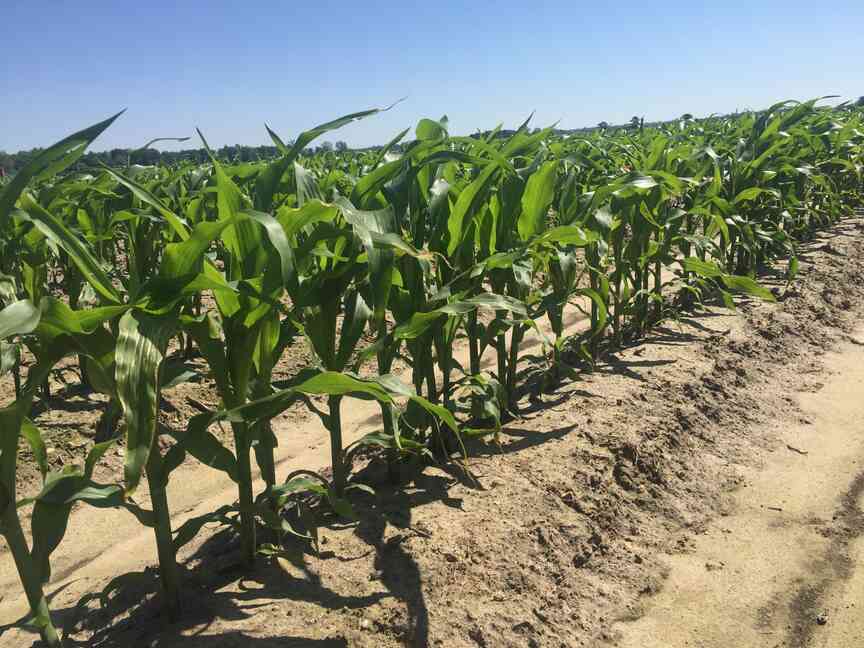
Due to recent heavy rain, the immediate future for Arkansas farmers will probably involve clearing ditches, with a good likelihood the following week will be taken up with replanting and reworking fields, extension specialists said.
Planting of the state’s commodities has begun, with the March 31 Crop Progress report from the U.S. Department of Agriculture showing 22% of the state’s corn crop planting and 3% already emerged. Rice was 8% planted and 1% emerged. Soybeans were 5% planted. Winter wheat, usually harvested in summer, was 11% headed.
While rain is usually a welcome event, the expected deluge can wash away plant beds and any newly emerged seedlings.
“I’ve been telling guys to hold off,” said Jeremy Ross, extension soybean agronomist for the University of Arkansas System Division of Agriculture. “We’ll probably need to repull beds that have been freshly pulled.”
The National Weather Service issued a flood watch for much of the state through April 6.
Independent reporting for Pine Bluff & Jefferson County since 1879.
“There’s not much you can do with that much rain in a short amount of time,” said Scott Stiles, extension economics program associate for the Division of Agriculture. “You want to have all the ditches and pipes open.”
In northeastern Arkansas, “everybody around here has water furrows run — a good effort on drainage,” Stiles said.
Jarrod Hardke, rice extension agronomist for the Division of Agriculture, said: “Backing up of the rivers, streams and bayous will be the story. Low ground that’s already planted may be wiped out regardless of the crop planted there.”
Hardke said “rice will survive the best, but levees will be the issue. They’ll get washed out and blown and have to be repulled and reseeded.
“Recently planted corn and soybean are in for a wild ride for survival,” he said. “Cool temperatures may help buy them some time but staying flooded or saturated for four-plus days is a bad recipe for emerged seedlings and fresh planted seed.”
The cotton and peanut growers, with their later planting dates, might dodge a bullet.
“We haven’t begun to plant yet,” said Zachary Treadway, extension cotton and peanut agronomist for the Division of Agriculture. “If we end up getting all the rain they’re calling for, we could see delays, either from extremely wet ground that takes a long time to dry, and/or replants taking priority.”
CROP INSURANCE CONSIDERATIONS
Stiles said that for crop insurance purposes April 1 is the earliest planting date for rice, with April 15 being the earliest planting date for soybeans.
“Rice or soybeans that have already been planted are not eligible for replant payments from crop insurance,” he said.
To learn about extension programs in Arkansas, contact a local Cooperative Extension Service agent or visit www.uaex.uada.edu.
Mary Hightower is with University of Arkansas System Division of Agriculture.