
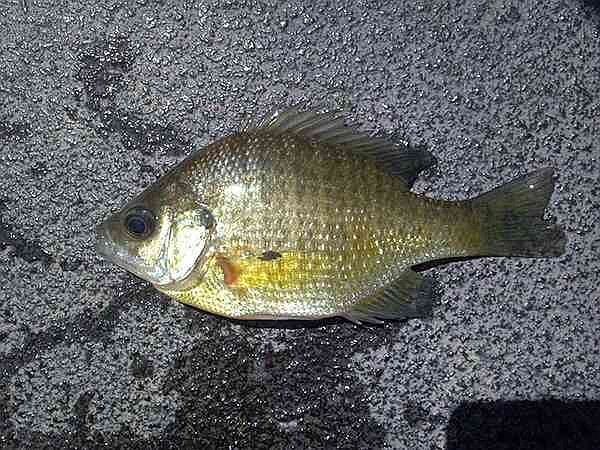
The bluegill is a versatile species present in most Arkansas ponds, streams and large reservoirs. Many only consider bluegills as food for larger predators such as largemouth bass, catfish and crappie, according to Scott Jones, small impoundment extension specialist at the University of Arkansas at Pine Bluff. However, with some adjustment to management strategies to favor bluegill growth, pond owners may come to appreciate their potential as a sportfish.
The most common bluegill variety available at local fish farms or delivery routes is the northern bluegill. They are usually simply labeled as “bluegill” and were likely initially sourced from within the state to ensure compatibility with the climate and typical conditions of the area, Jones said. The northern bluegill performs well across all of Arkansas and can grow well over 8 to 9 inches in length with proper management and good conditions.
“Coppernose bluegill are also widely available. The coppernose is a subspecies of bluegill native to northern Florida and Georgia,” he said. “They are closely related enough to northern bluegill to interbreed but they do have noted growth and climate tolerance differences.”
Coppernose can grow faster and larger overall than northern bluegill in the warmer climates of the southeastern U.S. Coppernose can endure cooler climates, but their winter survival, especially under ice cover, is far reduced compared to northern bluegill.
Independent reporting for Pine Bluff & Jefferson County since 1879.
“Pond owners in southern and Central Arkansas can likely achieve faster growth and larger max sizes from coppernose than northern bluegill, again with good conditions and management,” Jones said. “Ponds located in northern Arkansas that experience partial or complete surface ice each winter may not achieve better performance out of the coppernose than they would with the more cold-tolerant northern bluegill.”
Some farms offer hybrid bluegill. These are usually created by crossing bluegill with green sunfish, he said. The resulting hybrids have the potential to grow larger than northern and coppernose bluegill under good conditions and management.
“Another quirk to hybrid bluegill is that up to 90% or more of them are male. This significantly reduces their reproduction rate,” Jones said. “In some cases, such as when large bluegill are the goal, this is beneficial because it keeps the bluegill population from growing beyond what the pond can support. In cases where bluegill are meant to feed other predators, reduced reproduction is detrimental to the overall pond strategy.”
Another problem with hybrid bluegill is that their offspring have far slower growth and less size potential compared to their parents, he said. This means supplemental restocking of adult hybrids is necessary to maintain a hybrid bluegill pond’s performance long-term, or pond owners may need to drain the pond about once every 5 to 7 years to remove small fish and start afresh.
“For these reasons, hybrid bluegill should not be stocked into ponds that already have northern or coppernose bluegill in them, and they should not be stocked when bluegill are intended to be the food for another sportfish,” Jones said.
The fastest way to boost bluegill growth in any pond is feeding them with 40% protein, or higher, floating fish feed every day when the water temperature is above about 65 degrees, he said. While this can be done by hand, it is recommended that an automated fish feeder be installed to ensure consistent feeding every day. Only feed as much as the fish can eat within about 5 to 10 minutes.
Fish cover should be limited to 10% to 20% of the pond area, which is more favorable for bluegill growth than the 20% to 40% coverage recommended for most fishing ponds.
“The concept is that we want heavy predation on small to intermediate-sized bluegills so that the large adult bluegills have more space and resources to continue growing larger,” Jones said. “Dense aquatic vegetation can be very detrimental to this strategy. Prevent new aquatic weeds from becoming established and work to control any existing weeds to help boost bluegill growth.”
Harvest adult largemouth bass conservatively. In bluegill-focused ponds, the largemouth’s primary role is to eat small to intermediate-sized bluegill, he said. To encourage this, harvest no more than 10 pounds per acre per year of largemouth bass larger than 14 inches in length, or release all bass caught. This will cause an overabundance of small largemouth that will help keep the bluegill population low enough for large bluegills to thrive.
While aeration is not required, it is encouraged. Heavier stocking and feeding rates can strain a pond’s natural oxygen production and waste processing capabilities. Supplemental aeration, especially from diffused aeration systems, can increase the carrying capacity of a pond and serve as insurance against turnovers and other dissolved oxygen-related problems.
“For new or renovated ponds larger than one acre, stock 250 to 500 northern or coppernose bluegill fingerlings and 50 northern largemouth bass fingerlings per acre,” Jones said. “Grass carp can be stocked at three to five fish per acre for aquatic weed prevention but be aware that they will eat fish feed. Harvest 25 to 50 pounds per acre per year of bluegills less than 5 inches in length. As the average fish gets larger, you can increase your maximum harvest length to 6 or 7 inches to encourage growth even further.”
For new or renovated ponds smaller than one acre, stock 750 hybrid bluegill fingerlings and 50 northern largemouth bass fingerlings per acre, he said. Grass carp can be stocked at three to five fish per acre for aquatic weed prevention but be aware that they will eat fish feed.
“You may harvest the hybrid bluegill as you desire, but you should keep records of how many you remove. You will need to restock using adults, at least 3 to 4 inches in length, either annually at roughly the rate that you removed that year or once every few years to replace fish lost to natural and fishing mortality,” Jones said. “If adult hybrids are not available, or if you prefer, you can drain the pond once the fishing is unsatisfactory and restart fresh.”
Details: Scott Jones at (870) 575-8185 or joness@uapb.edu.