
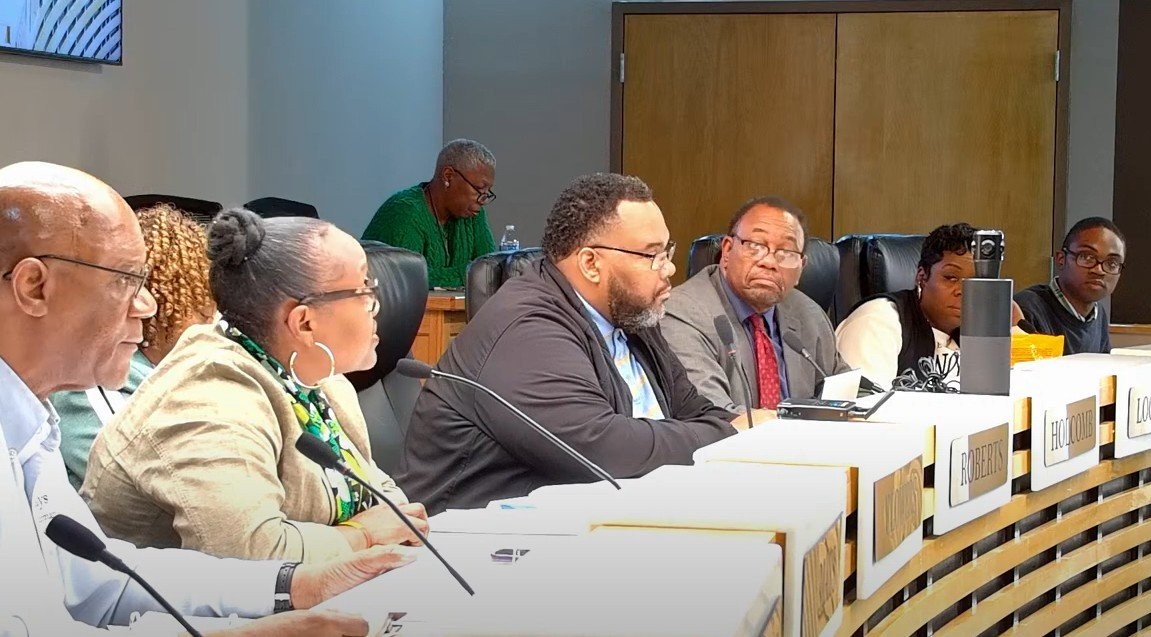
Pine Bluff is once again considering a 10-year, 1% sales-and-use tax to address critical city needs, with a special election proposed for Nov. 18. The measure, if approved, would be effective from April 1, 2026, to March 31, 2036.
Introduced during Tuesday’s Ways and Means Committee meeting, the proposed 1% sales-and-use tax in Pine Bluff aims to generate revenue for various city improvements, with funds allocated across several categories, each receiving 12.5% of collections.
These categories include transportation (Port of Pine Bluff, railroad, airport), public works (streets, broadband, sewer and stormwater), municipal capital improvements and equipment (City Hall deferred maintenance, technology upgrades), public safety (law enforcement, animal control, fire department), economic development (capital projects, entrepreneurship), housing and blight eradication, tourism development and promotion and youth and senior programs.
To ensure accountability, biennial forensic audits of tax expenditures will be conducted by an independent firm. The ordinance allowing the special election was tabled by the Ways and Means Committee after a lengthy debate among council members.
Independent reporting for Pine Bluff & Jefferson County since 1879.
Supporters of the tax, primarily Pine Bluff Mayor Vivian Flowers, argue that the city’s current financial situation, while stable, is insufficient to tackle the backlog of neglected projects and foster significant growth.
“We are operating on almost a balanced budget … but we know that there are not enough. Two million dollars isn’t even a bill to address an emergency, let alone all of the older latest needs,” she said.
Flowers emphasized that the city has enough money for “status quo” but not for “extra” improvements, which are crucial for attracting businesses and residents. She also highlighted the time-sensitive nature of the proposal, explaining why a Nov. 18 election is critical.
“We don’t have time to continue to lose population to lose opportunity to solicit and support entrepreneurs and small businesses … waiting longer would mean delaying essential resources until 2027 or beyond,” said Flowers.
Several council members expressed strong reservations, largely stemming from past tax initiatives of Go Forward Pine Bluff and a perceived lack of transparency. Council member Steven Mays Sr. was a vocal opponent, stating: “I am not supporting this tax.”
Mays believes the city needs to fix more things with existing funds before imposing new taxes on already burdened citizens, while criticizing the current state of infrastructure. He also claimed the “bankers” were behind the tax initiative and said, “I can not be bought.”
Council member Lanette Frazier echoed concerns about transparency, feeling left out of the discussions leading up to the meeting.
“We talk about transparency, but I still don’t feel like there is transparency because this meeting right here, I didn’t know what it was going to be in reference to,” she said, adding that “transparency seems to be selective.” She also pointed out that previous attempts to pass similar taxes through GFPB failed twice, asking, “What has changed from last year to this year, because nothing has really changed in reference to the need?”
Council member Lloyd Holcomb Jr. shared similar sentiments about public support.
“I’ve had citizens come to me. Some are not ready to … They don’t want a tax,” Holcomb said. He suggested holding a town hall meeting to inform the public before voting to send the measure to the full council.
Council member Bruce Lockett stated he could not vote for the current tax proposal without a detailed budget showing exactly where the money would go, item by item and with a timeline. He criticized the lack of this detailed information being presented to the council. “I can’t vote for a tax without a budget attached to it to specify where the money goes,” he said, questioning if the tax is to pass first before figuring out how to spend it.
Lockett emphasized his admiration for past initiatives of the tax passed under Mayor Carl Redus Jr., where expenditures were “itemized.”
“I just can’t support taxes that don’t have budgets with them to say where money is going to go categorically, and with a timeline, specifically on what and how we are going to do it.” He also expressed frustration with the late receipt of meeting information, stating he received the information 30 minutes before the meeting.
Council member William Fells’ comments revealed a desire for thorough public engagement, acknowledging he received prior notification from Flowers regarding the sales tax’s placement on the agenda.
“I guess my biggest comment right now, because I’m still just digesting everything that I’m hearing … is just we just have to make sure we’re just really communicating to the residents and allowing residents an opportunity to be heard,” Fells stated.
He recognized a “tremendous hunger for progress” in Pine Bluff, citing the success of the Go Forward sales tax as evidence of residents’ willingness to invest in tangible community improvements. However, a key condition for this willingness, according to Fells, is the public’s confidence that the tax is based on a “well-thought-out plan” and that the funds will be “executed … and conducted legally.”
While acknowledging the council’s good intentions, Fells emphasized the need to view the situation from the citizens’ perspective.
“There’s a lot of people who don’t go to the city council. They don’t … listen to (local radio). … They don’t read the (Pine Bluff Commercial), so there are some formal steps that we do in terms of notifying each other and spreading the word, but I think that we have to overcommunicate when it comes down to this tax, because we don’t want people … to just feel like this is something that’s just coming out of nowhere,” he said.
Flowers’ longstanding discussion of a sales tax throughout her campaign was acknowledged, making this pursuit in her first year unsurprising to some. However, for other citizens “who … haven’t heard anything about a sales tax this year,” the sudden news of it going before the city council in September and potentially appearing on the November ballot could be “kind of a shock,” explained Fells.
A significant point of discussion was the commitment to transparency and accountability, particularly regarding a forensic audit. Flowers announced that a forensic audit of city departments and the 2017 sales and use tax expenditures is being advertised, with two accounting firms sought for the task. This audit will cover “all seven years of expenses and revenue collected and spent associated with the 2017 sales and use tax,” Flowers said. She asserted that this is to “make sure that some of our missteps never happen again” and to determine “what we did right and what we can do better, and what went wrong.”
Furthermore, the proposed ordinance for the new tax includes a provision for a biennial forensic audit of the new sales and use tax collections. “For the 10-year period every two years, we will take a look back at all activities associated with this sales and use tax and provide that information to the public to the press, and of course, to our city council, to ensure that, as we move ahead toward progress, that we are doing so with transparency and accountability,” Flowers explained.
Flowers highlighted that this new measure differs from previous ones in that it “will not operate through a quasi-governmental award” but “through the city mayor and the city council,” whom she reminded are “elected by the public and accountable to the public.”
The debate continued, revealing concerns from council members, with some prioritizing immediate action and others demanding greater public transparency and a more detailed budget before supporting a new tax. Flowers acknowledged the “tough challenge” ahead and committed to engaging in town hall meetings and public education to build support and address concerns.
The committee ultimately voted to table the ordinance, meaning it did not receive a recommendation to move forward to the full council. However, council member Glen Brown Jr. clarified that even without a positive recommendation, the legislation would still be placed on the full council’s agenda for consideration.