
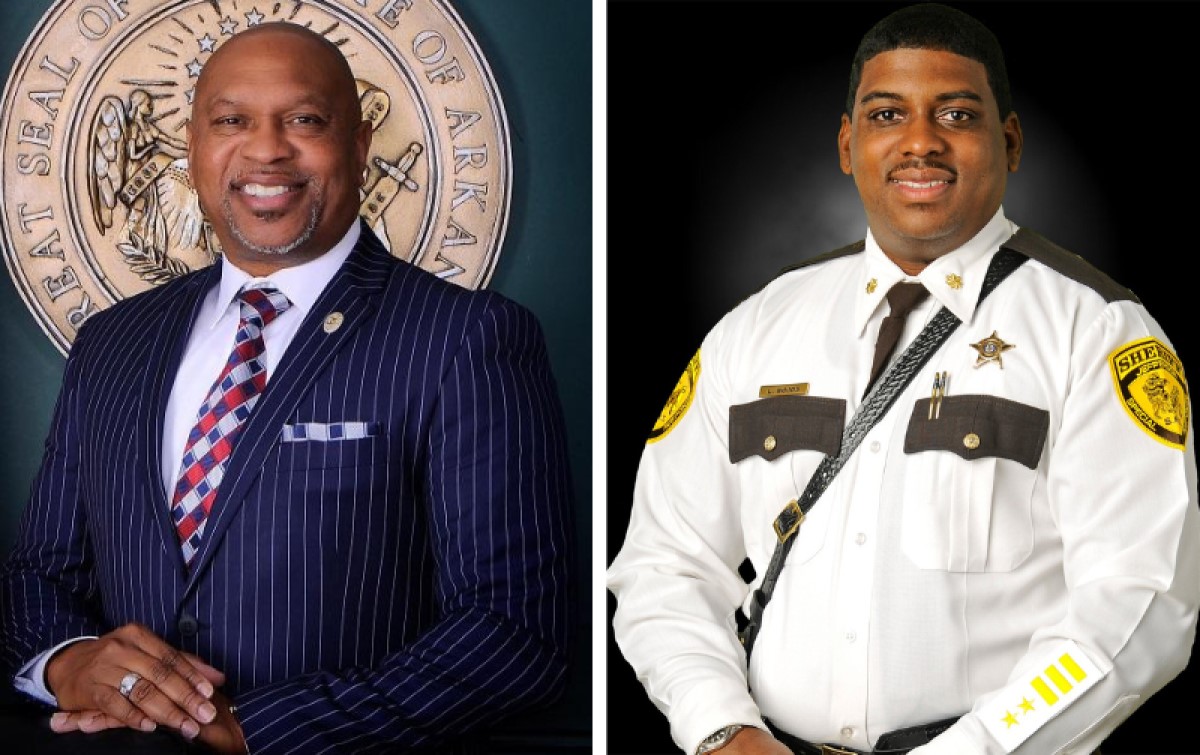
The Arkansas Court of Appeals held oral arguments Wednesday in Jefferson County Judge Gerald Robinson’s appeal of a ruling in favor of Sheriff Lafayette Woods Jr.
The appeal stems from a Circuit Court finding that Robinson was in contempt of court for continuing to arbitrarily deny claims for payment Woods’ office submitted. The Appeals Court has taken the case under advisement and will issue a ruling at a later date.
Attorneys for both parties spent the allotted 40 minutes debating the clarity of the underlying court order and whether Robinson’s actions amounted to willful contempt or were based on legitimate auditing concerns.
The conflict began on March 21, 2022, when Woods filed the original suit, accusing Robinson of inadequately funding operations out of the 2022 county budget. The dispute escalated into a fight over payment claims.
Independent reporting for Pine Bluff & Jefferson County since 1879.
In a hearing on Nov. 29, 2023, Special Judge Gary Arnold ruled that Robinson had improperly rejected 93 out of more than 2,000 budget claims from the sheriff’s office since June 2022. The judge later found Robinson in contempt in June 2024 for continuing to “arbitrarily and capriciously deny claims for payment” to the sheriff’s vendors.
The repeated denials hurt the sheriff’s operations, causing an account with Amazon to shut down and affecting the office’s credit rating and service from vendors like Sysco Foods. Arnold ordered Robinson to pay Woods’ legal fees but also cautioned that the personal animosity between the two elected officials was “getting in the way of doing the jobs they are capable of doing, and it’s hurting Jefferson County.”
Robinson, represented by North Little Rock attorney Casey Castleberry, immediately disagreed with the ruling and vowed to appeal, stating he would “continue to look at and make my determinations based on how those claims are submitted.” Robinson maintained that the denials were strictly due to the sheriff’s office failing to submit claims properly, such as listing the wrong address or requesting payment from an incorrect county account.
During the oral arguments, Castleberry argued that the contempt finding was invalid because the original order was too vague and lacked a clear, definite standard for a litigant to know whether they were violating it.
He argued that the contempt finding, based on “differential treatment,” was flawed.
Castleberry asserted there was a “rational basis” for every denied claim, arguing that the county judge must ensure claims are paid consistent with budget appropriations. He explained Robinson’s office had sent a memo in December 2022 advising all department heads to ensure their addresses and budgets matched up; otherwise, claims would be denied.
Castleberry stated a key component — a finding of “willfulness” — was missing from the trial judge’s order and the record.
Woods’ attorney, Adam H. Butler of Paragould, argued the trial judge was correct in his ruling and that the denial of claims was, in fact, arbitrary. Butler claimed the sheriff’s office was the only department being subjected to such technical denials. He cited the testimony of Tiffany Lowery, a chief deputy county clerk and “neutral third party” who testified the “bill to ship to address issue” was “silly” and had “never been an issue” until it was applied to the sheriff.
Butler stated Arnold found the continued and “repeated continued actions” of disparate treatment to be willful contempt.
Butler argued that if Robinson’s chief of staff, Rosetta Giddens, knew the correct addresses, she should have reconciled the claims instead of rejecting them.
The judges questioned both attorneys extensively on the issue of willfulness, asking what specific evidence would demonstrate disobedience to the court order.