Donald Trump’s problem is that he didn’t get enough love as a child.
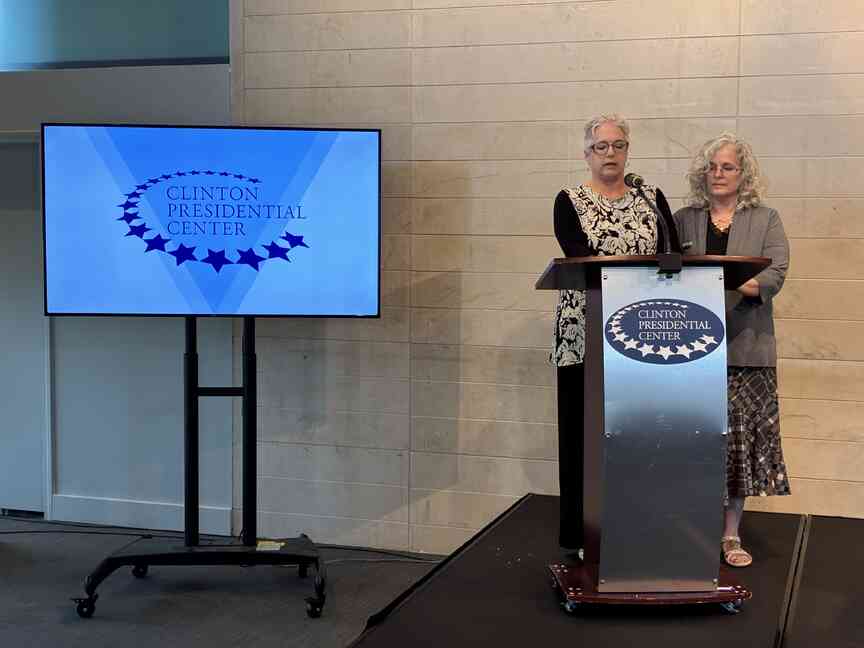
That was the assessment of Chris Jones and co-panelist Kate Woodsome, who spoke last week at Little Rock’s part of the 13th Annual Whistleblower Summit & Film Festival, held at the Clinton Library.
Jones holds five degrees, including a master’s in nuclear engineering, and is also an ordained minister. He responded to questions from Woodsome, who won a Pulitzer Prize as a reporter for The Washington Post, in ways that were sometimes more in line with his science side and sometimes his pulpit side.
Jones said he was speaking at another venue recently and someone asked him what he would say to Trump if given the chance.
“I would tell him that regardless of what he believes, God still loves him,” Jones said he told the questioner. He said Trump is the way he is “because of a lack of love from his father, and we are living through hell because of that. I think his whole tribe has not had enough love from their parents.”
Independent reporting for Pine Bluff & Jefferson County since 1879.
“I see Donald Trump as a kind of small boy desperate for love,” Woodsome said.
The two both said individuals also need to “turn up the love” in themselves as a way to combat the world’s noise that overwhelms us. Asked if an emphasis on love meant giving up the fight in the face of what can appear to be a fading democracy, they said far from it. “People do extraordinary things in the name of love,” Jones said.
Woodsome said people are interconnected with one person’s well being tied to that of others. Jones called the condition “quantum entanglement,” describing how atomic particles are connected across space and time.
“As a society, we are quantumly entangled,” he said. “We are one spirit.”
Jones was the Democratic nominee who ran unsuccessfully for governor against Sarah Huckabee Sanders in 2022. He recently filed paperwork to run for Congress against 2nd District U.S. Rep. French Hill, although he has not made a formal announcement about his plans.
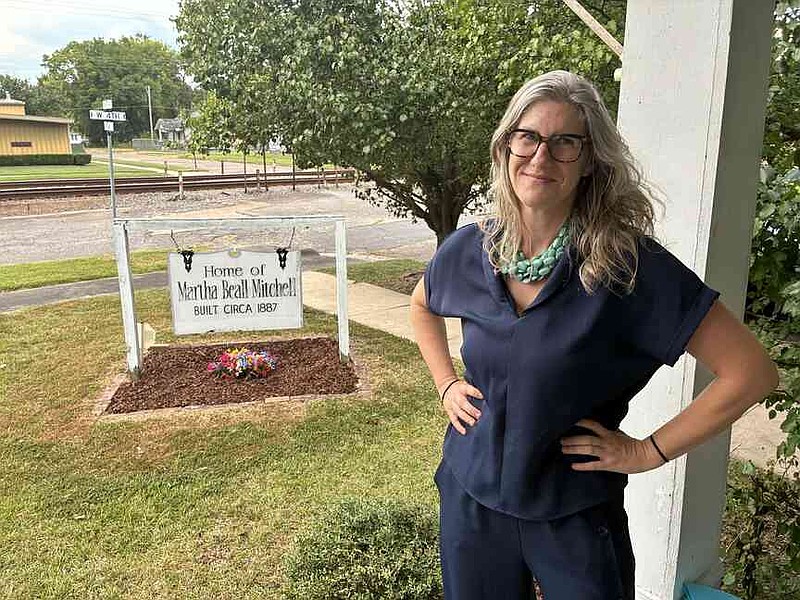
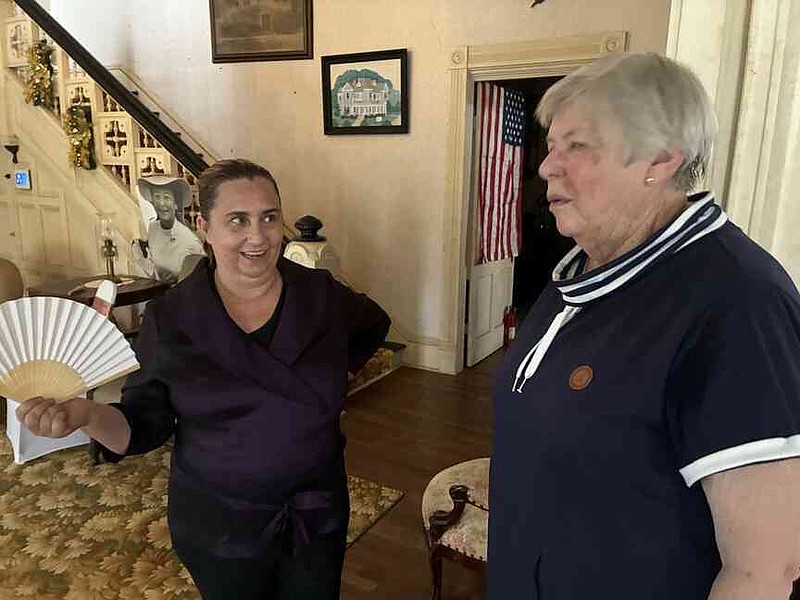
The Whistleblower Summit kicked off Tuesday in Pine Bluff with a reception at the Martha Mitchell House, which is now owned by Jennifer Louviere. She bought the grand, but aging, structure three years ago and has positioned it to be the home of a whistleblower museum, at once honoring Mitchell as being Arkansas’ most famous whistleblower for contributing to the takedown of the Nixon Administration, and also giving space to honor today’s whistleblowers.
Wednesday’s event at the library included Terra Renee, executive director of African American Women in Film, who talked about navigating the politics of Hollywood, and Pine Bluff’s Jimmy Cunningham, who discussed the city’s sometimes unpopular efforts to capitalize on its many storylines, including such harsh historical realities as the numerous lynchings that took place there.
A thread that ran through the themes that speakers chose to discuss was the danger or perceived danger of speaking out.
Woodsome, who took a buyout from The Washington Post about two years ago, won her prestigious prize for her coverage of the Jan. 6, 2021, riot that has been described as an attempted coup. But she came away from the experience with a type of PTSD and said she had to take a step back and rethink her priorities. When The Washington Post announced it was going to cut hundreds of staffers, she decided to take the offer and leave.
She said that in her work as a journalist, she had been to numerous countries that had “declining democracies.”
“I feel I’m from the future and from the past,” she said, adding that she saw how businesses and media in Hong Kong self-censored so as not to rile the Chinese authorities.
“They became less brave and asked less-pointed questions,” she said. “I’m seeing that in the U.S.”
Jones and Woodsome also spoke about misinformation and disinformation, with Woodsome saying they exist side by side, leading some to believe they can “choose their facts.”
“It blows my mind,” Jone said. “It’s always been there. We’ve always been able to convince people of things that aren’t true.” He asked Woodsome if America had reached a point of no return.
“It’s in the water now; we’re never going back,” Woodsome answered.
“I think people think they’re going to wake up and the sun will be a different color and it’s not,” she continued. “But we aren’t at a point of no return, because we wouldn’t be talking about it.”
Coz Scaife, president of the National Association to Stop Guardianship Abuse, and Mary Whitten, director of the organization, framed their group’s cause as being similar to what Martha Mitchell went through. Mitchell was married to John Mitchell, Nixon’s attorney general. From that platform, she made unpopular comments — unpopular to the president and his administration — such as saying the country should never have gotten involved in the Vietnam War and that Nixon was responsible for Watergate.
In the end, she was held against her will, drugged and roughed up, and when she emerged, attempts were made to discredit her by saying she had had a nervous breakdown and that she was an out of control alcoholic. Those efforts mostly failed. Nixon said in a later interview that had it not been for Martha Mitchell, there wouldn’t have been a Watergate.
In many ways, the women said, guardianship laws are used to effectively treat individuals in the same way Mitchell was treated, holding them against their will, isolating them from their family, physically abusing them and reducing them to marginalized individuals who have little to no control over their own lives — in many cases for the purpose of taking control of the person’s finances. They said federal laws, as enforced by the FBI, are starting to have a positive impact on the abuse, which can be put in motion by any number of entities and involve “pretty much anyone.”
Michael McCray, cultural development specialist for the city of Pine Bluff and co-founder of the Whistleblower Summit, emceed the event and said what was happening in Little Rock coincided with similar events going on in Washington, D.C., one of which included the showing of whistleblower-related movies.
McCray also presented Suzi Parker with the Martha Mitchell Pillar Award for her work. Parker said she grew up idolizing Mitchell and knew then that she wanted to be a journalist.