
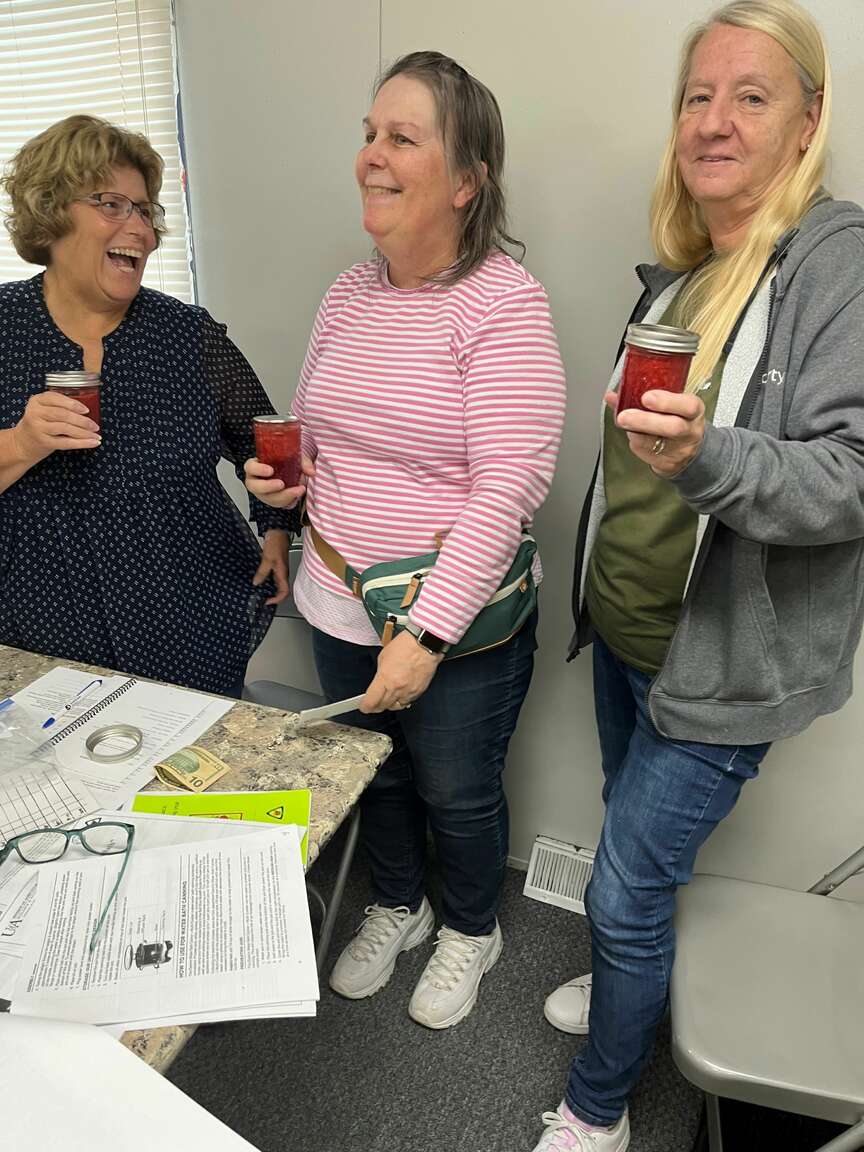
The recent meeting of the Heart-N-Hands Extension Homemakers Club was held at the Pursuit Church in White Hall, according to a news release.
Jody Stout, club president, welcomed everyone. Delores Kelley said that individual cereal packs, oatmeal, and macaroni and cheese are needed for the Backpack Program at Pursuit Church.
Nancy Rosen, community service project chairperson, reported that the committee had met and recommended the club continue to support the Hope of the Delta but to make the backpack project at Pursuit Church the primary community service project. The club voted to accept this recommendation.
Debbie James gave a report on the recent Southeast Arkansas District Fair.
Upcoming events that members can look forward to attending include: Oct. 15 — Jefferson County Extension Homemakers Club Fall Council beginning at 10 a.m. at the Jefferson County Cooperative Extension Office; Oct. 15 — Pecan and Peanut Sale ends; and Oct. 30-Nov. 1 — Arkansas Extension Homemakers Council Craft Retreat at the Ozark Folk Center in Mountain View.
Independent reporting for Pine Bluff & Jefferson County since 1879.
Also, Brenda Hendrix taught a workshop on making pillow cases.
During the Heart-N-Hands program, Tracy Diaz, Terri Penna and Lorie Rosetti presented Jams with Hot Water Bath.
Some safety rules for home canning were discussed by the three presenters:
(1) Hand wash closures in hot, soapy water.
(2) Clean jars prior to use (hand wash or dishwasher).
(3) Inspect jars, lids and bands for cracks, dents or imperfections before use.
(4) Use correct style canner for your stovetop.
(5) Use jar size indicated on the recipe or size down.
(6) Use a two-piece closure designed for home canning.
(7) Use a new lid each time you can.
(8) Reuse bands without signs of imperfections.
(9) Make sure that the boiling-water canning pot is tall enough to cover jars by 1 inch of water.
(10) Sit jars on rack, trivet or tied together bands placed on bottom of canner.
(11) Preheat jars in simmering water (180 degrees F) or hold in hot dishwasher after cleaning until ready for filling.
(12) Place hot jar on a towel or wooden cutting board to fill and after processing.
(13) Fill one preheated jar and place it in a canner before filling the next hot jar.
(14) Measure the headspace accurately following the recipe instructions.
(15) Remove the air bubbles with a plastic or wooden utensil.
(16) Follow the processing time given in the recipe, adjusting for altitude as needed.
(17) Start processing time after the water comes to a rolling boil for boiling-water canning or after a steady stream of steam exhausts for 10 minutes for pressure canning.
(18) Allow the jars to cool in boiling-water canner for 5 minutes after processing before removing.
(19) Place hot jars 1 to 2 inches apart on a towel or wooden cutting board to cool.
(20) Allow jars to cool for at least 12 hours before checking the seal.
(21) Visually determine if the lid is concave, remove the band, then gently press the center of the lid for seal.
(22) Using a clean, damp cloth, wipe the lid, neck and side of jars before storing.
(23) Store the jars in a cool, dry and dark location between 50 degrees and 70 degrees F.
(24) Use freezer-safe tapered jars with no “shoulders” when freezing.
(25) Store jars upright.
(26) Use plastic, wooden, bamboo or silicone utensils with glass jars.