
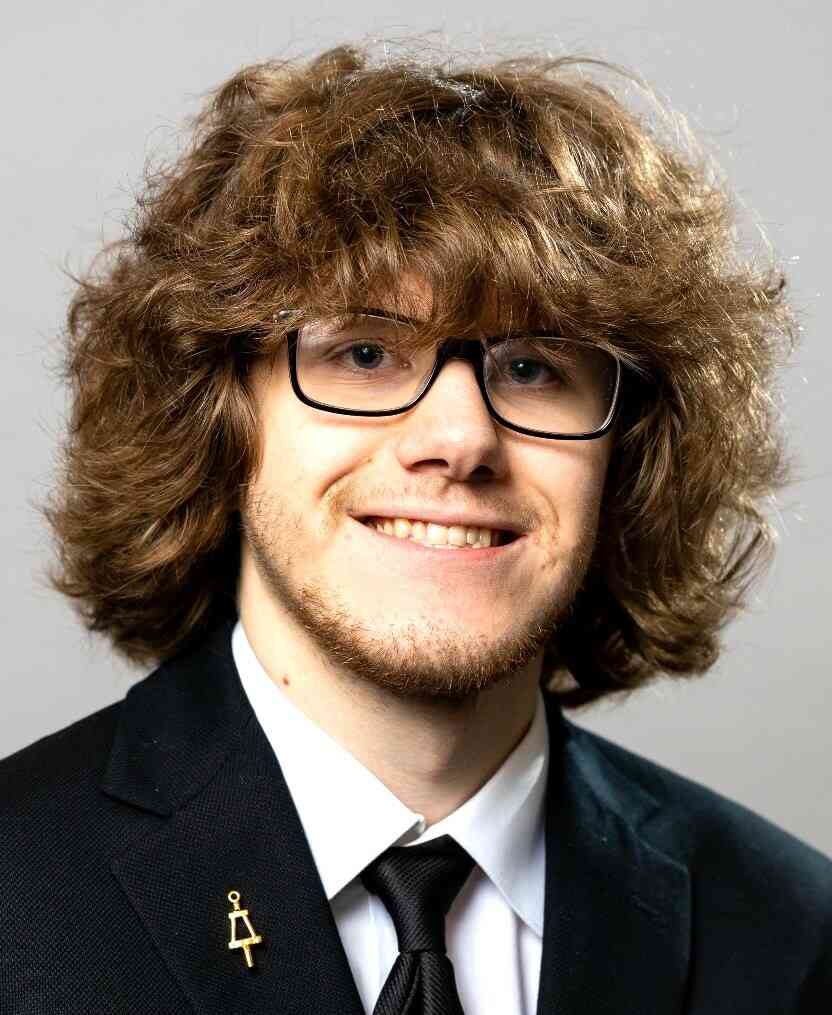
Trevor Dady, a mechanical engineering graduate student from White Hall, is exploring how an aerodynamic phenomenon known as the Coanda effect could improve the design and performance of unmanned aerial vehicles, more commonly known as drones.
Dady’s research project was displayed April 18 at the University of Arkansas at Little Rock’s Student Research and Creative Works Expo.
Set to graduate in December, Dady hopes to launch a career in the aerospace industry. His passion for flight and engineering innovation has shaped a research project that could have far-reaching implications for how drones are designed and used in fields such as package delivery, agriculture and military reconnaissance, according to a news release.
“The Coanda effect is when a fluid jet, like air, attaches to a surface and follows its curve instead of traveling in a straight line,” Dady said. “It’s the same thing you see when water clings to the back of a spoon under a faucet. In aviation, it can be used to increase lift, and I wanted to see how it could improve drone performance.”
Dady’s project investigates how Coanda surfaces-curved structures placed near propellers-can increase the efficiency and thrust production of drones. His research combines computer-based simulations, theoretical modeling and hands-on experimentation using a thrust stand to test different designs.
Independent reporting for Pine Bluff & Jefferson County since 1879.
“My work involved using computational fluid dynamics to simulate how air moves across these surfaces, then validating the data through both analytical models and physical experiments,” Dady said. “The goal is to see whether drones can be made more efficient and powerful by applying these principles.”
The research not only holds promise for the future of drone design but has also helped shape Dady’s own career goals, according to the release.
“This research has further cemented my desire to work in the aerospace industry,” he said. “It’s exciting to contribute to something that could one day improve UAV (unmanned aerial vehicle) technology across so many different sectors.”
Dady’s presentation at the expo will serve as part of his master’s thesis. He plans to expand the research by testing the technology on actual drones in future phases of his project.