
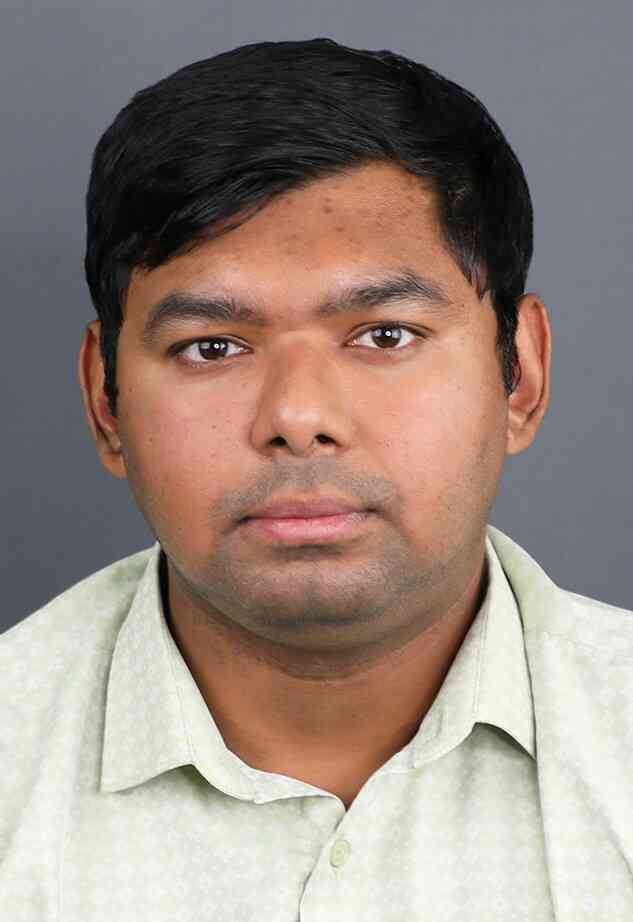
F.M.S. Abdal, a doctoral student of aquaculture and fisheries at the University of Arkansas at Pine Bluff, recently won first place for best student oral presentation at the Society of Wetland Scientists South-Central Chapter meeting in Fayetteville. He will be awarded a $900 prize for his achievement.
“The award itself was a bit of a shocker,” Abdal said. “I mainly wanted to present my findings and get some feedback from professionals. Winning first place was something unexpected.”
Abdal’s research focused on Arkansas’ wetlands, which he says have great economic and ecological value. Wetlands filter pollutants and retain sediment, protecting streams from agricultural runoff; provide habitat for migratory birds, amphibians and fish; support biodiversity; and improve water quality. They also offer recreation and hunting opportunities for local communities.
“Wetlands are the kidneys of the landscape,” he said. “They perform natural water filtration and provide critical habitat for wildlife.”
His research focused on evaluating the Agricultural Conservation Easement Program — Wetland Reserve Easement (ACEP-WRE) initiative that funds wetland restoration on private lands under the U.S. Department of Agriculture’s Natural Resources Conservation Service (NRCS). The project compared the ecological conditions of three types of wetlands: agricultural ditches (degraded wetlands), ACEP-WRE-restored wetlands (Wetland Reserve Easement sites) and reference wetlands (natural, undisturbed sites).
Independent reporting for Pine Bluff & Jefferson County since 1879.
He used the Wetland Rapid Assessment Method to evaluate wetland characteristics such as hydrology, vegetation structure, degree of interspersion and microtopography (presence of hummocks, woody debris, standing dead and amphibian pools).
The study compared how wetland quality changes over time — some sites restored in the 1900s-2010s show measurable progress in recovery. Results suggest that older restored wetlands exhibit better ecological conditions than newer ones but may still take decades to match natural wetlands.
“There is a positive trend showing that these wetlands are improving over time,” Abdal said. “But some may never fully function like natural wetlands because of severe changes to the soil and landscape in the past. Their ecological condition depends on several factors beyond just age.”
Abdal moved to the U.S. in 2023 from his home country of Bangladesh, a nation rich in rivers and fisheries.
“We have a phrase in our language that means, ‘fish and rice make up a Bengali,'” he said. “These are resources of upmost importance to our country and its people. I wanted to be part of the aquaculture sector because it’s a major industry with enormous potential. My in-laws are involved in fish feed production, which also sparked my interest.”
Abdal said his decision to pursue a Ph.D. at UAPB was inspired by the realities of climate change, which he says are clearly visible in Bangladesh through changing weather patterns. He wanted to pursue research that could inform ecological and climate resilience efforts back home.
He credits his direct supervisor Uttam Deb, Ph.D., associate professor of aquaculture and fisheries economics, and Mike Eggleton, Ph.D., professor and his project’s principal investigator, with constant support and encouragement.
Abdal said he also appreciates UAPB for its small class sizes and personalized learning environment. He believes this fosters stronger connections between students and faculty.
“At larger universities, professors may have 120 students per course,” he said. “At UAPB, however, graduate students can have much more interaction with their supervisors and colleagues. There are always opportunities for one-on-one discussions and feedback. That has been really fruitful for me.”
Will Hehemann is an extension specialist of communications for University of Arkansas at Pine Bluff School of Agriculture, Fisheries and Human Sciences.