
Fifty thousand out-of-state hunters visit Arkansas during the annual 60 day duck season. Overall, an average 100,000 Arkansas duck stamps are sold each year. These sales generate better than $1 million in annual conservation revenue for the state.
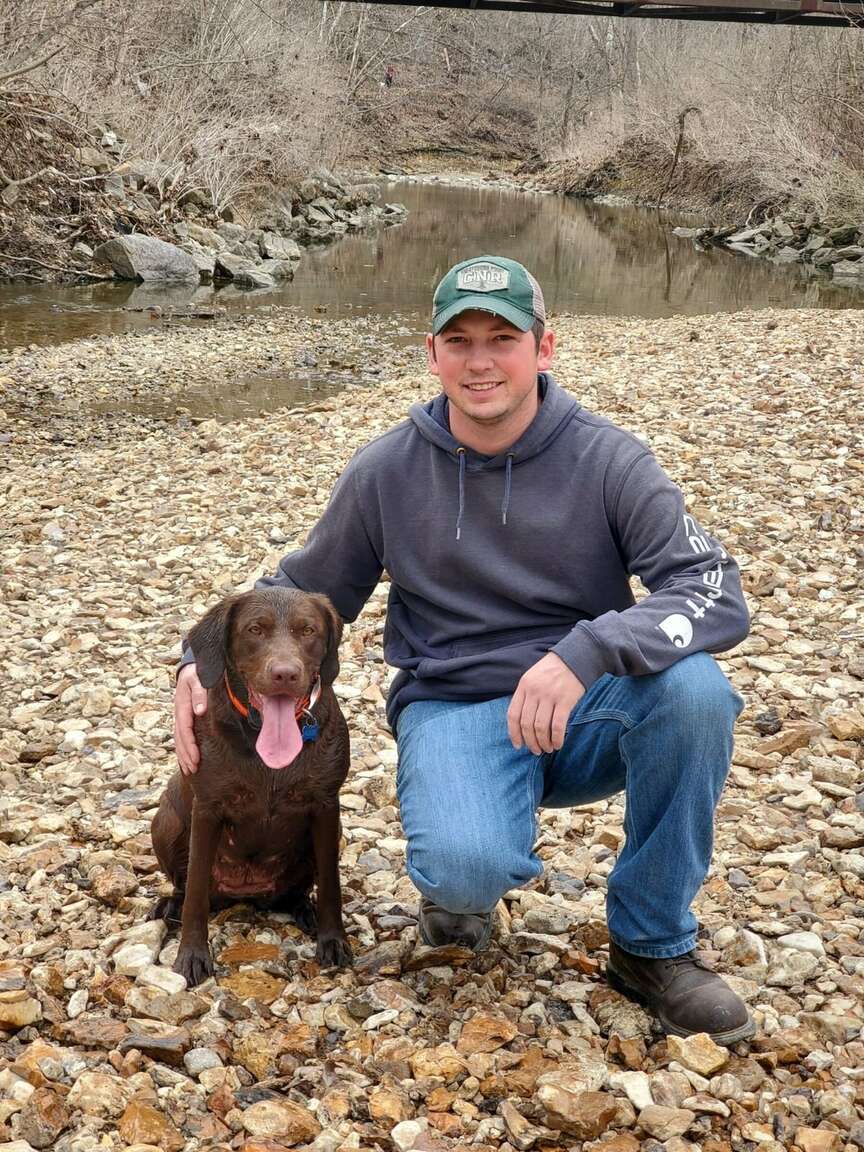
Conserving the resource by overseeing regulation of duck hunting and the associated waterfowl hunting industry is a big responsibility. The head of the Arkansas Game and Fish Commission’s department that controls the popular outdoor activity is Waterfowl Coordinator Brett Leach.
Leach has been with AGFC since January after filling the shoes of former Waterfowl Coordinator Luke Naylor.
After 16 years as head of the waterfowl department, Naylor was promoted to head of AGFC’s Wildlife Management Division. Naylor’s new position places him over all the various wildlife departments including deer, turkey, bear, etc.
Independent reporting for Pine Bluff & Jefferson County since 1879.
The 2023-24 duck season is divided into three splits running from Nov. 18-26, Dec. 9-23 and Dec. 27- Jan. 31. That makes this a hectic time of year for the new Waterfowl Coordinator and his entire staff.
“I grew up near Green Bay, Wis., with a hunting and fishing background. My grandpa inspired me toward conservation,” Leach said. “I attended school at the University of Wisconsin Steven’s Point campus. I worked all over the U.S. from the Dakotas to Minnesota to get all the waterfowl experience I could.”
He explained how he ended up in southwest Louisiana. His work there was placing GPS transmitters on geese and using the gathered data to classify their various habitats.
“I’ve been working on my master’s degree in resource conservation at the University of Missouri. One of our projects was putting telemetry devices on blue wing teal and tracking their migration. That was pretty exciting seeing some of our birds go from Canada all the way to Venezuela and Columbia,” he said.
This year’s duck season is looking pretty bleak so far, Leach said.
“The biggest predictor of birds in Arkansas is water on the landscape and we’re experiencing somewhat of a drought. We’ve seen birds where people have flooded their fields but not a lot of ducks overall. If we get some more rain hopefully we’ll get more ducks. The birds appear to be hanging around north of here. Iowa is pretty much at peak migratory population while Missouri is approaching peak. Mississippi’s numbers are bleak like ours,” he said.
Regarding the forecast for coming weeks, Leach has a prediction.
“According to spring 2023 transect aerial surveys conducted over the Canadian prairie pothole region where ducks hatch, mallard breeding populations are the lowest we’ve seen since 1993.”
Similar aerial surveys in Arkansas indicate the mallard breeding population is down almost 50% in the past five or six years.
On Dec. 11, this season’s first of three AGFC annual aerial duck surveys was completed. This three times per season survey consists of Arkansas Game and Fish Commission biologists flying over three distinct flyway regions of the state, the Mississippi Alluvial Valley (Delta), Arkansas River Valley and southwest Arkansas.
The full report was released Dec. 21. It reads, “Surveys in the Delta estimated 449,860 total ducks, 79,365 of which were mallards (Table 1) and 17,878 ducks in the Arkansas River Valley, including 9,920 mallards. Biologists performing cruise surveys in southwest Arkansas reported an estimated 35,857 ducks with 4,517 mallards (Table 2).
Arctic goose population estimates totaled 622,532 light (lesser snow and Ross’s) geese and 188,402 greater white-fronted geese in the Delta. Biologists noted 4,500 light geese and 1,000 greater white-fronted geese in southwest Arkansas. Total duck population estimates were at an all-time low.”
During the survey, indications of avian flu were spotted in a number of fields. Crews were dispatched to sample the deceased geese and they tested positive for the disease. The good news is the degree of infected geese is far lower than what was regularly witnessed during the 2022-23 season. Hunters say where they saw 40-50 dead or sick blue, snow and Ross’s geese present in every 40-acre field at the start of last season, only five or six are now showing up. Of those, hunters say the vast majority are Ross’s only.
Previous experience indicates that when more water is on the landscape and geese have a broader area to inhabit, the lesser concentration of birds sees a decrease in the spread of infection.
A major duck hunting destination in Jefferson County is Bayou Meto Wildlife Management Area. Due to the long term negative effects of annually flooding the WMA’s green timber reservoir to maximum levels, AGFC developed a plan to counteract the decline in desirable trees and associated duck forage. Rather than flooding the reservoir to maximum depth, AGFC’s Bayou Meto management plan target levels have been decreased over the past two years. Water levels for 2022-23 were aimed at not more than 178.6 and the WMA should see only 178 in 2023-24. This will leave a significant area of acreage above water.
With the lack of significant rainfall, current reports state that water is just getting out of the ditches. There are real time USGS gauges on all Bayou Meto water control structures so hunters can log into river.gauges.com and watch exactly what’s going on from day to day.
Leach commented on AGFC’s Waterfowl Rice Incentive Enhancement (WRICE) Conservation Program.
“It’s one of the coolest programs any agency can offer to the hunting public. It gives people the opportunity to hunt private rice fields during the weekends while allowing those fields to go un-hunted during the week. This gives ducks a place to rest and feed undisturbed for five days and allows hunters great opportunities to enjoy flooded field hunts on the weekends,” Leach said.
The 2023-24 season raised the number of fields participating in the program from 69 to 78, benefiting farmers, ducks and hunters. Participating farmers may still operate and harvest their rice fields as usual, but receive added incentive income by leaving stubble and flooding fields during waterfowl migration and allowing permitted public hunting opportunities. Hunters register online weekly for a minimum $5 fee and are selected by drawing each Sunday for the following weekend. Successful applicants may bring three guests along on the adventure.
“It would be great to see other states offer a similar program of leasing private ground for the public good,” he said.
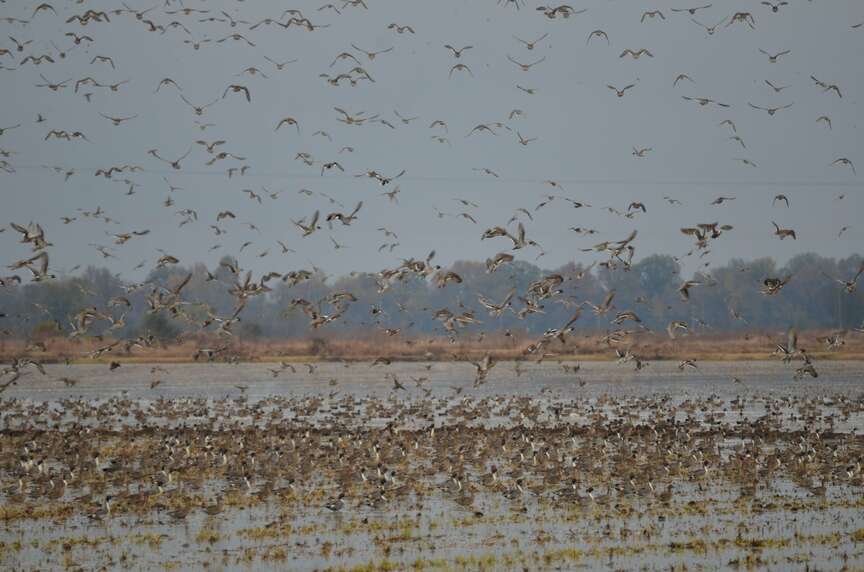 Large numbers of migrating pintails rest and feed undisturbed through the week on Arkansas Game and Fish Commissions Waterfowl Rice Incentive Enhancement fields. These same flooded fields are open to public hunting on weekends through weekly lottery drawings. (Special to The Commercial/Richard Ledbetter)
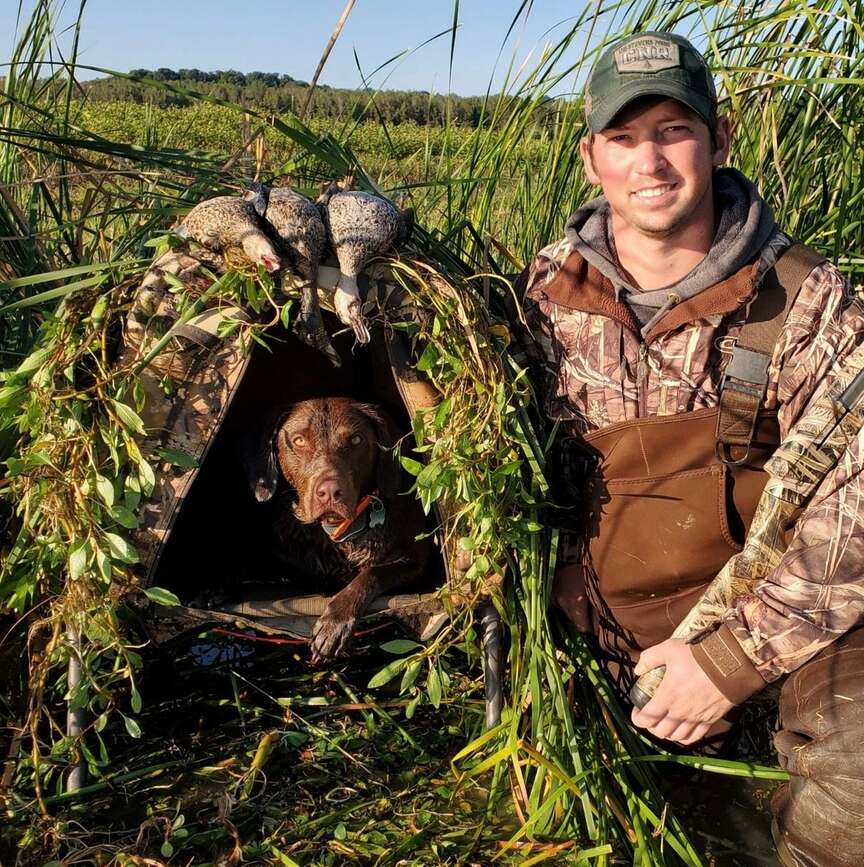 Brett Leach, who has been waterfowl coordinator since January, said this years duck season is looking pretty bleak until more rain occurs. (Special to The Commercial)