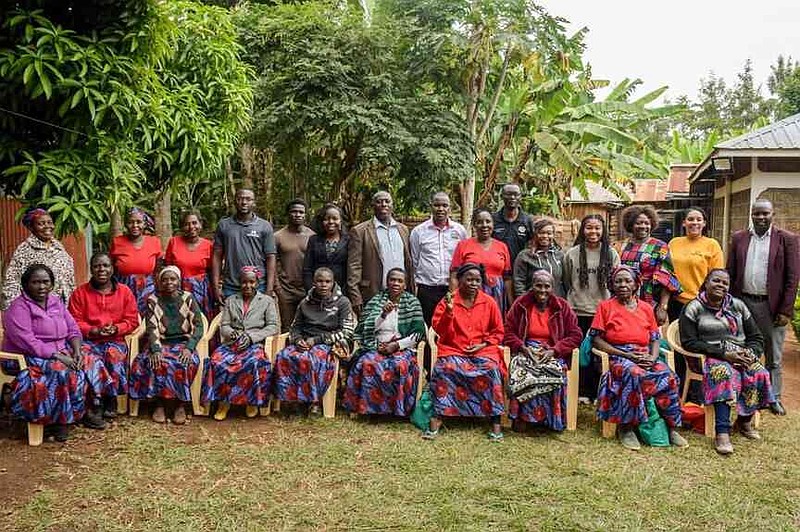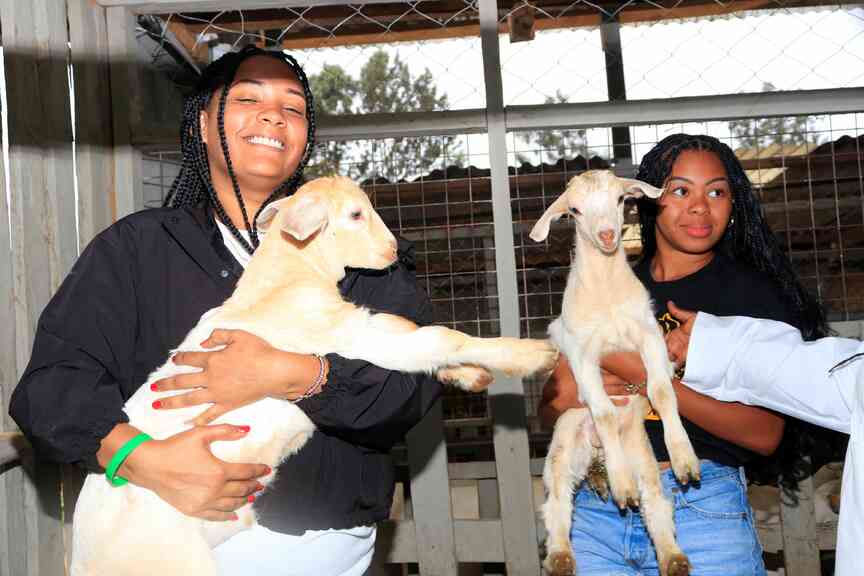
University of Arkansas at Pine Bluff and Southern University and A&M College students recently gained hands-on international experience through the 1890 Student Global Food Security and Defense Fellows Program.
The experiential learning initiative was organized by the Office of International Programs and Studies at UAPB and the Southern University Agricultural Research and Extension Center in Baton Rouge.
Hosted by Chuka University in the East African country of Kenya, the program was supported with funding from the 1890 Center of Excellence in Global Food Security and Defense, which is based at the University of Maryland Eastern Shore, according to Pamela Moore, Ph.D., associate dean for global engagement at UAPB.
This program brought together undergraduate and graduate students and faculty from UAPB, SUAREC and Chuka University to explore global trends and applied agricultural production systems within the East African context, Moore said.
Student participants included Destyne Howard and Sterling Brown of Southern University and Shyia Ellingburg and Zoe McGowan of UAPB. They were accompanied by James Obuya, Ph.D., research assistant professor at SUAREC, and Jane Opiri, Ph.D., associate professor of human sciences, who were faculty program coordinators for Southern University and UAPB, respectively.
Independent reporting for Pine Bluff & Jefferson County since 1879.
“The 1890 Student Global Food Security and Defense Fellows Program in Kenya was designed to move students from learning about food security in theory to engaging it in practice,” Opiri said. “We set out to introduce them to global trends and best practices, ground their understanding in Kenya’s agricultural production systems and strengthen their creativity, time management and cross-cultural collaboration skills.”
A TRANSFORMATIVE EXPERIENCE
UAPB graduate student Zoe McGowan said the trip was nothing short of life-changing.
“This program profoundly shaped my global outlook and reinforced the importance of community-based research,” she said. “Seeing Kenya’s commitment to sustainability and resource optimization made me more aware of how scientific innovation can empower rural economies.”
As a student of aquaculture and fisheries, McGowan said observing small-scale fish farming operations helped her understand the real-world challenges of feed efficiency, disease control and accessibility.
Most of McGowan’s graduate work involves laboratory research as she develops probiotic therapies to reduce disease in largemouth bass. She said her time in Kenya grounded that science in human and environmental contexts.
“In Kenya, agriculture is the heartbeat of the community, and farmers view the land as both a livelihood and a shared responsibility,” she said. “That vision resonated with me because back home, about 41% of Arkansas’ land is dedicated to agriculture, yet cities like Pine Bluff are classified as food deserts. This contrast reminds me that true food security depends not only on production but also on equitable access and sustainable practices.”
McGowan said that planting crops alongside Kenyan farmers was one of the most meaningful parts of her journey.
“Getting my hands in the soil was grounding and transformative,” she said. “It connected the science I do behind the bench with the people and ecosystems that benefit from it.”
She hopes to apply lessons from Kenya to make aquaculture more sustainable and accessible in Arkansas, strengthening local food systems while contributing to global agricultural resilience.
“Kenya showed me that true food security begins with people — those who innovate, adapt and persevere,” McGowan said. “Science is most powerful when it listens to the community it serves.”
SEEING AGRICULTURE THROUGH A NEW LENS
Human sciences undergraduate student Shyia Ellingburg said the experience reshaped her understanding of agriculture, sustainability and community.
“This program’s impact on me is immeasurable,” Ellingburg said. “I now have a deep admiration and respect for Kenya, Kenyans and African cultures. My participation completely transformed how I view farming, sustainability, food and community.”
Before the trip, Ellingburg said her agricultural experience was limited to gardening, classroom lessons and exposure to farming systems in the southern U.S. Witnessing how Kenyan farmers work with the land using traditional knowledge and innovative local methods changed her perspective.
“I realized that agriculture is more than technology or billion-dollar production — it is deeply tied to culture, identity and survival,” she said. “Kenyan farmers’ commitment to environmental sustainability and community-based solutions made me rethink sustainable farming.”
Ellingburg said she was particularly struck by the cultural connections between African agricultural traditions and the practices that have survived among rural Black farmers in the U.S.
“My biggest takeaway was that our agricultural heritage is global and deeply rooted in shared experiences of adaptation and perseverance,” she said. “The most meaningful part of this experience was witnessing how we can truly support others and what help really is.”
She encourages other students to participate in similar programs.
“Studying abroad pushes you outside your comfort zone and helps you see yourself and the world from an unimaginable perspective,” she said. “It is so much more than just traveling. It’s learning how people in other parts of the world genuinely live, work and solve problems.”
GAINING A GLOBAL VIEW OF AGRICULTURE
Southern University program participants say the experience broadened their global outlook and deepened their commitment to sustainable agriculture.
Sterling Brown, an agribusiness major at Southern University, described the summer trip as eye-opening.
“I learned about sustainable farming methods like agroforestry and intercropping, which I hope to apply to my undergraduate research at Southern University,” Brown said.
He said the trip offered valuable insight into how farming families sustain themselves through agricultural enterprises and gave him the chance to experience Kenya’s vibrant culture firsthand.
“I was able to immerse myself in Kenyan culture by learning about Kenyan foods and traditions,” he said.
The exposure strengthened his passion for international agriculture and farmer advocacy.
“I will purposely encourage other students — especially through the Minorities in Agricultural and Natural Resource-Related Sciences (MANRRS) program, in which I am one of the national leaders — to seize the opportunity whenever there is an opening to participate in study abroad programs such as those to the African continent,” Brown said.
For Destyne Howard, a graduate student in urban forestry at Southern University, the trip profoundly changed her understanding of global agriculture, sustainability and cultural interconnectedness.
Through immersive experiences with Kenyan farmers and institutions such as Chuka and Kenyatta universities, Howard observed innovative organic farming practices addressing food security and environmental challenges. These included nitrogen-fixing cover crops, composting with livestock manure and integrated crop-livestock systems that emphasized resourcefulness and resilience.
“The program deepened my appreciation for Kenyan culture, language and community values, enriching my global perspective,” Howard said.
She added that the experience complemented her academic background in plant and soil science and urban forestry, inspiring her to integrate East African agricultural techniques into her graduate research.
Howard said she returned home with a renewed commitment to sustainable agriculture and a determination to apply global lessons locally.
“It is my goal to advance practices that enhance soil health, support local farmers, and ensure long-term food security for future generations,” she said.
CULTURAL EXPERIENCES
At Chuka University, students participated in lectures on Kenya’s agricultural sector, sustainable production systems and global trends. The academic sessions were paired with hands-on learning experiences at various agricultural demonstration sites across the Mt. Kenya region.
Participants visited the Agribina Micheni Farm, the East African Fish Co. and EM Technologies for low-cost bio-solutions. They also toured the Agricultural Innovation and Technology Center in Embu County, where they studied cooperative innovation models based on the Israeli kibbutz framework.
The cultural program included visits to the Ol Pejeta Conservancy, a wildlife sanctuary that integrates conservation and community development, and Makutano Thingira Culture Centre, a rural community that enabled students to participate in various aspects of traditional village life.
“Overall, the students left inspired by Kenyan farmers’ resilience and collaboration,” Obuya said. “They gained practical insights into sustainable agriculture and a deeper appreciation for community-driven solutions. The experience was unique and surreal for the students, since it was their first visit to the African continent.”
Opiri said every morning began with a guided introduction of the day’s event, and each evening concluded with group debriefs and action planning to help participants turn their observations into ideas they could apply back home.
“In my opinion, the impact on students was both technical and transformational,” she said. “They learned to ask deeper questions, moving from ‘What practice did we see?’ to ‘Why does it work here, and how might it transfer?'” She said that the participating students of aquaculture connected feed efficiency and disease control challenges on small-holder farms in Kenya to biosecurity principles studied in one of her classes. More broadly, students recognized that food security involves more than growing food — it encompasses equitable access, education, markets and environmental stewardship.
“This experience will help them effect change because it equipped them with a systems lens and a bias toward action,” she said. “They returned with concrete models such as integrated crop, livestock and fish systems, cooperative input purchasing, composting solutions and community distribution hubs. This knowledge can be adapted to contexts like Pine Bluff, where food deserts persist despite surrounding farmland.”
STRENGTHENING GLOBAL COLLABORATION
According to Chuka University faculty coordinators, professors Geofrey Gathungu and Joseph Njogu, the program is built on a multi-phase research project promoting sustainable agricultural practices among smallholder farmers in Kenya’s Tharaka Nithi County.
“The program was designed to deepen participants’ understanding of global food security trends and applied agricultural production systems in Kenya as an example of the African context,” Gathungu said.
“It provided students with first-hand applied experiences, introduced them to global best practices and exposed them to Kenya’s rich culture and history.”
During the program, students met with Chuka University leaders, including Vice Chancellor Henry Mutembei, who commended the initiative as a valuable platform for mutual learning and agricultural innovation. Upon the program’s conclusion, fellows received certificates of participation during a campus ceremony.
“Our university is committed to fostering strong international collaborations that enhance food security,” Mutembei said. “This fellowship not only enriched students with practical knowledge and global perspectives, but also strengthened our institution’s position as a hub for international collaboration, research and experiential learning.”
GLOBAL VISION FOR LOCAL IMPACT
Opiri said the Kenya program exemplified the 1890 Center of Excellence’s mission to provide transformative experiences that prepare students to tackle global challenges through local action.
“The program turned global exposure into local responsibility,” she said. “Our students are now better prepared to translate evidence into practice, lead with cultural humility and build resilient, equitable food systems at home and abroad.”
She added that the collaboration between UAPB, Southern University and Chuka University has opened doors for future exchanges involving faculty and students, as well as expanded research partnerships in areas such as post-harvest management, technology to foster agriculture resiliency, aquaculture and fisheries production, and soil and water conservation. “This program also helped faculty coordinators and those from Kenyan partner universities to bond, identify areas for future collaboration and map out how to improve this experiential learning opportunity to give our students the experience while traveling abroad,” Obuya said.
He said the experience fits well with one of the objectives of the 1890 Center of Excellence in Global Food Security and Defense — to build the capacity of the future U.S. workforce in agriculture.
For information on study abroad programs, contact Pamela Moore at moorep@uapb.edu.
Will Hehemann is an extension specialist of communications with the University of Arkansas at Pine Bluff School of Agriculture, Fisheries and Human Sciences.