
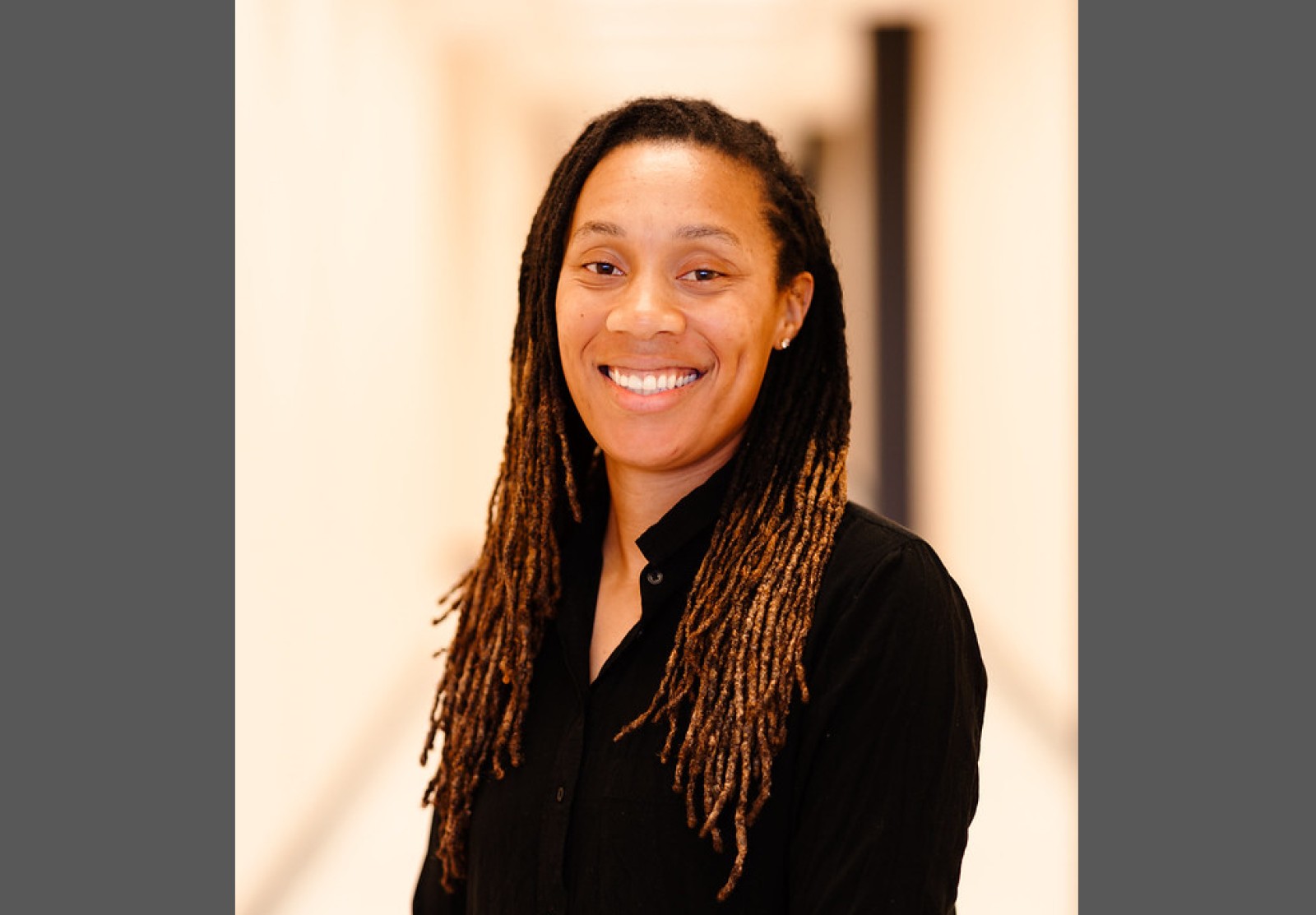
While attending the University of Arkansas at Pine Bluff, Trina L. Fletcher didn’t show much interest in STEM — science, technology, engineering and mathematics — until she learned of the many employment opportunities in the field.
“I looked into it, enrolled in the program, majored in industrial tech and interned every summer,” she said. “Fast forward, I was really motivated by (faculty members) Dr. (Charles) Colen and Anissa Evans, how much they really cared about us and the growth and success of the program.”
Fletcher was one of the first students in UAPB’s STEM program, graduating in 2008 — six years before the STEM building on campus officially opened.
Today, Fletcher is back at her alma mater, serving as associate dean in the School of Arts and Sciences and bearing a Ph.D. in engineering education from Purdue University. She previously received tenure and promotion at the College of Engineering and Computing at Florida International University.
Independent reporting for Pine Bluff & Jefferson County since 1879.
“Her wealth of experience, impressive achievements in research, leadership and national advocacy for equity in STEM education will elevate our institution’s academic excellence and community impact and reinforce our commitment to preparing students for the future,” Interim Dean Grant Wangila said in a news release. “Her dedication aligns perfectly with UAPB’s mission.”
Fletcher centers her research on STEM education and how to get more women involved in the field, as well as the president/chancellor turnover at universities with a focus on those at 1890 land-grant institutions such as UAPB.
“To date I’ve gotten over $1 million around these topics,” Fletcher said. “I’ve been a part of multi-million-dollar consortiums. I’m still a part of one of them around heart disease at Boston University and the University of Michigan.”
While at Florida International, Fletcher was awarded two National Science Foundation RAPID awards to study the impact of covid-19 on expanding participation in engineering. She also was awarded a CAREER grant from the NSF in 2022 and is a steering committee member for EngineerGirl, an initiative by the National Academy of Engineering to increase the number of girls in engineering.
Fletcher also has a grant under review for research on informal STEM education with Harvard University. She’s also working on grants for $500,000 toward leadership in STEM education research and $4 million to $5 million toward studying a STEM workforce transformation center.
Fletcher has also discovered in her ongoing research on campus leadership that presidential turnover is an issue across all institutions.
“What we’re finding, because I’m still working on it, is that in higher ed, it’s really coming out to be one of the most difficult executive jobs to have,” she said. “Being the CEO of a company versus the CEO of a higher-ed institution is getting to be more of a difficult job because higher ed is turning more into a business.”
Schools that may not have as high a research rating as larger or more well-known institutions need to focus on as much research, she said. The Carnegie Classification of Institutions of Higher Education assigns research ratings.
“We have to focus and get as much research dollars as the U of A does,” Fletcher added. “That’s one thing.”
Fletcher said she attained the grant at Florida International because a fellow professor was concerned about what she was seeing at institutions across the nation and asked Fletcher to investigate.
“We’ve seen a number of presidents die of heart attacks, suicide … it’s out there, right?” Fletcher said. “What are we doing to support these leaders?”
The UA System Board of Trustees appointed Anthony Graham as UAPB’s next chancellor, to take effect by July 1. He will officially replace Laurence B. Alexander, who left last summer to take the same role at the University of Michigan Flint.
Alexander served as UAPB’s chancellor for 13 years, more than twice the average tenure of a campus CEO, according to the American Council on Education.
“That was good for us, but where we hurt, regardless of how long he was here, was covid,” Fletcher said. “Covid is another challenge for institutional leaders, trying to bounce back and help students get back engaged and want to be on campus and alleviating social anxiety we know faculty and students are dealing with.”
Having sustainable leadership in place at colleges and universities is important to recognize as higher education becomes more of a business, according to Fletcher.
Fletcher can relate to corporate America, having held management and leadership roles at two Fortune 500 companies, according to UAPB. She also served as director of precollege programs for the National Society of Black Engineers and previously was engineering program director and assistant professor at UAPB.
“Students are different. Times have changed. You’ve got technology and social media, so the way we engage with students is different, so you need institutional leaders who, if they don’t immediately get that, they work under people who do,” she said. “If they don’t, it will make their jobs very more difficult.”