
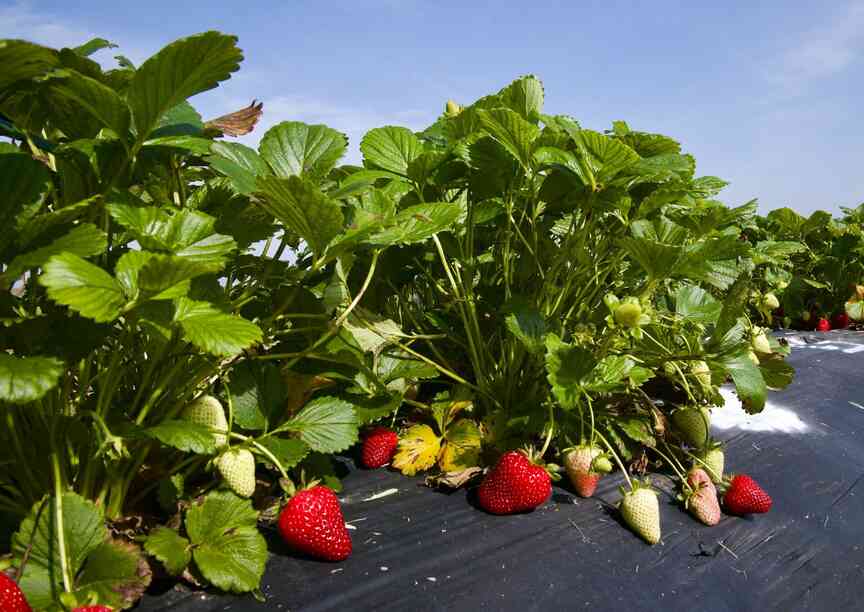
After an emerging disease swept the strawberry industry in 2024, many growers and plant suppliers are looking to new, potentially resistant varieties for the 2025-26 crop.
Neopestalotiopsis, commonly called Neo-P, was first detected in Arkansas in 2020, but became a widespread issue for strawberry production during planting season in 2024 and affected harvest season in the beginning of 2025. Neopestalotiopsis is a genus of plant pathogens belonging to the family Sporocadaceae. While new strains or species of the fungus are highly pathogenic in strawberries, it does not pose a health risk to humans.
“There are still a lot of questions around Neo-P, a lot we don’t understand,” said Aaron Cato, horticulture integrated pest management specialist for the University of Arkansas System Division of Agriculture. “But we have learned that if growers stay vigilant with cultural and chemical control methods, we can drastically reduce the impact.”
One cultural method that has caught traction for this season is the use of potentially resistant varieties. Division of Agriculture horticulture production specialist Amanda McWhirt said the strawberry industry in the Southeast planted more new varieties in the fall than she’s seen in her career.
“We had a lot of new brand new varieties that have not been previously trialed planted across the state this year (2025) in an effort to limit the impact of Neo-P on the strawberry crop,” McWhirt said. “This is really the first time as an industry we’ve planted new varieties at this scale across the state.”
Independent reporting for Pine Bluff & Jefferson County since 1879.
Have no fear, older favorites such as Chandler and Camino Real will still be available. However, many growers have shifted a significant portion of their acres to new, potentially Neo-P resistant varieties.
“We still have some decent plantings of our old favorites, but a lot of growers have planted new varieties on about 40% or more of their acres,” McWhirt said.
The Division of Agriculture extension horticulture team is conducting extensive research on Neo-P control methods and trialing the newer varieties.
“We’ve got plantings of these new varieties at research stations across the state and we will be tracking yield, plant size, fruit quality and performing taste tests,” McWhirt said. “We’ve started comparing plant sizes in mid-December and we’re already seeing differences between the old and new varieties. We will be able to make better recommendations to growers ahead of the 2026-27 season.”
Cato and his pest management team have pushed the importance of a rigorous fungicide spray schedule and vigilance in keeping dead or diseased plants out. Additionally, Cato will be hosting a round table on Neo-P and McWhirt will be hosting a round table on the performance of new varieties, both at the 2026 Mid-South Berry Conference.
“We’ve been very fortunate this planting season in that we’ve seen very little Neo-P compared to last year and I hope it stays that way,” Cato said. “But ultimately we should still treat this year as if the risk is high, as the potential losses far outweigh the costs of additional sprays.”
More information on controlling Neo-P this winter can be found in Cato’s blog post. To learn more about Division of Agriculture research, the division’s website.
Sarah Cato is with the University of Arkansas System Division of Agriculture.