
Soybean basis is bucking the norm at elevators along the lower Mississippi River, while basis in the upper Midwest hits record lows, said Scott Stiles, extension economics program associate for the University of Arkansas System Division of Agriculture.
The Mississippi River at Memphis recently was at minus 7.67 feet, dangerously close to the action level of minus 8 feet. The river was forecast to hit minus 7.9 feet by Sept. 29 and minus-8 by the following week.
Research has noted a link between widening basis and lower Mississippi River levels. Basis is the price difference between the futures price and the cash price of the commodity.
“Oddly, soybean basis has improved over the past few weeks on the Mississippi River,” he said. “This region has been very fortunate to see this given the downtrend in the river depth, increasing barge freight, and lack of Chinese demand.
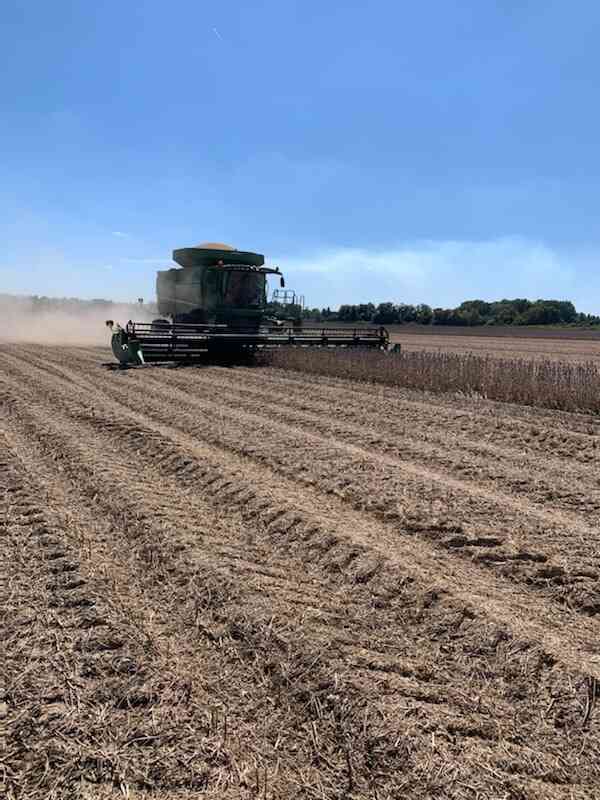
“I’m really surprised to see this,” he said. “Soybean harvest is hitting its stride in the Mid-South. In Monday’s (Sept. 22) Crop Progress from the U.S. Department of Agriculture, Arkansas’ soybean harvest was 35% complete, Mississippi and Louisiana were 56% and 74% harvested, respectively.”
Independent reporting for Pine Bluff & Jefferson County since 1879.
Stiles said “basis on the Mississippi River is finding support from shifts in export demand. Monday’s Grain Inspections from the USDA indicated 87% of soybean shipments last week departed the Mississippi Gulf, with largest volumes headed to Egypt and the U.K.
“Other destinations of size were Bangladesh, Indonesia and Japan, but, above all, nothing was headed to China,” Stiles said. “No soybeans were exported last week off the Pacific ports.”
Looking at trends, at Arkansas City, the soybean basis improved to minus-20 cents the week of Sept. 23, compared to minus 30 cents the previous week or minus 35 cents five weeks ago.
Elsewhere: Pine Bluff was minus-37 cents the week of Sept. 23, minus-48 cents the previous week and minus-72% five weeks ago; West Memphis: Minus-24 cents that week, and minus-34 cents five weeks ago; and Lake Village: Minus-30 cents, and minus-40% five weeks ago.
“Corn basis has been a bit more inconsistent across locations,” Stiles said.
At Arkansas City corn was minus-5 cents the week of Sept. 23 and the previous week, and minus-8 cents five weeks ago; Pine Bluff was minus-7 cents that week, minus-4 cents a week ago and minus-5 cents five weeks ago; and West Memphis was minus-6 cents, minus-7 cents previously and plus-5 cents five weeks ago.
Meanwhile, the picture is grim in the upper Midwest, noting the lack of sales to China, according to a report from North Dakota State University.
“By the end of August, new-crop soybean sales to China stood at zero, marking the first time in modern trade records that no purchases were on the books this late in the season,” the report said. “Lost Chinese demand has not been replaced by other foreign buyers or domestic use.
“Brazil has captured China’s peak-season demand, pushing U.S. shipments out of their traditional window,” the report said. “The lack of export pull has driven North Dakota soybean basis to a record low of minus $1.50/bushel and cash prices below $8.50, far under production costs.
The report also noted that “states dependent on Pacific Northwest rail channels have experienced the sharpest basis declines, while railroads have shifted rates to favor gulf movements, accelerating a structural pivot in grain flows.
“The outlook underscores how absent Chinese demand is reshaping U.S. export flows, widening Northern Plains basis, and eroding farm-gate returns,” the report said.
USDA FORECAST
Working in the background are changes reported by USDA on Sept. 12. Corn production is now forecast to hit a record 16.8 billion bushels, but the United States average yield was reduced 2.1 bushels to 186.7 bushels per acre. Ending stocks were lowered by 7 million bushels to 2.11 billion, up 59% from last year’s 1.325 billion bushels.
As for soybeans, USDA was forecasting a 9-million-bushel increase in production. Ending stocks are projected at 300 million bushels, up 10 million from last month on a softer outlook for exports. USDA projects new crop soybean exports to slip to 1.69 billion bushels, the lowest since 2019.
To learn about extension programs in Arkansas, contact your local Cooperative Extension Service agent or visit www.uaex.uada.edu.
Mary Hightower is with the University of Arkansas System Division of Agriculture.