The increased prevalence of Medicaid, a government-funded health insurance program for low-income individuals and families, has led to an alarming increase in the threat of fraud.
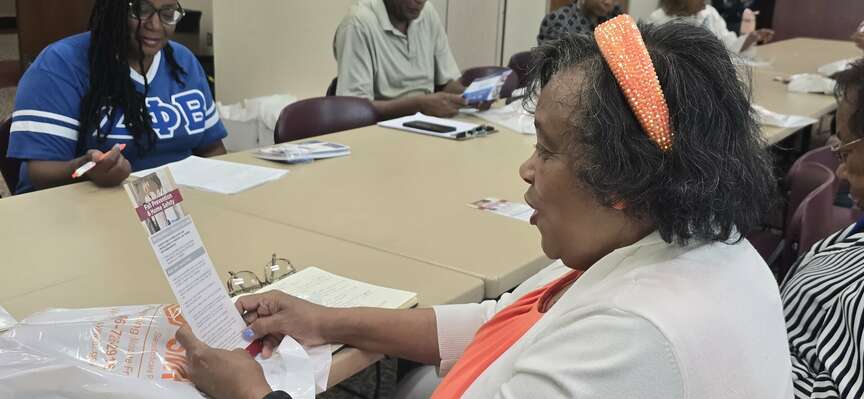
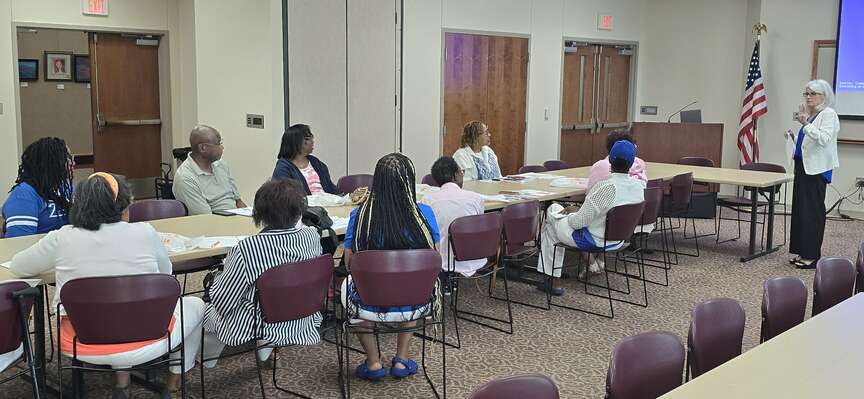
In an effort to combat this issue, the Epsilon Zeta Zeta Chapter of Zeta Phi Beta Sorority Inc., along with sorority member and care coordinator Jacqueline Gilbert, hosted their Second Annual Jamboree on Friday at the Donald W. Reynolds Community Services Center. The primary objective of the event was to disseminate vital information to senior citizens, who have become increasingly targeted by these fraudulent schemes.
“The purpose of the Senior Jamboree is to improve the life and lifestyle of seniors in the community,” she said. “It is important because there is a lot of misinformation or no information about Medicaid fraud. This is a way that we can provide the community with appropriate information and resources.”
During a meeting with a small group of senior citizens, Kathleen Pursell, a prominent spokesperson for Senior Medicare Patrol, addressed the topic of safeguarding against fraud and provided valuable insights.
“When you turn 65 and you get on Medicare and that’s when the phone calls begin,” she said. “Ninety billion dollars is lost annually to fraud, waste and abuse. Criminals make a lot of money from healthcare fraud.”
Independent reporting for Pine Bluff & Jefferson County since 1879.
Medicaid fraud occurs when individuals or entities intentionally deceive the Medicaid program to obtain unauthorized payments or benefits. It can manifest in various forms, such as:
Billing for services not rendered: Providers submit claims for treatments or procedures that were never actually performed.
Billing for unnecessary services: Providers perform or recommend services that are not medically necessary, often driven by financial incentives rather than patient needs.
Upcoding: Providers bill for a more expensive service than the one actually provided.
Kickbacks: Providers receive illegal payments or gifts in exchange for referrals or prescriptions.
Patient fraud: Beneficiaries misuse their Medicaid benefits, such as sharing their ID cards with others or selling prescription drugs.
“Doctors, hospitals, clinics, insurance reps, medical suppliers and pharmacists … they have access to your records,” explained Pursell, who said most of the callers are cold calling and not following marketing guidelines. “They get bribes, they get kickbacks, they get payments for services they haven’t done.”
This fraud not only squanders taxpayer money but also jeopardizes patient care and erodes public faith in the system. According to Pursell, the U.S. Department of Health and Human Services’ SMP (Senior Medicare Patrol) program aims to empower seniors through education.
“We want you to call and report the smallest charges. I don’t care how small they are,” she said.
Steps to detect possible fraud, errors and abuse:
Review your Medicare statements for mistakes by comparing them to your personal records.
Look for three things on your Medicare statement: Charges for something you didn’t get; billing for the same services and supplies twice; and services ordered by your doctor.
Pursell stressed the importance of reporting all suspected fraud suspensions. Furthermore, individuals who receive suspicious calls are asked to refrain from providing personal information. Prompt reporting of such calls is crucial, Pursell advises.
In March, Arkansas Attorney General Tim Griffin issued a statement highlighting the accomplishments of his office’s Medicaid Fraud Control Unit (MFCU). According to the U.S. Department of Health and Human Services (HHS) Office of Inspector General’s Medicaid Fraud Control Units Fiscal Year 2023 Annual Report, the MFCU achieved a No. 4 ranking for abuse and neglect convictions.
“This recently published report shows that Arkansas ranked fourth in the country in total convictions for abuse and neglect, which are crimes perpetrated most often against elderly and disabled victims,” he said. “My office investigated and prosecuted 13 cases that led to convictions in Federal Fiscal Year 2023, outranking much larger states like California and New York, both of which have more than 10 times the number of staff as Arkansas.”
The Fiscal Year 2023 report covered the period from October 2022 to September 2023. The task of the unit is to combat Medicaid fraud by investigating and prosecuting violations of state and federal laws involving Medicaid providers and to address abuse or neglect toward residents of long-term care facilities.
Government agencies, law enforcement and healthcare organizations are working together to combat Medicaid fraud through various initiatives. These include:
Increased audits and investigations: Scrutinizing billing patterns and claims data to identify suspicious activity.
Data analytics: Utilizing advanced data analysis tools to detect fraud patterns and anomalies.
Whistleblower programs: Encouraging individuals to report fraud and offering protection and rewards for doing so.
Enhanced provider screening: Implementing stricter background checks and credentialing processes for Medicaid providers.
Collaboration: Fostering partnerships between government agencies, law enforcement and healthcare providers to share information and coordinate efforts to prevent and detect fraud.
Attendees were appreciative of the information provided during the Jamboree. Other topics for the seniors included therapeutic solutions, exercise, home safety and fall prevention.
If an Arkansan suspects Medicaid fraud or the abuse and neglect of a long-term care facility resident, they can file a complaint by visiting https://arkansasag.gov/resources/contact-us/medicaid-fraud-reporting/ or by calling (800) 482-8982. All complaints are confidential.
Arkansas Senior Medicare Patrol can be reached at (866) 726-2916.