
The application period has opened for farmers seeking relief through the Emergency Commodity Assistance Program.
The program was passed to help farmers mitigate the effects of higher input costs and falling commodity prices. The Farm Service Agency of the U.S. Department of Agriculture will issue up to $10 billion in direct payments to eligible producers of eligible commodities.
Hunter Biram, extension economist for the University of Arkansas System Division of Agriculture, said the per-acre payment rate is based on national economic data on costs and returns from USDA. Farm-specific total payments are based on the sum of all planted acres and 50% of failed acres — measured by those prevented from planting as determined by the Farm Service Agency. A farmer will receive the full payment if he or she owns or cash rents the land on which the payment is based. A farmer under a crop share rental agreement will receive a payment based on their share of the crop share agreement.
Per-acre payment rates are:
Corn, $42.91;
Independent reporting for Pine Bluff & Jefferson County since 1879.
Cotton, $84.74;
Peanuts, $75.51;
Rice, $76.94;
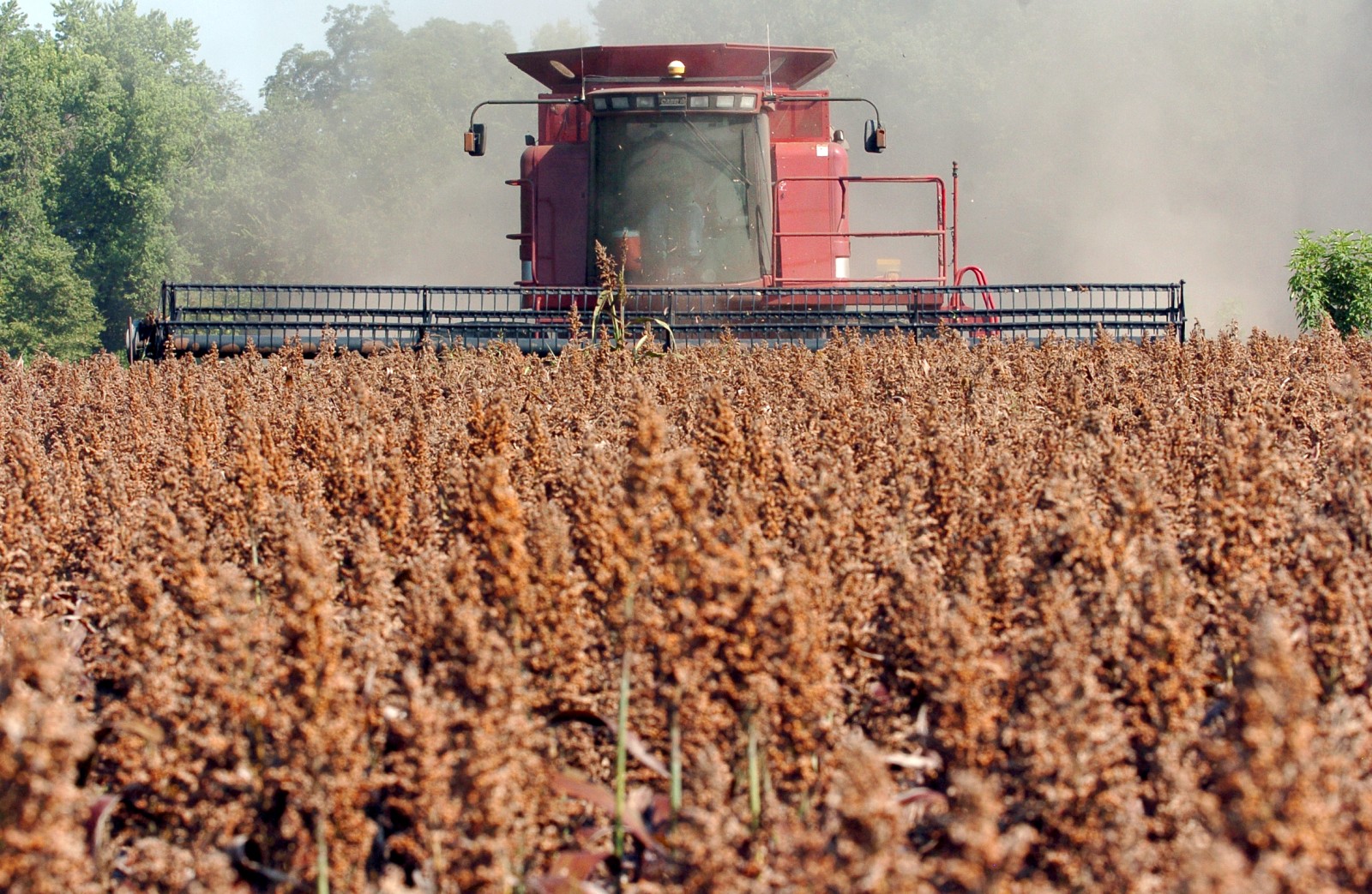
Sorghum, $42.52;
Soybeans, $29.76;
Wheat, $30.69.
“Importantly, a farmer will not get the full payment initially,” Biram said. “ECAP payments will be pro-rated by 85 percent to ensure that payments do not exceed the available funding. FSA may issue further payments if additional funding remains available after the initial payments are issued.”
Payments may not exceed $125,000 per person or legal entity if less than 75% of the average gross farm income of the person or legal entity for the 2020-2022 tax years is derived from farming, ranching or silviculture activities. The payment limit increases to $250,000 if more than 75% of the average gross farm income is derived from farming, ranching or silviculture activities.
Biram said these payment limitations are separate from the payment limitations which apply to other programs, such as Agriculture Risk Coverage or Price Loss Coverage.
“FSA notes that the payment limit determination is based on ‘gross income’ defined by the IRS rather than ‘average adjusted gross income’ as typically used, to reduce confusion for producers, accountants, and attorneys,” he said.
Biram, working with three other economists, produced an analysis for the Rural and Farm Finance Policy Analysis Center of expected payments to come from the American Relief Act. They estimated Arkansas farmers would receive about $286 million.
“The estimates we determined with the Rural and Farm Finance Policy Analysis Center are nearly the same as those stated in the Notice of Funding Availability with the cotton and peanut payment rates coming in around $3 and $1 below the estimate, respectively,” Biram said.
FORMS REQUIRED
Acreage amounts will come straight from a producer’s FSA-578 Report of Acreage Form. If a producer has not previously filed an FSA-578 form, the producer has until Aug. 15, 2025, to do so.
Producers filing an FSA-578 for the first time must have the following forms on file with FSA: AD-2047, CCC-901, CCC-902, CCC-943, AD-1026, and SF-2881. Acreage prevented from planting must be reported on the CCC-576 even if the deadlines applicable to other FSA programs have passed.
For more information, visit USDA.gov.
Mary Hightower is with the University of Arkansas System Division of Agriculture.