
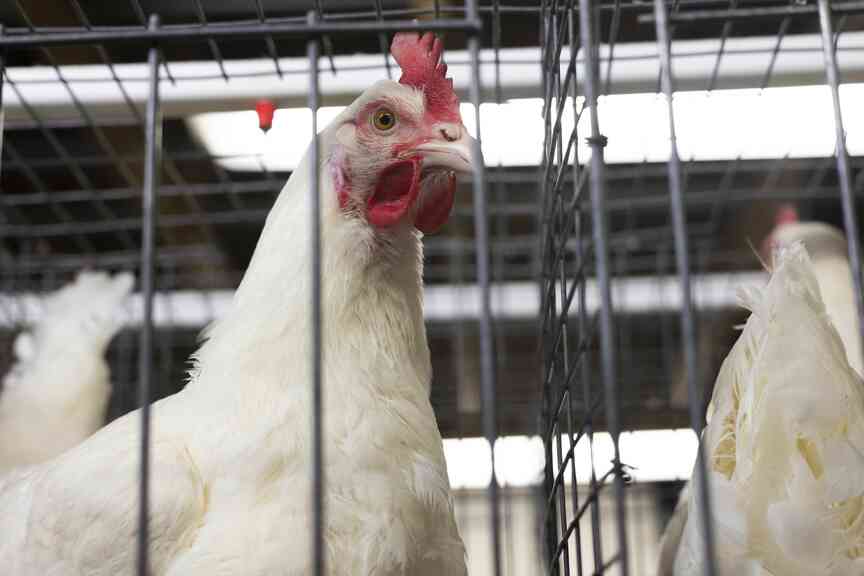
Bird flu has been found in two more flocks, said Dustan Clark, extension poultry veterinarian for the University of Arkansas System Division of Agriculture, in a Dec. 23 news release from the University of Arkansas System Division of Agriculture.
“As of this morning, highly pathogenic avian influenza has been confirmed in a commercial broiler farm in Drew County and one backyard flock in White County,” he said. “The flocks are being depopulated and epidemiological tracebacks are in progress.
“It’s likely the White County flock was infected by exposure to wildfowl,” he said.
Wildfowl migration is at its peak along the Mississippi Flyway.
On Dec. 19, bird flu as confirmed in a commercial flock in Cleveland County. The Animal and Plant Health Inspection Service, or APHIS, said there were 71 confirmed infected flocks nationwide in the last 30 days. Twenty-four were commercial and 47 were backyard flocks. The count did not include the White or Drew county instances.
Independent reporting for Pine Bluff & Jefferson County since 1879.
Clark said public reports of dead and dying wildfowl are increasing.
“If you see any dead wildfowl, do not touch it,” he said. “Do report it to the state agriculture department or state wildlife officials.”
The public is encouraged to report sick or dead wildfowl to:
Arkansas Game and Fish Commission Wildlife Health Program to report concentrations of sick or dead birds;
USDA Wildlife Services: (866) 487-3297;
USDA hotline to report illness in personally owned poultry flocks: (866) 487-3297;
Arkansas Department of Agriculture Poultry Disease Hotline to report suspected sick birds: (501) 823-1746;
Arkansas state veterinarian if you encounter sick waterfowl near a poultry operation: (501) 297-2250.
Clark said a series of in-person seminars for backyard flock owners will be conducted in various counties and online webinars for commercial growers and hobby owners will start after the first of January.
Taking appropriate biosecurity measures are the best defense for backyard or commercial flocks. For details, visit the Cooperative Extension Service biosecurity page at https://www.uaex.uada.edu/farm-ranch/biosecurity/default.aspx.
To learn more about extension programs in Arkansas, contact your local Cooperative Extension Service agent or visit www.uaex.uada.edu.