
The future of major development projects in Pine Bluff has been thrown into jeopardy as the city’s Urban Renewal Agency (PBURA) asserts that Mayor Vivian Flowers is breaking promises when it comes to allocations for certain projects.
In previous PBURA board meeting audio recordings obtained by The Pine Bluff Commercial from October through December 2025, PBURA contends Flowers’ actions violate a prior commitment, strain contractual obligations and put the city at risk of lawsuits. The agency also prioritizes the immediate completion of projects like the go-kart track over the new administration’s budgetary decisions.
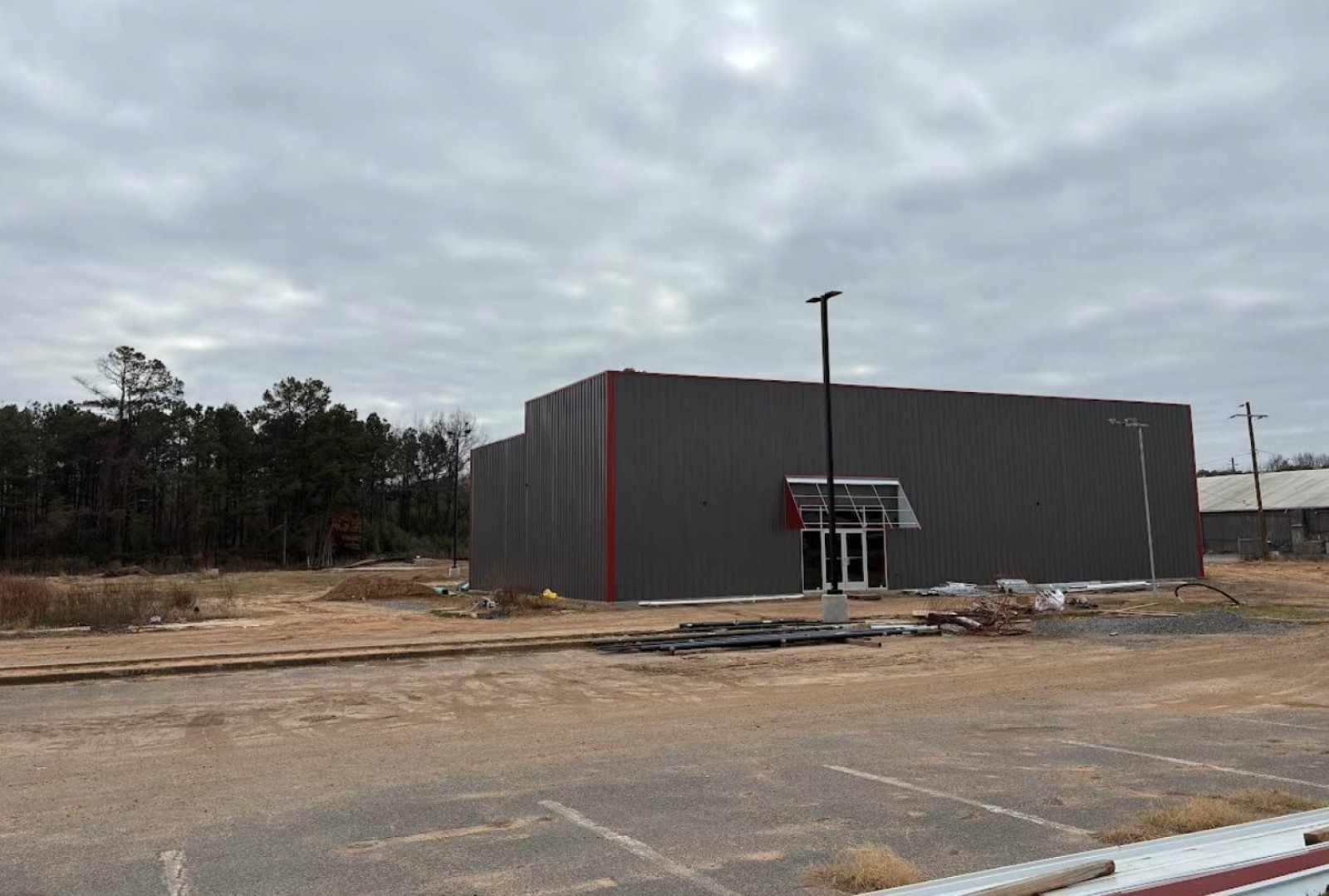
The go-kart project is now described as being “in a dilemma” due to the financial shortfall.
The core issue revolves around $860,000 from the 2017 Sales Tax that was originally earmarked exclusively for “all construction” costs related to the track, approved by the City Council in December 2024.
Independent reporting for Pine Bluff & Jefferson County since 1879.
According to October’s PBURA meeting, the money was never transferred, and according to PBURA Executive Director Chandra Griffin, the new administration now considers the allocation expired.
“To me, the city wrote us a hot check because it didn’t happen,” stated Griffin during the October meeting, noting that all other departments received their allocations from the same meeting. She highlighted the immediate financial crisis for the go-kart track. “We have a balance of $14,757.21. So if I get a construction bill, which is usually at least $100,000, I won’t be able to pay it,” she said.
“I sent an email in August to say, hey, we need monies to be moved over from that ($860,000) allocation… I will not be able to pay a construction bill,” continued Griffin.
Board members expressed disappointment and distrust over the city’s failure to honor the previous council’s vote, especially after the agency incurred debt based on the allocation.
A board member on the audio emphasized the city’s exposure.
“We incurred obligations, contractual obligations based on their vote, based on what they told us to do,” said the board member who could not be identified. “We are committed to these contracts. I mean, the city’s gonna get sued.”
Another speaker, whose identity could not be verified, questioned the long-term impact on the city’s credibility.
“And nobody will ever trust us,” said the speaker.
To press the issue, the board moved to formally demand the release of the promised funds. A motion was passed to send a certified letter to the mayor and copy the entire city council, “requesting our $860,000 that was approved last year.”
During November’s City Council meeting, the Pine Bluff City Council passed a resolution to allocate the remaining balance of the 2017 5/8-cent sales and use tax, dedicating the approximately $860,000 in funds to finalize the local go-kart project and support operations at Simmons Bank Park.
The new resolution outlines a three-part plan for the remaining revenue:
Up to $200,000 is allocated toward the construction costs of the go-kart project.
Up to $200,000 is designated for furnishings, fixtures and equipment.
The remaining balance of the revenue will be used for operational expenses for Simmons Bank Park and the go-kart track.
The city specified that it will not transfer funds but will instead directly pay invoices identified under these allocations.
Griffin later confirmed with The Commercial that the allocated funds were intended to be the foundational public investment, which would then trigger the commitment of private funding.
“The way it’s done now, we’ve got a problem,” she stated in a follow-up interview. “The entire 860 is not being spent on construction,” she said, explaining that this failure to use the public money as intended prevents the secondary private funding from activating.
The PBURA also relies on public money being spent first before private funding, which includes $1.2 million for the go-kart track that is committed. Griffin explained the importance of this order.
“I do know that in the past we’ve used the public funds first. The private side wants to have the confidence that the money is there before they put their money in,” she said.
According to the audio, it was discussed that the new administration also raised the prospect of using the project’s private funding — an estimated $1.2 million — first. According to the discussion from the board members, including PBURA Chair Jimmy Dill and Go Forward Pine Bluff CEO Ryan Watley, there was a concern that the city would not be able to come up with the money if the private side puts in all its money first and then more money is needed.
A board member pushed back on this idea, explaining the long-established precedent in public-private partnerships: “The private does not want to put their money in until they make sure the city is putting the money in that they have agreed to put in, then the private kicks in.”
The board concluded that the city is under a contractual obligation for the go-kart track work and must eventually pay. A board member noted the potential consequences of not honoring the commitment: “They will, no doubt, face litigation.”
The audio also referenced a private meeting held between Flowers and Council Member Glen Brown Jr. with Dill, suggesting a multi-step plan by Flowers that would abolish the existing Urban Renewal Commission and introduce a new, tax-backed framework under a different name.
The proposal, revealed in the discussions, aimed to streamline development efforts, address current financial and legislative hurdles and shed the “negativity” associated with the Urban Renewal name.
All functions and assets would be transferred to a land bank and placed under the city’s Community Development Department. This aspect of the plan, however, faces a significant legal hurdle, as noted during the discussion, as previous attempts to establish a land bank have found “no enabling legislation in Arkansas.”
During the December City Council meeting, the Revitalization and Land Bank director position in the Economic and Community Development Department resolution was pulled from the agenda. The position was being created in response to the legislation to completely abolish the Urban Renewal Agency.
According to the resolution, the director’s primary duty would be to assume the responsibilities of the defunct agency and to oversee the anticipated land bank program. The person in this role would manage and complete outstanding urban renewal projects, coordinate revitalization initiatives and assist in establishing the future land bank program.
The director would also serve as the general manager for Simmons Bank Park. The position’s annual salary for the city revitalization and land bank director would be $66,800.
During a budget meeting a few days later, Griffin raised a question regarding the transfer of the $860,000 construction allocation. Flowers responded by discussing the agency’s restructuring efforts, which were intended to locate existing reserve funds and resolve issues with a “problematic” operational budget.
The meeting focused on the immediate need for funds to pay outstanding contractor invoices for the track, a project requiring $1.4 million for completion, with $1.2 million expected to be provided by a private partner.
Griffin confirmed that construction is stalled, with a general contractor on site threatening to walk off the job due to a lack of payment. The agency currently has two outstanding invoices totaling approximately $332,487.
The agency was unable to pay outstanding invoices for construction, and the general contractor on site threatened to “pull off the site” due to nonpayment, according to Griffin.
According to Flowers, during that budget meeting, a plan was presented that included a compromise with Dill to dissolve the Urban Renewal Agency on Dec. 31 and move the director’s position to Economic Development. This restructuring is projected to save the city more than $100,000 annually by eliminating line-item expenses for things like sanitation, building maintenance and telephone contracts.
Griffin would continue to manage Simmons Bank Park, assist the city with a nonprofit and start a land bank. The compromise with Dill was to wait to dissolve the agency until the go-kart track project is complete and to successfully formulate the funds — the $860,000 and the $1.2 million private commitment — to cover the remaining construction and operation costs.
The dissolution would have taken effect on Dec. 31. However, this date was conditional, as Flowers noted they were waiting to finalize how the funding would be formulated to ensure construction completion and ongoing operation.
Furthermore, Flowers questioned the agency’s financial management after an inquiry revealed that the agency’s bank account holds an untapped reserve of $789,746, despite the low balance in the construction line item.
The amount of money reported as being in the Urban Renewal Agency’s bank account, based on access by Gina Devers, Pine Bluff’s finance director, was $789,746.
The reason this money was not being used for the outstanding invoices is that it was being held in a reserve account or fund, and not in the specific line item designated for the construction project.
According to Flowers, the construction line item had a critically low balance of around $14,000. She suggested that a resolution would be required to transfer the money out of the reserve fund and into the proper line item before it could be spent to pay the outstanding invoices.
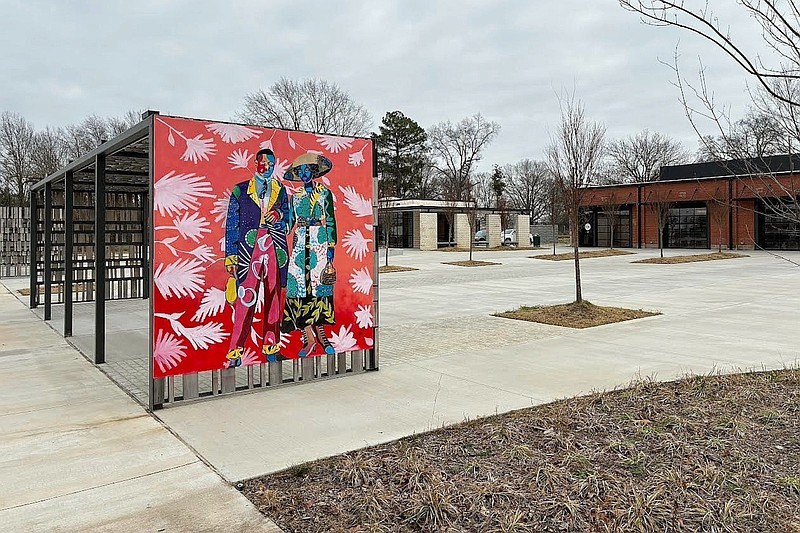
Flowers also highlighted the problematic operational budget for Simmons Bank Park (“Sixth and Main”), which is budgeted for $301,000 per year but currently generates only about $4,500 per month in revenue (approximately $54,000 annually). The proposed dissolution and transfer of the director position is intended to mitigate this operational deficit.
Griffin explicitly stated that the meeting was the first time she’d heard of a remaining balance in the bank account and indicated she was unaware of the amount of cash the agency currently held. Her board members also questioned where the reserves came from, according to the audio from October’s meeting.
Ultimately, the committee chair stated that given the confusion and conflicting information, more discussions are needed before moving forward. The meeting concluded with no immediate resolution to pay the outstanding contractor invoices.
On the audio recordings from October’s PBURA meeting, Flowers’ plan to pass a local tax to secure long-term funding for the new development efforts was mentioned. However, those involved in the discussion noted that any revenue realized from such a tax would not begin to flow until the middle of next year.
The controversial ordinance to place a new one-cent sales and use tax on the ballot for 10 years failed before the Pine Bluff City Council recently, with a majority of council members voting against allowing the public a chance to decide the measure.
After the measure’s defeat, Flowers said she would not bring the issue back to the council, vowing instead to “take it to the people” by gathering signatures for the measure to appear on the November election ballot.
Flowers presented her case for the tax, citing an impending financial crisis and the city’s inability to compete with neighboring communities.
She warned that without new revenue, the city is currently operating “$2 million in the red” in revenue compared to spending, even with carryover funds. She cautioned that next year’s budget process would involve “cuts in services, cuts in jobs.”
The council discussed a separate ordinance during that meeting that proposed to dissolve the Pine Bluff Urban Renewal Agency. The ordinance was ultimately pulled from the agenda.
The ordinance was pulled because Flowers, Brown and Dill were actively working on a compromise.
According to Flowers, Dill requested a one-year extension of the agency’s life to Dec. 31, 2026, instead of immediate abolishment. The goal is to allow the agency time to complete the remaining construction on both projects and transfer ownership of Simmons Bank Park to the city, a condition of the agreement with Simmons Bank, which contributed $2 million for the facility.
According to the audio from PBURA’s October meeting, the concept of urban renewal would be brought back, but with a new designation, with the explicit goal to “call it something else to get away from the negativity associated with the name.” The audio referenced this information being mentioned by Flowers during her private meeting.
According to the audio, upcoming projects discussed with Flowers would need the Urban Renewal Agency to remain operational, specifically until the end of 2026.
These potential projects were vaguely categorized as “construction projects, housing projects, or whatever may be coming on Sixth.”
Dill said the request to keep the URA open until the end of 2026 was explicitly conditioned upon the mayor’s engaging in discussion with Watley about the Sixth Street projects.
Based on the audio from PBURA’s meeting, Flowers made the following specific proposals and plans regarding the Urban Renewal Agency’s operations, staffing and legal counsel.
Flowers requested that the PBURA transfer its ownership and interest in the Magnolia building and the Simmons Bank property, and downtown buildings, to the city.
Griffin would be moved to community development, where her office would be either in City Hall or the UAPB incubator.
It was also discussed that the mayor’s office proposed that the URA’s legal expense budget line item would be eliminated, with the responsibility for legal matters now belonging to the city attorney.
“To me. That leaves a bad taste in my mouth as far as being trusting of what’s being said,” said a board member on the audio. “I think that in doing it this way shows how this administration does not have the best interests of the city in my eyes, because they’re not honoring the decision that was made.”
However, as of Tuesday, Griffin said funds were transferred by the city’s financial director from a reserve amount and were used to immediately process two outstanding invoices totaling approximately $400,000.
While the immediate financial crisis was averted, the project’s overall funding remains uncertain to Griffin. According to Griffin, project stakeholders are grappling with a requirement that “public funding needs to come in first before the private funding,” yet there is no clarity on the amount or timeline for the remaining public dollars.
In a follow-up with Flowers, she pushed back against PBURA, asserting that the agency possesses ample reserve funds to cover project construction costs.
Flowers confirmed that the city has not yet transferred an anticipated $860,000, money she says was previously allocated for urban renewal but not under her administration’s 2025 budget. She explained that the city’s reluctance to move the money was due, in part, to discovering the substantial amount of unspent public money in the agency’s accounts.
“It’s in a different account,” Flowers stated, detailing how the reserve was found. “And then when my finance director looked up how much money they had, she started going down the different funds and looked because see, we can go, we can access the account, they can’t. So she looked directly into their bank account, and that showed the total, and when she said the total, I was like, wait what?”
Flowers revealed that the Urban Renewal Agency has approximately $790,000 in reserve — money the city did not put there. “Any money that goes into reserve is placed there by the board, so the city didn’t put money in reserve. They made a decision at some point to put money in reserve,” she said.
She explained that with the existing reserve, additional city funds and $1.2 million secured by Go Forward for the project’s completion, the agency is well-funded.
“If you’ve got $1.2 million and you’ve got $790,000 almost and an additional $60,000 seems to me you have plenty of money to complete construction,” Flowers said.
During December’s budget meeting, Flowers said the city could give an additional $60,000 to fulfill the total to complete the project.
Flowers directly addressed the board’s reported position that the city must fulfill its funding promise before the private sector contributes its $1.2 million. When asked if there was an official Memorandum of Understanding to that effect, Flowers was adamant:
“Absolutely not. When I met with Chairman Dill, I talked about that. I said, ‘That is exactly why I’m not moving it,'” she said.
She clarified that the previous action taken by the council was merely a 2024 budget amendment to pay expenses, not a formal agreement outlining a sequencing of public-private funding.
She underscored the public nature of the Urban Renewal Agency.
“Urban renewal is a public agency, and they have taken the responsibility to manage and spend public money; there’s no private money that goes to urban renewal,” she said. “All of it is the people’s money… and we just have to spend it right.”
Flowers also took the opportunity to reiterate the purpose of a proposed economic development tax, which she says is being misrepresented as a funding source for project operations.
“The purpose of the tax is not to pay for operations for these projects. The purpose of the tax is to strengthen our economy and grow jobs,” she said, listing other goals, including addressing deferred maintenance, fixing the port and creating youth programs.
Flowers connected the funding issue back to the city’s overall financial health, noting that the budget is “much, much tighter now” due to reliance on federal dollars and carryover. “I think it’s major that we do not have as strong a budget as we need, and therefore, if we want to not only run the city… we need more revenue. That’s the bottom line of it there,” she said.
She also defended her proposal to dissolve the agency, framing it as a necessary measure to contain operational costs for the new facilities. “That’s one of the reasons why I proposed the measure to dissolve the Urban Renewal Agency, because when you look at the budget that has been presented for operations for those two projects, it begs the question, how do we turn that around?”
Flowers highlighted specific savings from consolidating management of Simmons Park, including the elimination of a budgeted $88,000 for two new management positions, $6,000 in waste disposal fees and other utility savings, bringing the projected $301,000 budget down to about $100,000.
“Now the city is putting up $100,000 instead of $301,000. That’s all we’re trying to do,” she concluded.
Flowers indicated that the Urban Renewal Agency likely does not need the additional $860,000 due to the discovery of reserve funds, in combination with other money already secured for the project.
She reasoned that the agency has sufficient funds by combining the $1.2 million secured by Go Forward, approximately $790,000 found in the agency’s reserve account, $14,000 already in the bank and an additional $60,000, which would essentially cover the full $860,000 if added to the reserve and existing funds.
“Seems to me you have plenty of money to complete construction,” she said. “You have the money you need to supplement and trigger the private funds unless your aim is to spend all of the 2017 tax money first before you spend any private money; that’s a different conversation.”