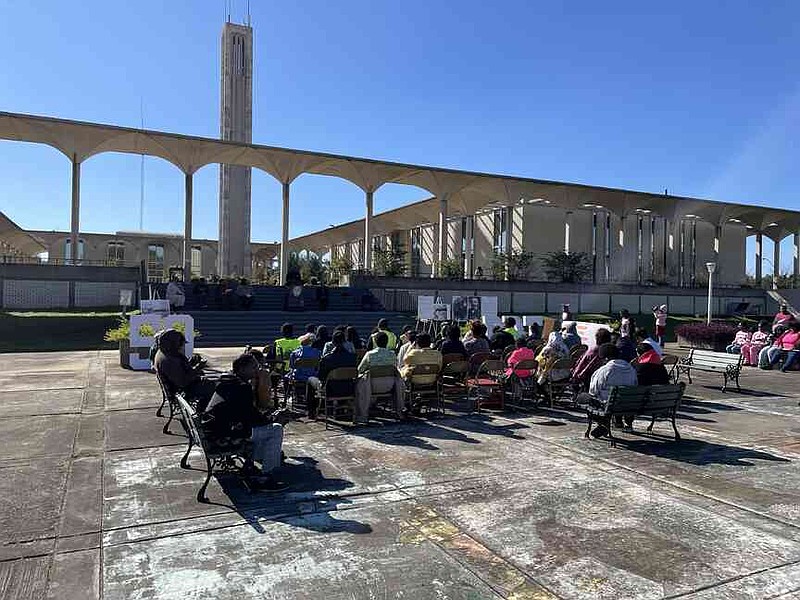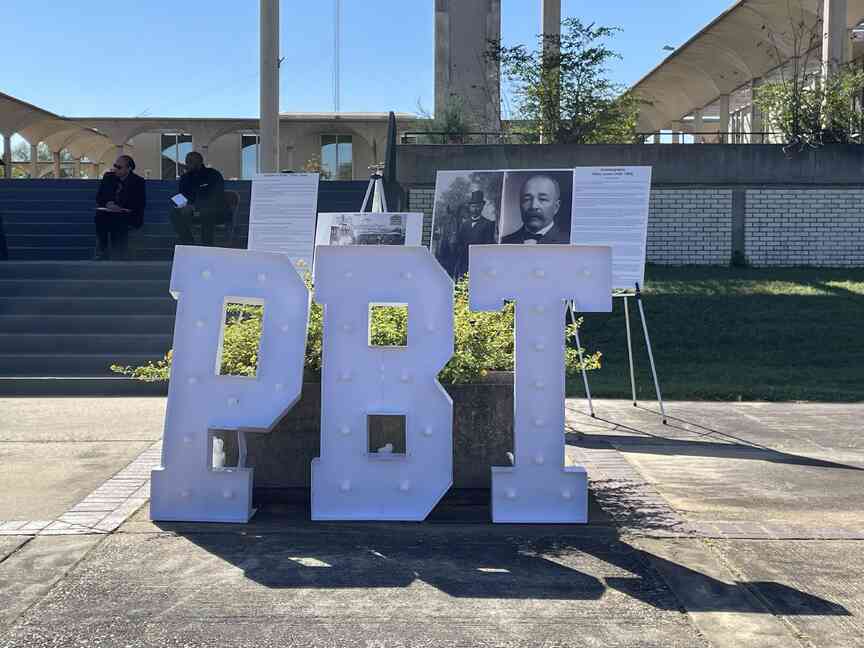
Pine Bluff Transit marked its 50th anniversary on Wednesday at City Hall, celebrating five decades of the public transportation service while honoring the remarkable legacy of Walter “Wiley” Jones, a former slave who founded the city’s original trolley system in 1886.
The celebration began with a musical prelude performed by Friendship Academy students, followed by the national anthem. Greetings and welcome remarks set the tone for the ceremony before City Council members Latisha Brunson and Yvonne Denton offered heartfelt comments about the transit system’s importance in their lives and to the community. Students from 34th Avenue provided musical entertainment during the program.
Transit Director Cassandra Shaw delivered remarks highlighting the system’s history during the “Transit History — Miles from Yesterday” portion of the program, noting that Pine Bluff holds the distinction of having the oldest public transit system in Arkansas, dating back to 1870. Mayor Vivian Flowers later delivered remarks celebrating the milestone anniversary.
Jones, born into slavery in Madison County, Ga., arrived in Pine Bluff at age 20 and became one of the first wealthy African Americans in the South. Through various jobs as a mule driver, saloon worker, barber and waiter, he saved and invested his money, eventually owning a barbershop, a saloon at 207 Main St., and a successful Southern Mercantile Co.
In 1886, Jones became one of the first African Americans in the nation to receive a franchise to operate a mule-drawn streetcar system, establishing the Wiley Jones Streetcar lines. He later acquired and merged with the failing Citizens’ Street Railway system.
Independent reporting for Pine Bluff & Jefferson County since 1879.
Today, the City of Pine Bluff honors Jones’ pioneering legacy through “Trolley Hop Thursdays,” a downtown promotion that celebrates the historic trolley system he founded.
The transit system has evolved significantly over its 154-year history. Operating under various names, it transitioned from mule car operators (1886-1897) to electric streetcar operators (1903-1936) under companies including Citizens Light & Transit Co., Pine Bluff Power & Transit Co., and Arkansas Power & Light Co. Buses were introduced in 1933 and fully replaced streetcars by 1936.
The modern Pine Bluff Transit was established in 1974 when Resolution 396 authorized the City of Pine Bluff Board to purchase 12 buses from Southeast Arkansas Bus Co., which had decided to discontinue service. The ordinance stated that “continued operation of public buses within the COPB is necessary for the preservation of the health, safety, and welfare of the citizens of Pine Bluff.”
The following year, Resolution 460 established a public mass transit policy for the urbanized area of Pine Bluff — a policy that remains in place 50 years later.
Shaw announced that Pine Bluff Transit has recently been reclassified from an urbanized transit provider to a rural transit provider following population decline. This change will remove constraints on providing metropolitan service and allow Pine Bluff Transit to serve a broader area.
“Great news for the city. PB now has multiple public transportation providers in our city including SEAT and DRIVAN Transportation,” Shaw said in the remarks, noting that the system is developing a demand response system that will allow riders to schedule rides in underserved areas.
According to the most recent National Transit Database records, Pine Bluff Transit served 42,387 unlinked passenger trips over 212,327 revenue miles.
During the “Community Voices” portion of the program, longtime riders shared their experiences with the transit system. The ceremony recognized the Spears Sisters as lifelong riders and Arvella Wright as the longest and most senior ADA paratransit rider.
Shaw paid tribute to past leaders who shaped the agency, including Larry Renolds, who led the agency from 1995 to 2013 and was instrumental in training the next generation of managers. Charlena Lacy was noted as one of the first African American leaders of a 5307 agency who “continued to build on the foundation that Larry laid,” with her vision for the red trolley becoming beloved by the community. Howard Girley was recognized for bringing in technology upgrades and processes.
In the “Transit Future — Rolling Into Tomorrow” segment, Shaw outlined the agency’s mission and vision for the future.
“My message to this team, every member of the team is always consistently the same. We exist to provide rides for the people who need transportation. PERIOD,” Shaw stated in the remarks. “For the last 50 years, we have done so, proudly, under the seal of the City of Pine Bluff.”