
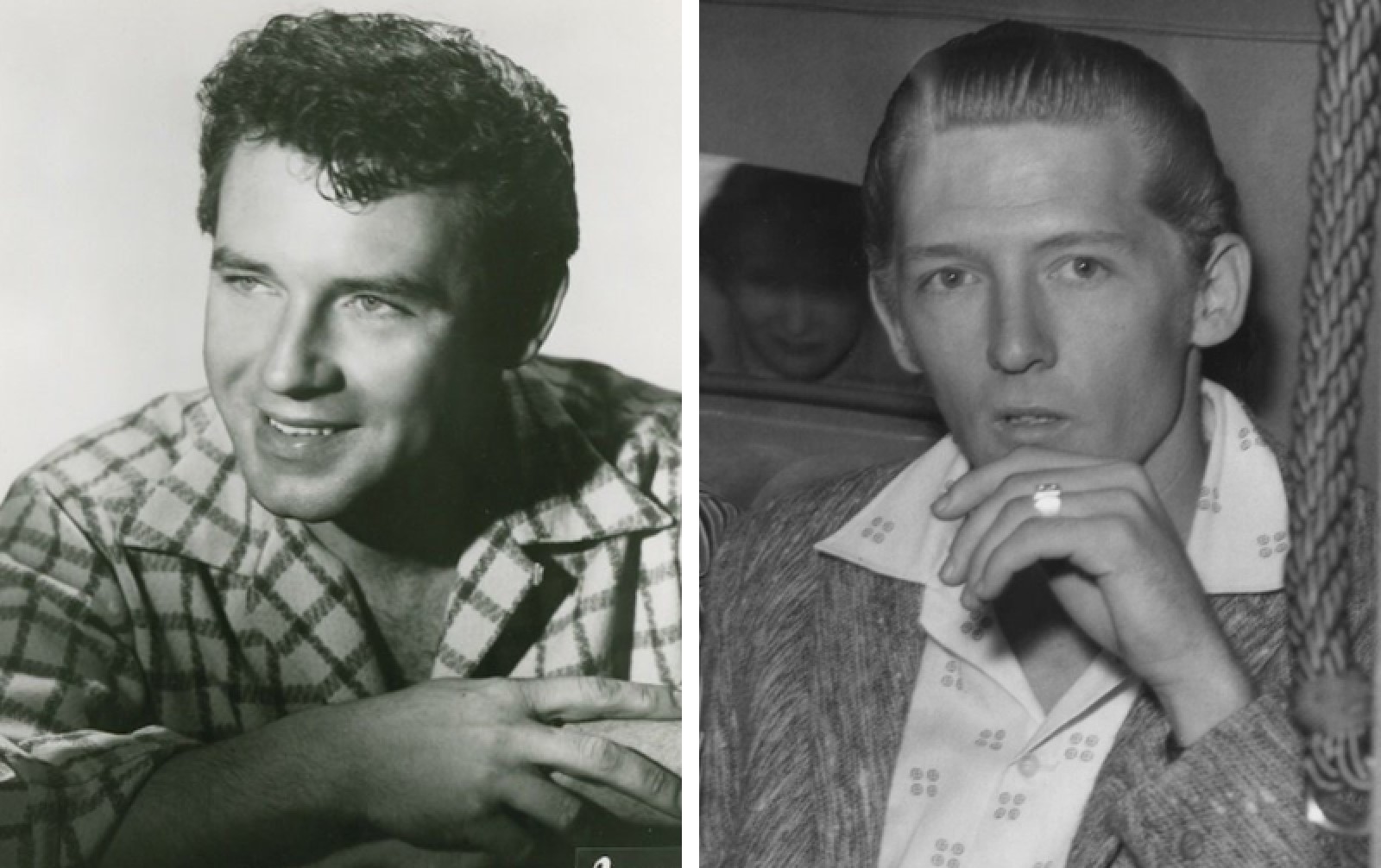
Pine Bluff resident Carl McVoy, a rockabilly musician, was instrumental in introducing his younger cousin Jerry Lee Lewis to the boogie-woogie music that helped him become a rock ‘n’ roll pioneer.
Carl Everett Glasscock was born on Jan. 3, 1931, to John Lee Glasscock and Fannie Sue Herron in Epps, La. During his early childhood, Glasscock and his family moved to Pine Bluff.
In his teen years, Glasscock spent time in Queens, N.Y., with his father, a New York City minister. It was in New York that Glasscock first heard the boogie-woogie music that he later brought back with him to Pine Bluff. Once back in Pine Bluff, Glasscock found employment in the construction industry.
In the summer of 1945, Glasscock’s younger cousin Jerry Lee Lewis (who later became a pioneer of rock ‘n’ roll and rockabilly music) visited. Glasscock taught him everything he knew on the piano.
Independent reporting for Pine Bluff & Jefferson County since 1879.
Lewis looked up to Glasscock, who was instrumental in the development of Lewis’ style and ambitions with piano. Televangelist preacher Jimmy Swaggert and country singer Mickey Gilley are also Glasscock’s cousins.
At work, Glasscock became friends with Sun Records artist Ray Harris. Harris was eager to start his own record label but didn’t have the funds. So for $3.50, Harris recorded demos of Glasscock singing a rock ‘n’ roll version of “You Are My Sunshine” and “Tootsie,” written by Sun artists Quinton Claunch and Bill Cantrell. In late 1957, Harris approached record store owner Joe Cuoghi, forming Hi Records.
Glasscock was sent to Nashville to re-record the two songs with Chet Atkins on more professional equipment. During this time, Glasscock began going by the stage name Carl McVoy.
In December 1957, McVoy’s record was released to much fanfare, but the fledgling record company could not handle the demand. Hundreds of orders for “You are My Sunshine” flooded in, but payment did not. So, Cuoghi, who had ordered the pressing of a few thousand records, found himself and Hi Records in a cash-flow bind.
During his time at Hi Records, McVoy recorded at least 14 unreleased titles in six sessions, including “Little John’s Gone” and “Daydreamin.”
In April 1958, the “You Are My Sunshine” record and McVoy’s contract were turned over to Sam Phillips and his label Phillips International, later known as Sun Records, for $2,600 (approximately $28,000 today). The record enjoyed some success at Sun Records, but sales plummeted as the record’s momentum died.
McVoy recorded “My Bucket’s Got A Hole In It” three months before Sonny Burgess. He also recorded “Born To Lose” one year before Johnny Cash. Like his cousin Lewis, McVoy recorded “You’re The Only Star In My Blue Heaven.” In July 1958, three months after Ray Smith’s record, he recorded “Right Behind You Baby.”
McVoy cut “A Woman’s Love,” which bass player Stan Kesler placed with Elvis Presley, who later retitled the song “The Thrill Of Your Love,” which appeared on the 1959 “Elvis Is Back” LP. “Satisfied,” which mixed gospel and pop music, was the last song McVoy recorded at Sun before moving back to Hi Records to concentrate on production work as an engineer and studio musician.
Throughout his music career, McVoy kept his job in the construction industry. In 1960, he bought Claunch’s stake in the company in Hi Records. He joined Bill Black’s Combo as their pianist and can be heard on most of their hits, except their first success, “Smokie, Part 2,” which featured Joe Louis Hall on piano.
McVoy wrote several tunes for Bill Black’s Combo, including “Do It – Rat Now,” which was number 51 on the top 100 charts in 1963. He also released two singles in 1961 and 1962, covering Slim Harpo’s “Raining In My Heart” on the Tri label and a remake of Chuck Willis’ “What Am I Living For” with Hi Records.
In 1963 Hi Records released the instrumental LP “Raunchy Sounds” by the Hi-Tones, a group which included McVoy, Willie Mitchell, Jack O’Brien, Reggie Young, Jerry Arnold, and Bobby Stewart. McVoy co-wrote five of the 12 songs on the album.
In 1965, McVoy quit the music business and returned to construction full-time, forming his own company Carmack Construction. In 1992, he died of a heart attack on his 61st birthday.
This article is from ExplorePineBluff.com, a program of the Pine Bluff Advertising and Promotion Commission. Sources: www.tims.blackcat.nl — Carl McVoy; www.bear-family.com — Carl McVoy; www.wikipedia.org — Carl McVoy; www.video.wixstatic.com — Jerry Lee Lewis & Carl McVoy; www.newspapers.com — Carl McVoy Obituary; www.ancestors.familysearch.org — Carl Everett Glasscock McVoy; Image Credit: www.sunrecords.com.
Ninfa O. Barnard wrote this article for ExplorePineBluff.com.