
“So don’t boast about following a particular human leader. For everything belongs to you — whether Paul or Apollos or Peter, or the world, or life and death, or the present and the future. Everything belongs to you, and you belong to Christ, and Christ belongs to God.” 1 Corinthians 3:21-23.
Some of the most valuable memories I draw upon come from my upbringing. These memories were birthed from a healthy childhood that laid down roots of values, guidance, and love that sticks with me today. So, when I read 1 Corinthians 3, it stirred up one of those memories. I was reminded of how the structure of our church brilliantly met the needs of the membership based on leadership availability and the size of the congregation.
Ask any Christian living within 15 miles of where I grew up how frequent their church meets on Sundays, and chances are they would tell you once or twice per month. One church has service on the 1st and 3rd Sundays while another would take the 2nd and 4th Sundays. This practice is very sensible considering that most church communities are small, separated by many miles of farmland, and are limited by the number of ministers. This rotation allowed more people to attend and ensured that each congregation had some form of pastoral presence to continue proclaiming Christ every Sunday.
Having the unique opportunity to rotate between churches allows members to hear God through different voices and personalities. As an illustration, one minister may have a tender spirit, soft and thoughtful, while another minister may use more voice articulations termed “hooping” and sometimes spelled “whooping” that captured your attention from beginning to end.
For those of you who aren’t familiar with the term , according to the internet, “hooping is a traditional practice within Black churches, particularly in African American Missionary Baptist and Pentecostal congregations. It is characterized by a rhythmic and expressive form of preaching that blends the preacher’s words with the congregation’s vocal participation, often resulting in a musical quality to the sermon.”
Independent reporting for Pine Bluff & Jefferson County since 1879.
And music it is! Some ministers started slow and steady, but by the end of the sermon the flow of the words would overtake you. Like a gentle tide led by the Spirit’s power rising and crashing over the hearts of the congregation.
Yet, as captivating as this rhythmic style sounds, 1 Corinthians 1-3 encourages us to focus deeper. Look beneath the surface. Look for the presence of the power and authority of Christ.
While God makes use of different styles to draw people unto Himself, the most important factor is the power of the Spirit working on the inside, even if the sermon message comes across gently.
For the purpose of illustration, I wished that someone would have told me not to boast about my favorite speaker, because I sure had one. It was the Rev. J.J. Jackson. His preaching was electric and full of passion. And, without hesitation, I would announce that “I attended Macedonia Baptist Church, where Rev. J.J. Jackson is pastor.”
Interestingly, I see a similar pattern in 1 Corinthians 1-3 and 2 Corinthians 10:1-11 where people aligned themselves with particular leaders; and later criticized Paul’s preaching style. In spite of this, Paul wanted them to break free of the hype of following a specific leader based on speaking ability. Speaking abilities don’t save. The Word of God saves. Leaders are just servants, just like you and I are servants.
In other words, enjoy every leader that God sends, regardless of style. We are ONE body, belonging to ONE deity ─ the Son of God. We must be unified in Christ, because every minister God calls is used for His good purpose: equipping us for eternity, according to 1 Corinthians 15.
God’s not impressed by polished techniques (1 Corinthians 1:28.) However, it is true that a minister’s tone needs to be upbeat and interesting. No minister wants their listeners falling asleep in the pews while they are speaking. His goal is to make the word of God come alive and real. He wants you to know what the Word says. And how it applies to the future. When this takes root, real growth can be realized.
It is also true that some delivery styles will vary. Some ministers focus on a specific topic. Others may focus on verse-by-verse exposition of the scripture. But this doesn’t matter. As long as Christ is being preached, the method is secondary. So, enjoy all ministers. Enjoy their uniqueness. Enjoy how they illuminate the Word of God. Each one has been given to you, so that you will have a richer understanding of your faith.
More importantly, we know that without the Holy Spirit, Bible study, and preparation, even an experienced minister has the potential to fall flat. That’s why I believe that a charismatic speaker under the power of the Holy Spirit has no more influence than a non-charismatic speaker with the same empowerment. Just like a dull penny has the same worth as a shiny penny. The value remains the same, we just need to receive it.
So, let’s not fall into traps, saying “I believe Deacon So and So’s teaching about…” or “I follow Rev. What’s His Name” or “I choose to believe what the Sunday School Teacher says about a certain subject.” The church body follows Christ. We should be united in faith, belief, and practice. Each person plays an important role, but our guide and focus should always be Christ.
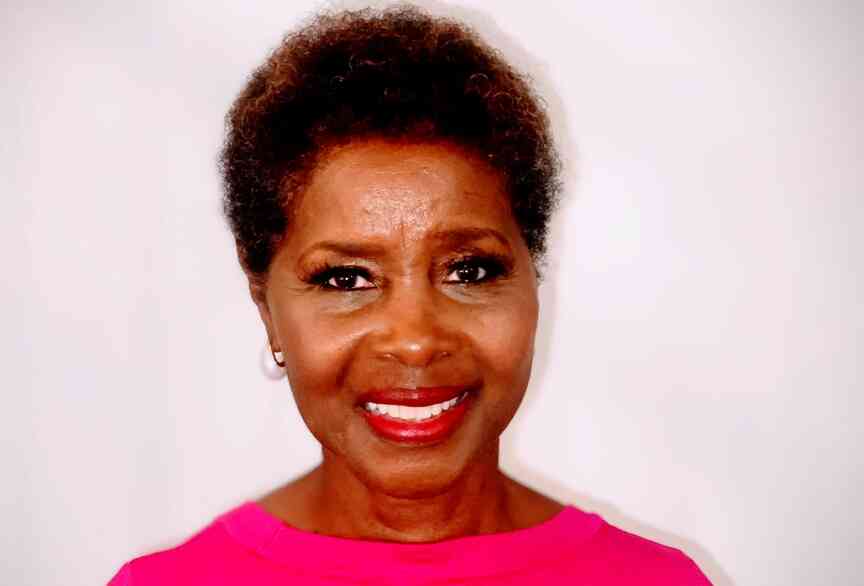
Brenette Wilder, formerly of Altheimer, Ark., is a blogger at wordstoinspire105953116.wordpress.com and author of Netted Together.
Editor’s note: Pastors, ministers or other writers interested in writing for this section may submit articles for consideration to shope@adgnewsroom.com. Writers should have connections to Southeast Arkansas. Please include your name, phone number and the name and location of your church or ministry.