
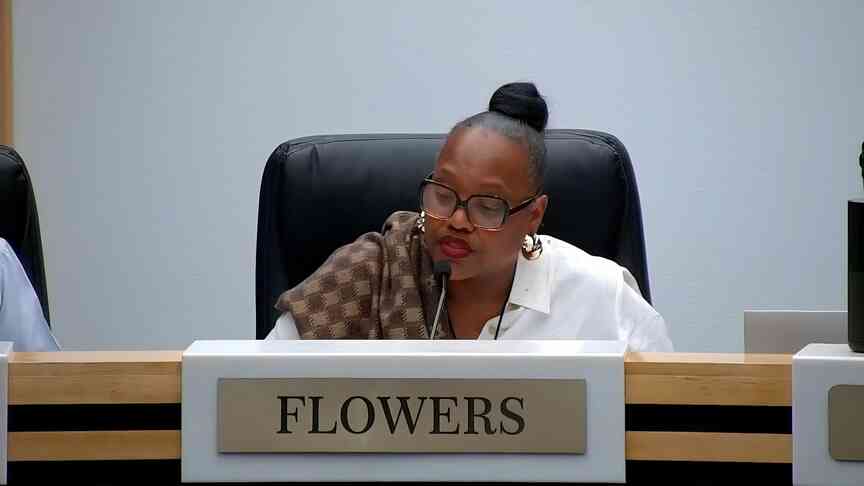
A controversial ordinance to place a new one-cent sales and use tax on the ballot for 10 years failed before the Pine Bluff City Council on Monday night, with a majority of council members voting against allowing the public a chance to decide the measure.
After the measure’s defeat, Mayor Vivian Flowers said she would not bring the issue back to the council, vowing instead to “take it to the people” by gathering signatures for the measure to appear on the November 2026 election ballot.
The measure was defeated by a vote of 6-2. Council members William Fells and Glen Brown Jr. voted in favor of putting the tax on the ballot, while Yvonne Denton, Lanette Frazier, Steven Mays, Lloyd Holcomb Jr., Bruce Lockett and LaTisha Brunson voted against it.
The debate over the proposed tax centered on the city’s mounting financial challenges, declining population and a fundamental disagreement over who should make the final decision.
Independent reporting for Pine Bluff & Jefferson County since 1879.
Flowers presented her case for the tax, citing an impending financial crisis and the city’s inability to compete with neighboring communities.
She warned that without new revenue, the city is currently operating “$2 million in the red” in revenue compared to spending, even with carryover funds. She cautioned that next year’s budget process would involve “cuts in services, cuts in jobs.”
A key feature of the proposed tax was a built-in measure for transparency and accountability, stating that a forensic audit would be performed every two years throughout the 10-year life of the tax to prevent theft, fraud, waste and abuse.
Flowers also noted that a preliminary report on the 2017 sales tax expenditures is underway, with results expected in mid-February.
During the public comment period, citizens in support of the proposal expressed the necessity for the revenue, stating that there is a need for a good infrastructure, because in order to entice businesses to move and invest in Pine Bluff, the infrastructure is the first thing that they see.
The Rev. Kevin Crumpton spoke on behalf of young people, noting that many who are out of school for two to three weeks at a time “don’t have anything to do” and are “picking up a lot of shoplifting charges” at local stores, warning that they will eventually “become an adult problem.”
The Rev. Jessie Turner urged the council not to silence the voice of the voters, explaining that the city’s business is the people’s business and that the decision should be made by voters who know best how to spend their hard-earned money.
Mays raised sharp questions about the public-private partnership, specifically questioning the city’s obligation concerning Simmons Bank Park, saying, “Who’s running Pine Bluff?”
Fells argued that putting the measure on the ballot was the best way to hear the people’s wishes. However, many council members, including Brown, said that residents in their wards had contacted them to express opposition to the proposed tax.
“If you are receiving calls from your constituents and they are telling you no, when do you listen to the people?” Brunson said.
Before the sales tax debate, the council discussed a separate ordinance that proposed to dissolve the Pine Bluff Urban Renewal Agency (PBURA). The ordinance was ultimately pulled from the agenda.
Flowers explained that the abolition was proposed because of unexpected expenses exceeding $800,000 for the URA and its projects — Simmons Bank Park and the go-kart track — that the city would be obligated to cover.
The ordinance was pulled because Flowers, Brown and the PBURA board president, Jimmy Dill, were actively working on a compromise.
According to Flowers, Dill requested a one-year extension of the agency’s life to Dec. 31, 2026, instead of immediate abolishment. The goal is to allow the agency time to complete the remaining construction on both projects and transfer ownership of Simmons Bank Park to the city, which is a condition of the agreement with Simmons Bank, which contributed $2 million for the facility.
Flowers asked to pull the measure, noting that they were “in the midst of a compromise” but had not yet reached a final agreement, requiring “further information and direction from the Urban Renewal Agency.”