
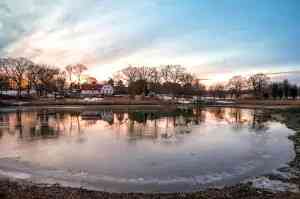
With the cold temperatures, it can be easy for landowners to overlook pond maintenance, said Scott Jones, small impoundment Extension specialist for the University of Arkansas at Pine Bluff. However, there are a few maintenance steps pond owners should consider taking in the winter to ensure their ponds are in prime condition by spring.
Jones recommends landowners take the following steps:
ADJUST FEEDING AND FERTILIZATION
Because plant and animal activity declines as the temperature drops, landowners should stop fertilizing their ponds and feeding their fish. It is best to end fertilization when water temperatures drop under 60 degrees Fahrenheit, and feeding should end when the temperature drops below 50 degrees. Fish can continue to be fed if they respond to the feed, but landowners will notice a reduction in activity and eventually no response as the water gets colder. Uneaten feed is wasted money, and it contributes to excessive nutrient loads.
ADJUST AERATION
Independent reporting for Pine Bluff & Jefferson County since 1879.
Winter aeration is beneficial for preventing a pond surface from freezing; however, the overall net benefit of winter aeration is far lower than summer aeration. While water conditions can worsen under long-term ice cover, Arkansas ponds rarely stay frozen long enough for significant water-quality issues to develop. Therefore, it is acceptable for Arkansas pond owners to turn off their aerators over winter.
For those wanting to continue operating their aerators over winter, there are still fish health and waste processing benefits. In this case, diffusers should be moved to areas shallower than 50% of the maximum depth of the pond, or 3 to 4 feet deep. If the system has multiple diffusers, move one or two to the shallows and turn off the diffusers left in deep water. Fountains, surface aerators and circulators can remain in their usual locations and continue running over winter.
MAINTAIN EQUIPMENT
Winter is the perfect time for routine equipment maintenance since most handy pond devices are turned off. Depending on the type of motor used, aeration system manufacturers may recommend replacing filters, diaphragms or seals. Inspect electrical cables and hose lines for damage, clean cooling fans and diffuser pads and brush out debris that may have collected within or around the equipment.
Old feed should be cleaned out from fish feeder hoppers, blowers and delivery devices. If batteries or electrical components have been malfunctioning, now is the time to service or replace them to ensure the feeder is fully operational by spring.
CHECK UNUSED FEED
Unused feed can be stored over winter if it is dry and free of mold or contaminants. It should be kept in airtight containers in at least a semi-climate-controlled, dry location. Feed that is already wet should be disposed of as it will likely develop mold over winter, which could make fish sick if eaten.
APPLY LIME IF NECESSARY
If water testing indicates that a pond would benefit from increasing its alkalinity, hardness or pH, winter is the ideal time to apply agricultural lime. Adding agricultural lime during the growing season can negatively affect plankton blooms and cause aquatic weed issues. Application during the winter allows lime the time to dissolve without the risk of disrupting biological balances.
STOCK FISH
Winter is not prime fish-stocking time, but it is still OK to do so. Grass carp, which can be used for aquatic vegetation control, are acceptable for winter stocking because they are sold at larger sizes and are more resilient in cold temperatures. Forage fish and sport fish can be stocked in winter, but it is better to only stock larger fingerlings or adults. Small fingerlings and fry are more susceptible to cold and there is far less small natural food available in winter to maintain them through to spring.
Rainbow trout are another good option for winter stocking. While vendors and availability may be limited, rainbow trout are active and fun to catch over winter when warm-water fish are lethargic. When spring brings higher temperatures, the trout will become sluggish and become nutritious meals for intermediate to large-sized bass. Some pond owners stock trout annually just to feed their trophy largemouth bass.
CONSIDER A WATER LEVEL DRAWDOWN
Winter drawdowns can help control submerged aquatic weeds by exposing them to drying and freezing. This involves lowering the water level 2 to 4 feet — no more than 50% of the pond’s volume –using drain valves, pumps or temporary siphons. The method works best in ponds larger than one acre and when levels stay lowered for 6 to 8 weeks with at least two weeks of below-freezing weather, allowing exposed soil to dry and freeze enough to kill roots and tubers.
Not all plant species respond the same way, but weeds such as watershield, fanwort, elodea, egeria, milfoil, spatterdock, southern naiad and water lily are more likely to be reduced by a successful drawdown. If the soil doesn’t freeze fully or stays wet, many plants will survive, though spring regrowth may still be lighter and easier to manage with warm-season control methods.
For more information about winter pond maintenance, contact Scott Jones, small impoundment Extension specialist, at (870) 575-8185 or joness@uapb.edu or contact a local county Extension office.
Will Hehemann is an extension specialist of communications for the University of Arkansas at Pine Bluff School of Agriculture, Fisheries and Human Sciences.