
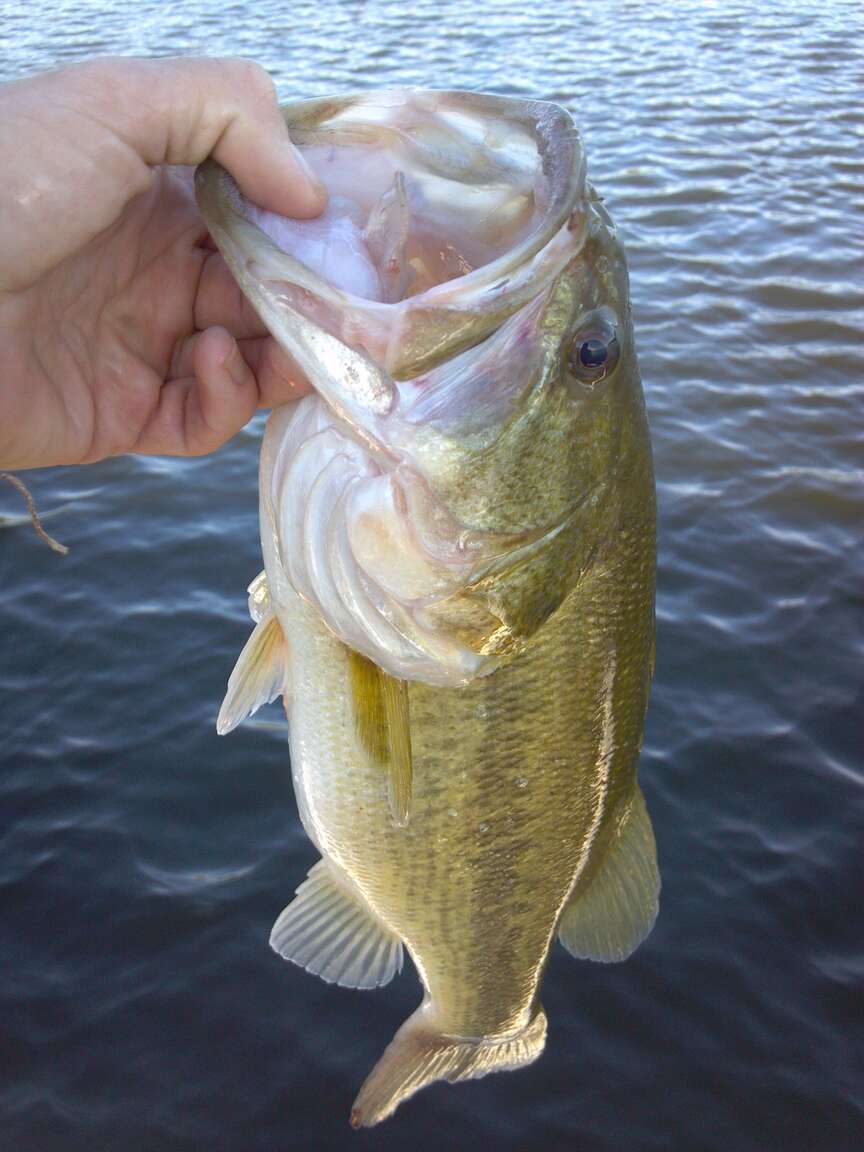
The “undisputed king” of freshwater sportfish in the southeastern U.S. is the largemouth bass, according to Scott Jones, small impoundment Extension specialist at the University of Arkansas at Pine Bluff.
“Largemouth possess a blend of aggressiveness, challenge to capture and growth that attracts fishing enthusiasts to their pursuit,” he said. “Additionally, their compatibility with diverse waterways, relative ease to produce and ability to regulate abundance of other fish species make them a convenient, if not critical, component to private lake and pond management.”
Largemouth are easy to find at local fish farms throughout the southeast, he said. There are several species and varieties most commonly available for private lake and pond stocking in the southeast.
NORTHERN LARGEMOUTH BASS
Largemouth bass are native to most river basins east of the Rocky Mountains from northern Mexico to southeastern Canada, Jones said. They have been introduced throughout North America. The species found most broadly is Micropterus salmoides salmoides, also known as northern largemouth bass.
Independent reporting for Pine Bluff & Jefferson County since 1879.
“This is Arkansas’ native variety of largemouth,” he said. “It is well adapted to the local climate and performs well throughout the state when stocked into private lakes and ponds with suitable habitat and forage.”
Northern largemouth can reach 8-10 pounds in Arkansas, though 6-8 pounds is a more reasonable expectation for most situations, Jones said. Under ideal conditions, northern largemouth can reach 15 pounds. These conditions are rare in Arkansas, and they are exceedingly expensive to maintain.
“Stocking rates range from 50 to 200 fingerlings per acre depending on who you ask, the goals of the impoundment, the management strategies and other fish species involved,” he said.
“Bluegill are the most common forage species stocked with largemouth bass, usually at a 10:1 bluegill to bass ratio.”
FLORIDA LARGEMOUTH BASS
The Florida largemouth bass Micropterus salmoides floridanus is native to the Florida/Georgia region, Jones said. Florida largemouth are often selected for stocking into trophy bass lakes and ponds because of their superior growth potential.
“Florida largemouth can reach 20 pounds under ideal conditions — conditions that are unfortunately not available in Arkansas regardless of budget,” he said.
The Florida largemouth is a subtropical species that can survive Arkansas’ cooler climate, but not thrive like it can in places like Texas and the Deep South, Jones said. In fact, it is likely that Florida largemouth bass will not outgrow northern largemouth in Central – and certainly not in northern – Arkansas.
Southern parts of the state should be able to achieve better growth and maximum size out of Florida largemouth but should maintain realistic expectations, he said. Florida largemouth bass can more easily reach the 10-12 pound range in southern Arkansas with 8-10 pound fish being more realistic for most situations. With fertile water, excellent habitat, abundant forage and appropriate harvest of underperforming fish, 12-15 pound Florida largemouth are achievable in southern Arkansas.
“Again, bluegill are an excellent primary forage choice. Stocking ratios in trophy bass ponds tend to be more in the 25-30:1 bluegill to bass range,” Jones said. “Annual supplemental forage, especially threadfin shad, and routine fertilization is often necessary to legitimately push trophy growth.”
HYBRID LARGEMOUTH BASS
Some farms offer hybrid (sometimes termed F1, or a proprietary trademark name) largemouth bass. These are the first-generation offspring (F1 generation) of a cross between a northern largemouth bass and Florida largemouth bass, he said. These are often selectively bred for an attractive blend of the aggressive feeding and susceptibility to angling of the northern with the enhanced growth capability of the Florida.
“Growth of the F1 generation can be quite good under ideal climate, habitat and forage conditions,” Jones said. “However, as is the case with most hybrid fish, the subsequent generations do not retain all the beneficial characteristics of their F1 parents, and it is common for average growth and size to decline over generations.”
In severe cases this outbreeding depression can result in unsatisfactory fishing after the original F1s die from natural mortality (this is very common in hybrid bluegill ponds). Hybrid fish are generally best for trophy-minded owners with smaller bodies of water that can be drained and restarted in the event the fishery declines over time.
ALL-FEMALE LARGEMOUTH BASS
While essentially non-existent due to the intense labor required to produce an all-female inventory of fish at a for-profit hatchery, the all-female largemouth bass strategy is an experiment many pond owners are intrigued by.
“The concept is sound; only female largemouth reach trophy sizes (males rarely grow larger than about 5 pounds), and reproduction leads to competition for resources that reduces growth for the whole population,” he said. “If there are no males to breed, eggs are re-absorbed by the females, the energy is re-allocated to growth, and there is far less competition for food.”
Trials with all-female, mostly-Florida largemouth have shown tremendous growth (8 pounds in 3 years and 11 pounds in 4-5 years) in one Georgia study, Jones said. The catch is sorting males from females.
During the spawn, a somewhat reliable method is looking at the urogenital opening just forward of the anal fin. Females often have an enlarged red genital papillae just behind the anus during the spawning season. Males have the same opening, but it usually is not red and swollen.
“This technique only works during the spawning season, and even then, it is not 100% accurate,” he said. “In short, it is a cool concept often discussed in pond management circles that is extremely difficult to actually implement.”
FEED-TRAINED LARGEMOUTH BASS
A few hatcheries offer feed-trained largemouth bass, Jones said. These are typically northern largemouth that have been fed pelletized feed since birth.
“Largemouth are natural predators that don’t easily convert to a pellet diet, and it is common for many of them to abandon pellet feeds if a live forage option becomes available such as stocking a feed-trained largemouth bass into a pond with bluegills in it,” he said.
However, it is an option that allows producers to grow exceptionally large bass in very small bodies of water where the traditional bluegill and bass strategy would not work well, Jones said. In larger ponds and lakes, this type of largemouth would likely not provide intended results (bass that consistently eat feed at the surface on demand) and they will cost more than traditional largemouth.
For more information about stocking largemouth bass, contact Jones at (870) 575-8185 or joness@uapb.edu.
Debbie Archer is an extension associate for communications with the University of Arkansas at Pine Bluff School of Agriculture, Fisheries and Human Sciences.
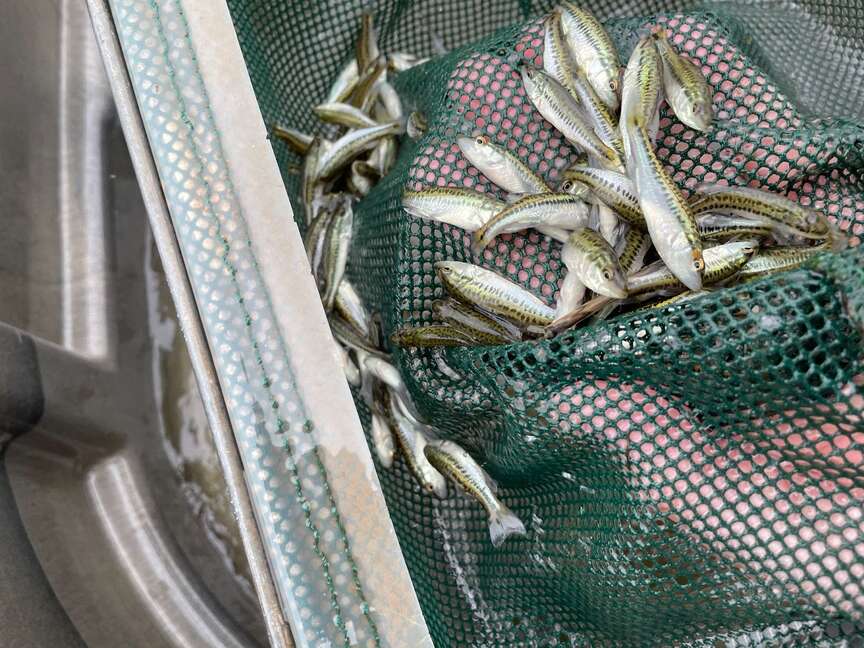 Roughly 9,000 2-inch TITAN MAXX Florida largemouth bass were released at Lake Monticello on May 6 to add more trophy-class genetics to the fertile fishery. (Special to The Commercial/Arkansas Game & Fish Commission)