
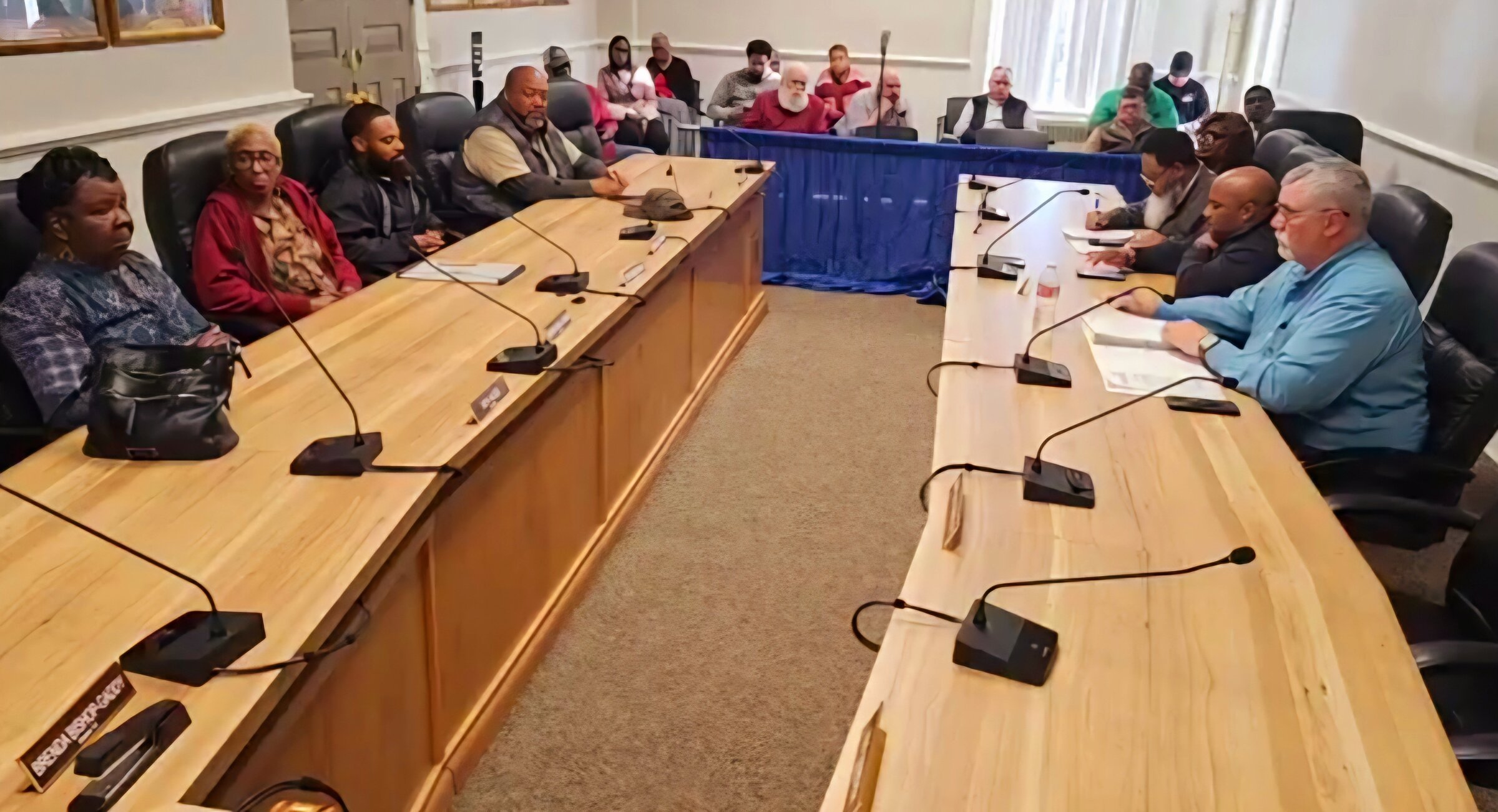
An appropriation ordinance from the county general fund totaling approximately $575,000, intended to cover past-due expenses and resolve negative line items in the county judge’s office, led to debate during last week’s Jefferson County Quorum Court committee meeting.
Judge Gerald Robinson explained the dire situation, saying the appropriation was necessary because the failure to pass a new budget had forced the county to operate on an amended 2024 budget, resulting in funds being allocated to the wrong lines.
The most urgent issue, according to Robinson, is the potential repossession of essential equipment: “We are three to four months behind with the bank that financed our dump trucks,” said Robinson. “We do not want to have our dump trucks repossessed. We need those trucks … It’s going to be an emergency not to have the proper equipment to do that.”
The appropriation order faced immediate resistance due to its bundled nature and lack of detail for several large expenditures. Justice of the Peace Reginald Johnson voiced the committee’s major concern.
“I don’t think anybody in the room has a problem going ahead and getting your notes paid, but there are some things in here that are not explained very well,” he said. “$87,000 in other professional services … Computer service is $62,000. It’s just a short narrative.”
Independent reporting for Pine Bluff & Jefferson County since 1879.
The critical financial issue for the county judge’s office that necessitated the appropriation order was the urgent need to make payments on past-due loans to prevent the repossession of the county’s dump trucks.
Robinson explained that this critical situation arose because the Quorum Court failed to pass the proposed 2025 budget, forcing the office to operate under an amended 2024 budget, under which changes were made that “negated us having the money in the proper place.”
Robinson’s plea for urgent financial relief was met with the Quorum Court members’ insistence on fiscal transparency and proper legislative procedure.
The core issues and disagreements that caused the gridlock were bundled and undocumented expenses, with a lack of detail. The justices of the peace’s main point was that while they generally supported necessary payments, the process was flawed.
Robinson defended the document, saying it reflected the lines that were “in the negative,” but admitted that providing a detailed narrative was not standard practice: “We have not done that in the past, but I mean, we can break it down.”
Robinson explained that delaying the order was leading the county toward a state of emergency. The most critical issue was the potential repossession of county equipment, which threatened to halt essential services.
The overall situation was framed as a crisis by Justice of the Peace Conley Byrd, who pushed for a vote expressing deep frustration over the long-running fiscal dispute. “We have impeded the county’s ability to function,” he said. “We are just about to bankrupt this county … We’re getting close to it.”
The gridlock was resolved by the committee suggesting a compromise to move the process forward, asking Robinson to produce “additional information” and a “short narrative” to be reviewed before the full court meeting on Tuesday.
The following day, Robinson issued a strongly worded statement pushing back against what his office terms “micromanagement” from the Quorum Court, asserting that the legislative body is overstepping its legal boundaries and interfering with the county’s daily operations.
Robinson argues that a fundamental misunderstanding of Arkansas county government law is driving what it calls “turf wars” that ultimately harm taxpayers.
“Micromanagement isn’t leadership — it’s just interference with a lot of paperwork,” he said, arguing that the Quorum Court confuses legal oversight with operational overreach.
The core of Robinson’s response rests on the legal separation of legislative and executive powers established in Arkansas law. According to the statement, the Quorum Court’s role is strictly to set the annual county budget through the appropriation of funds.
“The Quorum Court sets the county budget — but it is not their job to micromanage how the County Judge’s Office uses each line once funds are approved,” Robinson emphasized.
He also pointed to a prior ruling from the state’s top legal officer. “The attorney general has made it clear: Once funds are appropriated, the Quorum Court’s role ends at the budget table. Execution belongs to the judge’s office.”
Robinson’s statement also offered a list of reasons for the supposed interference, suggesting the motives are political rather than legal.
He said the persistent interference “usually reflects political tension, not legal duty,” and that the micromanagement of specific line items violates the separation of legislative and executive authority.
“When you spend more time blocking progress than building it, the taxpayers always lose,” he said. “Jefferson County deserves teamwork, not turf wars.”