
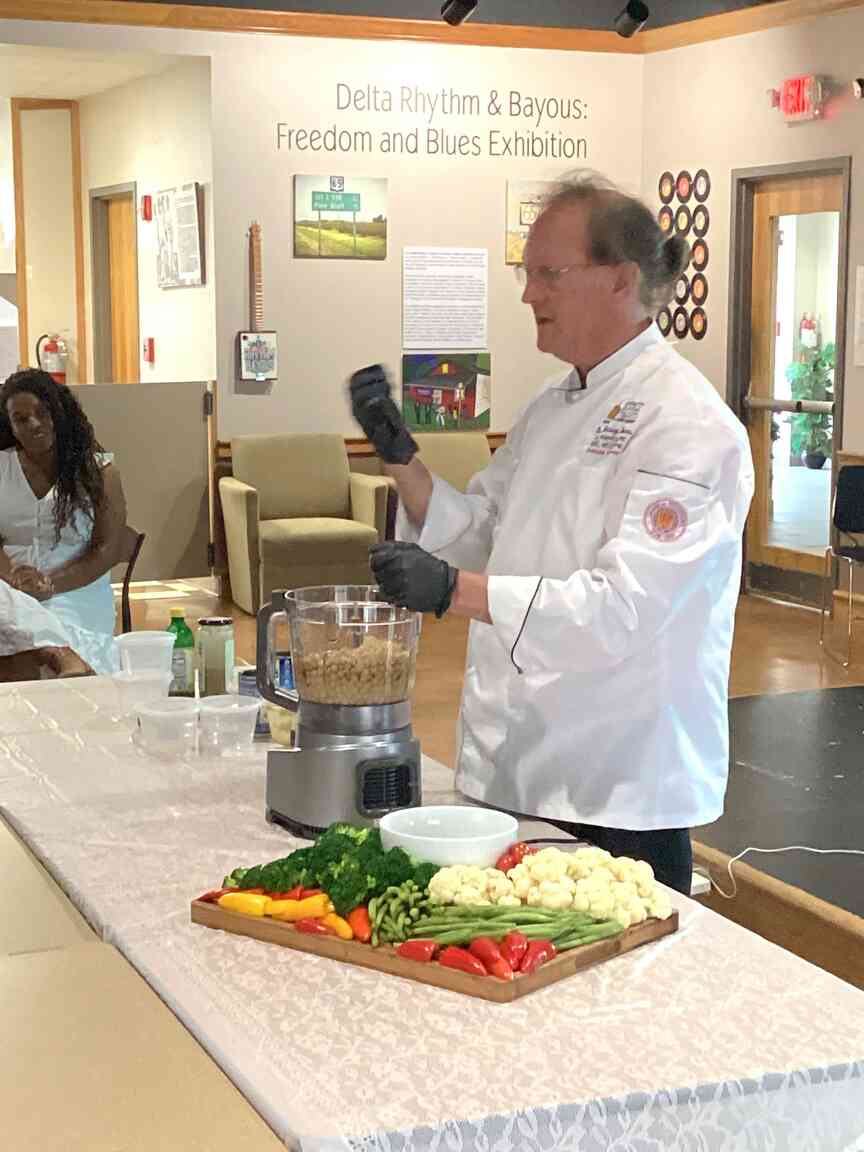
International Chefs Day, marked on Oct. 20, is more than a celebration of the culinary profession — it is a reminder of food’s power to educate, nourish and inspire, according to W. Jinnings Burruss Jr., assistant professor of food service and restaurant management for the University of Arkansas at Pine Bluff.
“International Chefs Day, founded by chef Dr. Bill Gallagher in 2004, empowers the next generation to see food as a tool for health, creativity and sustainability,” Burruss said. “For chefs, educators and food service leaders, it’s a call to give back and share our passion with the youth in our communities. For children, it’s an invitation to step into the kitchen, try new flavors and understand the connection between food, health and the planet.”
Burruss said International Chefs Day is also an opportunity to bridge the gap between education and community outreach at UAPB and similar institutions.
“By participating, we’re not just celebrating chefs — we’re shaping future chefs, leaders and informed eaters,” he said.
What is the best way parents can get children interested in cooking? Involve them early, Burruss said.
Independent reporting for Pine Bluff & Jefferson County since 1879.
“When kids are part of the process — from planning to prepping — they become invested and curious,” he said. “It can be as simple as letting them choose a vegetable, measure spices or stir a pot.”
He recommended age-appropriate tasks, playful activities like turning vegetables into food art and celebrating children’s creations.
“Most importantly, cooking should be a safe and joyful space, not a high-pressure environment,” Burruss said. “Those experiences shape positive relationships with food that can last a lifetime.”
For young adults considering their future, Burruss said pursuing a degree in culinary arts provides more than cooking skills.
“A culinary degree prepares students for roles in hospitality management, food entrepreneurship, nutrition services, education and product innovation,” he said. “At UAPB, students study technique, nutrition, sanitation, sustainability, leadership and cultural awareness through food.”
A degree also opens pathways to certifications through organizations such as Worldchefs. Most importantly, it empowers students to use food as a tool for community service, economic development and cultural storytelling.
One example of how UAPB connects classroom knowledge to the community is through its Nutrition Café initiative. Burruss said these events provide families with practical tools to eat and live well.
“The Nutrition Café goes beyond cooking demonstrations,” he said. “It’s an immersive, community-based learning experience where families, children and child care providers explore what it means to eat healthy.”
The most recent event, held at the UAPB Business Support Incubator in downtown Pine Bluff, drew participants from Jefferson, Bradley, Drew and Chicot counties. Attendees watched live food demonstrations, sampled fresh vegetables and attended sessions on nutrition science.
“The strength of these events lies in their accessibility,” Burruss said. “Parents and caregivers took home easy, affordable recipes. Child care professionals learned strategies for modeling healthy habits in classrooms. Children were able to taste fresh produce and experience cooking as something enjoyable and empowering.”
During the event, Marilyn Bailey, interim chair of the UAPB Department of Human Sciences and grant writer/principal investigator of the Evans-Allen Demonstration Garden Project funded by the U.S. Department of Agriculture National Institute of Food and Agriculture, emphasized the mental and emotional wellness aspects of nutrition education.
“Dr. Bailey explained how gardening and hands-on food education have proven therapeutic effects, especially for children coping with stress or behavioral challenges after the pandemic,” he said. “Simply touching the soil or growing a vegetable can be healing.”
Other sessions included presentations from UAPB faculty, such as Kimberly Haynie, associate professor of nutrition and food science, who explained how different fats affect heart health. By showing real examples of good vs. bad fats, she helped demystify food labels and everyday nutrition choices.
“This innovative program also fosters connections with local farms, preschools and community organizations,” he said. “It shows people how to source, grow and prepare healthy food in practical ways.”
The initial Nutrition Café grant project ended in September 2024, but UAPB has applied for an extension to continue the program. If funded, new sessions could begin as early as spring 2026. Burruss encourages families to attend future events.
To celebrate International Chefs Day, Burruss recommends parents and their children prepare the following vegetable dip recipe, which is a nutritious alternative to ranch dip.
HEALTHY VEGGIE DIP
Ingredients
1 cup Greek yogurt, 2% fat
1 tablespoon of dill or parsley, very finely chopped
1/4 teaspoon of garlic powder
1/4 teaspoon of salt + a pinch
Ground black pepper, to taste
Instructions
In a small jar with a lid or medium bowl, add yogurt, dill, garlic powder, salt and pepper.
Shake the jar or stir with a fork.
Serve with veggies. The dip tastes best after standing for 10 minutes. Shake or stir once again.
Notes
Store: Refrigerate in an airtight container for up to seven days.
Burruss used garlic powder for a subtle garlic flavor. Alternatively, you can use tiny, grated garlic cloves.
Dried vs. fresh herbs: Fresh dill tastes the best. However, if you are making this ranch dressing midwinter, dried dill will still do the trick.
For more information on Nutrition Café or UAPB’s food service and restaurant management program, contact Burruss at burrussw@uapb.edu.
Will Hehemann is an extension specialist for communications with the University of Arkansas at Pine Bluff School of Agriculture, Fisheries and Human Sciences.