This is the first of a two-part series.
As CEO for Delta Circles, a nonprofit organization based in Helena-West Helena, Patricia Ashanti works to bring positive change to the community where she grew up.
Founded in 2011, the organization’s causes include ending generational poverty; expanding science, technology, engineering and mathematics education among youths; and fostering creative entrepreneurship in the Delta.
In recent years, the Walton Family Foundation has supported Delta Circles by funding initiatives that align with its mission to foster community-led growth and highlighting the organization’s impact on the community.
Independent reporting for Pine Bluff & Jefferson County since 1879.
Ashanti said her mission to help others on a personal and community level began with an accident when she was driving her new car. While on the way to class at the University of Arkansas at Pine Bluff, she was hit by a vehicle driving the wrong way on a one-way street.
“When the impact happened, all I could hear was my mom’s voice saying, ‘Make sure you pay your car insurance. Make sure you pay your car insurance.’ And I had not paid my car insurance,” she said. “Now I’m dealing with everything that comes with trying to repair a new car without car insurance.”
The harrowing experience opened Ashanti’s eyes to how little she knew about personal finances. Not only did she realize that she needed to budget for car insurance and balance her studies while holding down a job at McDonald’s, but she also began to reflect on other related challenges including credit card debt, the importance of savings, and seeking better financial and career opportunities.
“I spent that really dark time of my life learning the ins and outs of finances,” she said. “The more I learned, the more I knew I wanted to go back to my community and teach others.”
Seeking to complement what she learned with her UAPB accounting degree, Ashanti found several training programs on providing outreach to others. She completed the “Bridges Out of Poverty” curriculum, which dealt with developing economic equity in communities, as well as “Getting Ahead in a Just-Getting-By World,” which served as a guide for getting out of poverty at the individual level.
“These courses opened my mind to the realities of generational poverty, because even though we were living it, no one talked about poverty — that was not part of our vocabulary,” she said.
Equipped with new insights and outlooks, Ashanti began searching for others in her community whom she could teach about financial independence.
“I started out with a class of four women, and we would meet on Sunday afternoons,” she said. “It was really therapeutic to take some time to examine our lives — where we’ve come from and where we want to go. There were moments of crying, there were moments of laughter. The experience made me realize that this was something I wanted to share with the larger community.”
Ashanti’s outreach expanded with grants allowing her to teach at the community college and housing authority. With more experience and research, she found her best option for reaching the most people was turning her community organization into a nonprofit.
HELPING WOMEN ACHIEVE FINANCIAL INDEPENDENCE
In its 11 years of service, Delta Circles has worked to change the trajectory of communities in the Delta through financial literacy, entrepreneurship, technical innovation, and agricultural and health initiatives, Ashanti said. New projects arise as she contemplates new possibilities and the direction she wants to take the organization.
Around seven years ago, Ashanti launched the Women Increasing Net-Worth Savings Group.
“This is essentially a forum for women to strengthen their financial literacy and increase incomes,” she said. “Participants collectively saved approximately $10,000 and increased their credit scores by an average of 89 points during the first year. They have seen measurable success in saving money and achieving personal goals, and some have gone on to pursue entrepreneurial opportunities to further increase their savings.”
In her work with Black women, Ashanti encourages participants to change the way they think, helping them understand their own potential and apply a sense of self-confidence and self-worth to money management.
“I have an entrepreneurial spirit, and I had a period in my life where, in addition to my day job, I utilized my accounting skills to make money on the side and support my family,” she said. “I use this as an example for other women and encourage them to recognize what they are good at. They can utilize those skills to increase their income and quality of life.”
CODING A BRIGHTER FUTURE FOR YOUTH
Ashanti said her ability to provide outreach to youth was drastically increased when Delta Circles and the Westside Community Hub collaborated to transform a historic but recently vacated elementary school into a center for community education and innovation.
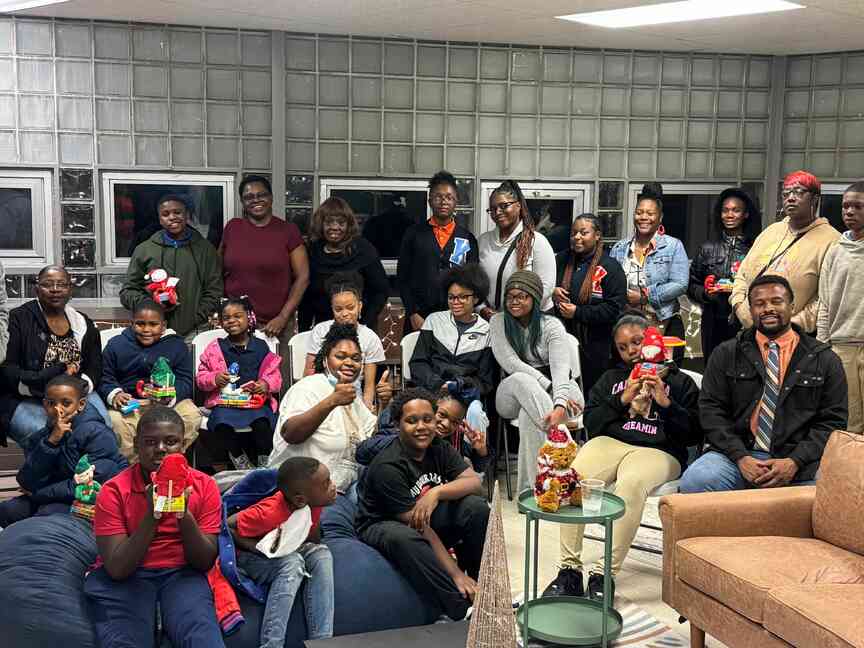
The Eliza Miller Opportunity Hub is a public space where youth and families find educational and professional opportunities, expand leadership skills and give back to their community.
Delta Circles should not feature programming solely for adults, she said. It is important to consider where the community should be in the next 10 or 20 years. That is why the organization is introducing youth to technology and responding to the demand for tech talent in Arkansas and across the nation.
“In order for our students in the Arkansas Delta to be considered as prepared and ready to join the technical workforce, they have to be introduced to technology just as students in other parts of the state are,” she said. “And we are seeing that when our youth are introduced to tech, they blow it out of the water. Their progress has been incredibly swift.”
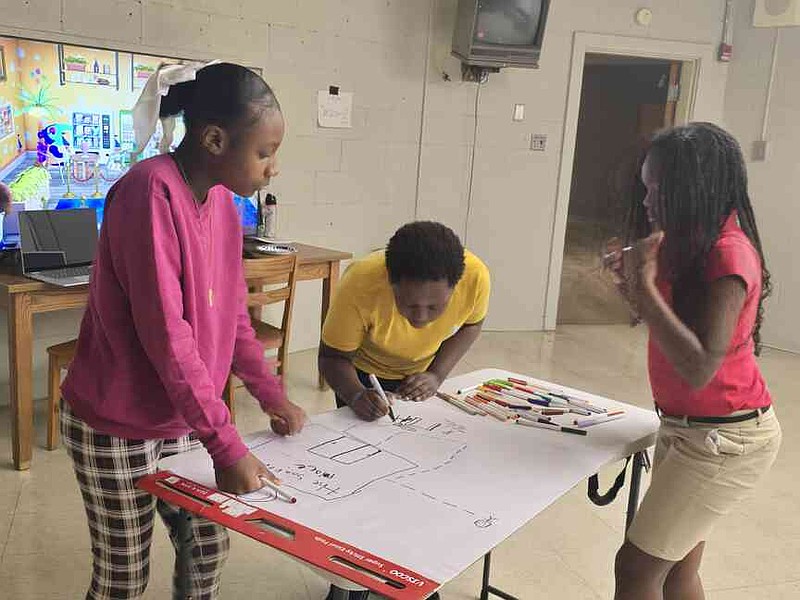
Delta Circles’ first foray into instilling technical skills in local youth came in the form of a STEM camp in partnership with Google. Over the course of 12 weeks, middle and high school students had the chance to immerse themselves in technology, physics and related topics through engaging hands-on activities.
“At the beginning of the class, the students took a preliminary assessment test and scored in the 35th percentile,” Ashanti said. “By the end of the course, their scores had drastically improved to the 90th percentile. Our partners at Google, as well as partners at a local tech company, were blown away — they said they had never seen such a significant improvement.”
Delta Circles recently launched a coding academy to equip students with problem-solving skills and prepare them for a technology-driven future. This has allowed Helena-West Helena youths to showcase their tech talent on a national level. In the fall of 2024, two teams participated in the Youth Coding League, a national program that runs every fall and spring, engaging students in grades fifth through eighth in coding challenges and projects.
“At the beginning of the competition, both our teams were ranked somewhere in the 20s out of 32 teams,” Ashanti said. “By the end of the season, however, our seventh and eighth graders had made it to the top 10. This semester, now that we know the rules better, they started off at number 12 right off the bat. And our group of fifth and sixth graders are already in the top five.”
Ashanti said watching these young students grow creatively and intellectually through competition has been a rewarding experience. And though her students have been working and studying hard, they still have time to have fun being kids.
“After the students complete coding exercises at our center, they can go to the game room,” she said. “We transformed a classroom into an interactive gaming center, complete with comfortable gaming chairs, video game consoles, virtual reality headsets and a big screen TV. So, once the day comes to an end, parents literally have to drag their children out of our gaming facility.”
Ashanti said the popularity of the gaming room is indicative of the success of the Eliza Miller Opportunity Hub.
“After all, the idea behind the community center was to create a place where people could escape,” she said. “Now we see this has grown into a space where people want to be. Our students and participants are creating memories — in five or 10 years, they will be reminiscing about the days at our space.”
Part II: How Calico Bottoms shaped Ashanti’s mission