Rethinking Olive Street and Jefferson Square to meet the needs of the South Central neighborhood is an ongoing project Go Forward Pine Bluff is taking on with support from the University of Arkansas Community Design Center.
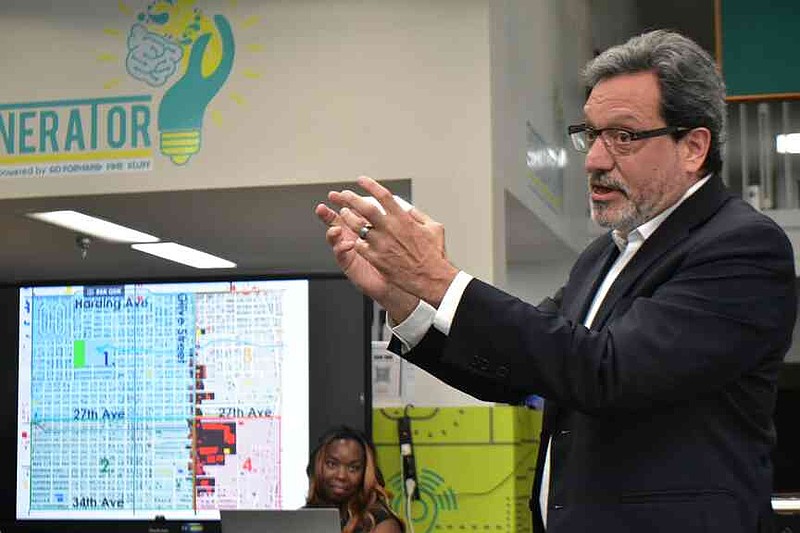
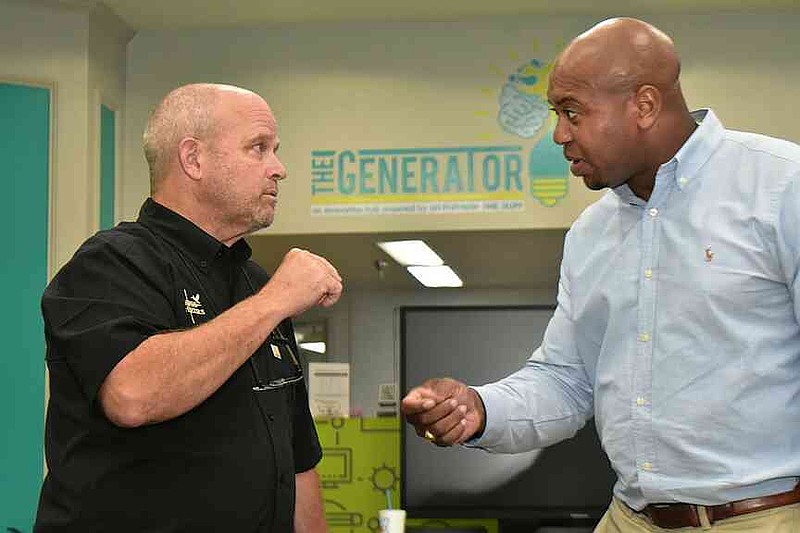
Both entities hosted a listening forum Thursday evening at The Generator, where community leaders and others gathered to hear data from a neighborhood survey on perceptions of Olive Street, known in the highway system as U.S. 63B. It’s also another step in possibly attaining more grants from the U.S. Department of Transportation to transform one of Pine Bluff’s busiest streets into a multi-use corridor no longer limited to vehicle traffic.
“The idea of looking at the Olive Street plan is to design a street that fits with the neighborhood that it’s in,” said Stephen Luoni, chairman of architectural and urban studies at the design center. “It’s a great, historic neighborhood, very pedestrian-oriented. So, we want to design a street that not only maintains a traffic flow and delivers traffic services, but also non-traffic services like economic development, flood mitigation and landscape architecture to shade the street, better pedestrian mobility along the street and a street that’s a destination, not just a place to pass through.”
NOB Architecture + Design of North Little Rock has created a website on concepts of redesigning Jefferson Square, which includes a survey and a history of Olive Street and a prospectus on “sprawl repair” of Olive Street and Jefferson Square by the UACDC. Luoni says he hopes a final plan for retrofitting Olive Street will be revealed by March or April 2026.
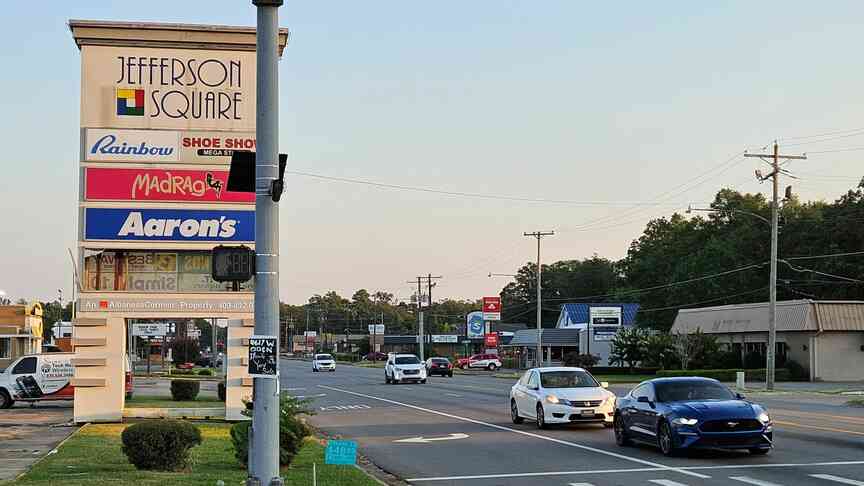
Olive Street was adapted to become more automobile-friendly during the 20th century, with five lanes covering the way from downtown Pine Bluff to the South Central neighborhood, Luoni revealed during a presentation. The street in its present state, however, has limited opportunities for safe pedestrian movement.
Independent reporting for Pine Bluff & Jefferson County since 1879.
The university received a $548,492 Reconnecting Communities and Neighborhoods Grant from the U.S. Department of Transportation in April 2024. Go Forward, the urban improvement initiative formerly supported by city taxes, has partnered with the UACDC since then and began asking for community input from citizens in February of this year. No tax dollars are used in this project, and both the design center and Go Forward will solicit more DoT grants to continue it.
“The DoT is not interested in projects where they just go in and put a 630 highway in like they did in Little Rock,” Go Forward CEO Ryan Watley said. “They want real projects that will not deteriorate the community. So, that’s why these sessions are very important so we can say this is a plan largely supported by the citizens, and this is what they want to see, how it will reconnect the city and make it better.”
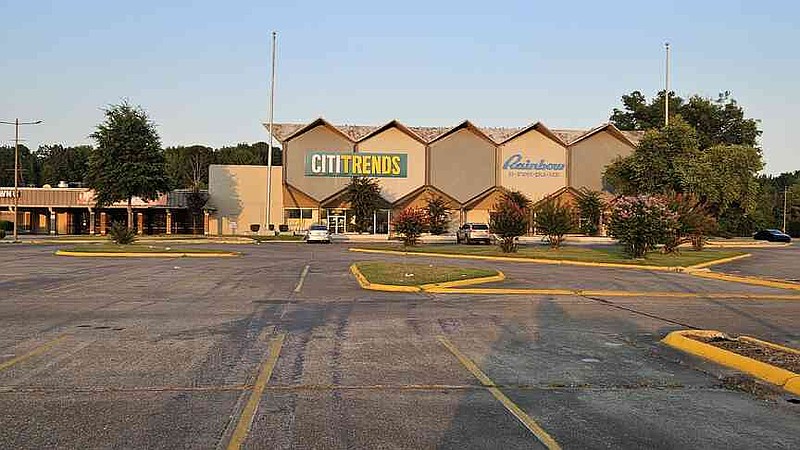
Central to Olive Street is Jefferson Square, a decades-old shopping area that has seen a downswing in commerce as Pine Bluff has lost population. Much of the parking space within the square is wide-open concrete that designers hope, with additional funding, can be turned into a mixed-use destination that adds recreation and gardening to the shopping experience at the location.
Matt Mosler pastors New Life Church at Jefferson Square and calls the shopping center the hub of Olive Street.
“I would love to see the whole community developed where we have more pedestrian traffic,” Mosler said. “There used to be a time when people would spend all day at Jefferson Square. You would do your shopping. You would go to the drug store and get a soda. I would like to see that stuff return.
“The biggest thing we have to do in Pine Bluff is that we have to flip the script and change the narrative. This is a community worth your investment,” he said.
Mosler challenges Pine Bluff residents to take ownership in improvement and promotion of the city to change perceptions of it.
“We’ve got to begin owning our houses. We’ve got to begin owning our streets again, because this is a great community with a tremendous past and, I think, an even brighter future,” Mosler said. “One of the things we lack in our city is (a vision for), where are we going? What do we want this city to be? What are we shooting for? I think this is great having a plan for what we want Olive Street to be.”
Messages seeking comment were left for Mayor Vivian Flowers and AlbaneseCormier Holdings (ACH), the Beaumont, Texas-based owner of Jefferson Square, but were not returned. Luoni said ACH worked with the Community Design Center for four months last fall on four proposals published on the website.
“We gave them four scenario plans for how they may rethink the Jefferson Square shopping center, and how to link up Jefferson Square with a new street design so that Jefferson Square is contributing to a new street environment,” Luoni said. It’s not clear, however, how much either ACH would need to contribute to redevelopment of Jefferson Square as part of the project.
Pine Bluff’s chances to attain more grants, if a notice of funding for them is released, will rest on how well the city draws public input, Watley said.
“Pine Bluff is a vast city. It’s bigger than a lot of cities,” he remarked. “It’s a large land mass, and so there are different areas of land mass that need revitalization. So, it’s not that we’re starting here or we’re starting there. Downtown is a center point where we have started. We’re trying to infill the development (within Interstate 530) and therefore people will come into the city for good and services, etc., and see opportunity.”
Former Pine Bluff Police Chief Lloyd Franklin Sr. sees the Olive Street project as an opportunity for a trickle-down effect of redevelopment across the city.
“In my opinion, it would be more of a catalyst for changing that particular area in town and it would give other parts of the city (confidence that) they can maintain the neighborhoods and do business also,” Franklin said. “I hate to pick on the Northside, but maybe on the Westside, you don’t have as much commercialization as you do other parts of the city. Anything I hear about the image, living conditions, (productive ability) of Pine Bluff, I’m all for it.”