
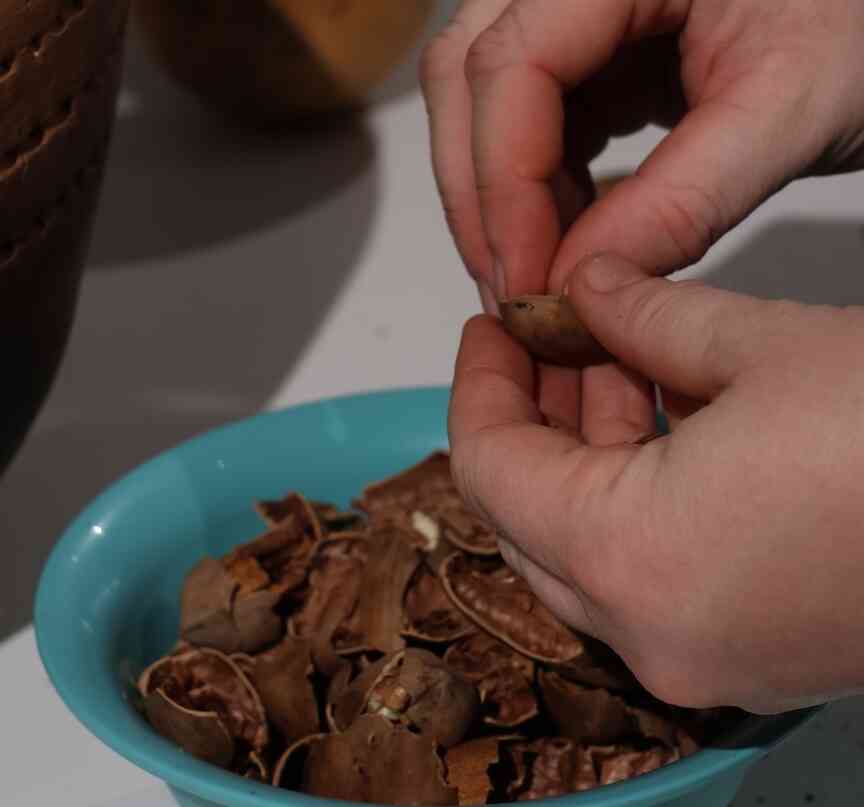
Even before Emily R. Bartz added maple syrup to the Ku-nu-che soup she was stirring, the sweet aroma of pecans filled the Creative Construction Zone at the Arts and Science Center for Southeast Arkansas.
The Cherokee soup called for ground hickory nuts, but Bartz, a Ph.D. archaeologist with the Arkansas Archeological Survey at the University of Arkansas at Pine Bluff Research Station, used pecans.
The two-hour afternoon cooking demonstration was part of ASC’s Second Saturday Family FunDay and was hosted by AAS.
Participants not only learned how to prepare the soup but also gained insight into the cultural significance and archeological legacy of native cuisine.
“This recipe brings to life an ancient culinary tradition of the Cherokee people, connecting us to thousands of years of history through the art of hickory nut processing,” Bartz said.
Independent reporting for Pine Bluff & Jefferson County since 1879.
In addition to celebrating Archaeology Month, the FunDay theme was “community, and explores the shared history of cooking and dealmaking,” said Shakeelah Rahmaan, ASC programs director.
The goal was to reveal “how food has always been at the heart of building and sustaining communities,” Rahmann added.
The March 8 event was free to the public and sponsored by the Pine Bluff Area Community Foundation and McFarland Eye Care.
A MAJOR FOOD SOURCE
According to the information Bartz provided, Ku-nu-che is a traditional hickory nut soup cherished by Cherokee communities in eastern Oklahoma.
Hickory nuts, known for their large, thick and buttery texture, have been a dietary staple in the Eastern Woodlands for millennia, and were a major food source during the Archaic period.
Charred hickory nutshells are frequently uncovered at excavation sites across the region.
This long-standing tradition is not only a testament to the nutritional value of hickory nuts but also to their cultural value and significance to the native people.
A FAVORITE EVEN TODAY
Like hickories, pecans are a botanical native of Southeast Arkansas and a nut that indigenous people would have collected and used in cooking as hunters and gatherers, possibly even after settling into a farming lifestyle.
Like modern people searching out the best grocery stores, ancient peoples would have probably known where the best-producing pecan or hickory trees grew and the trees’ production cycles.
Bartz said that hickory trees often produce in mast boom, or in greater abundance than normal, approximately every four years.
As a bonus, the autumn nut harvest would attract deer and other animals people would have relied on for substance.
GETTING DOWN TO BASICS
While the Ku-nu-che recipe only had five ingredients, including raw nuts, maple syrup, salt to taste, hominy and water, it was a labor-intensive process.
Bartz used a mortar and pestle to crack and pound the nut meat until it reached an oily or gummy consistency. It’s then formed into pecan or hickory nut balls.
The mixture was simmered for about 30 minutes, syrup was added and finally the cooked hominy.
Both Bartz and Tibor Hollmann, a student at Arkansas Tech University who had driven from Russellville to attend the demonstration, both agreed the finished soup tasted “like oatmeal.”
ASC’s Second Saturday Family FunDay programs offer monthly hands-on arts and science activities second Saturdays from 1-3 p.m. at ASC, 701 S. Main St.
For more information, go to www.artx3.org or call (870) 536-3375.
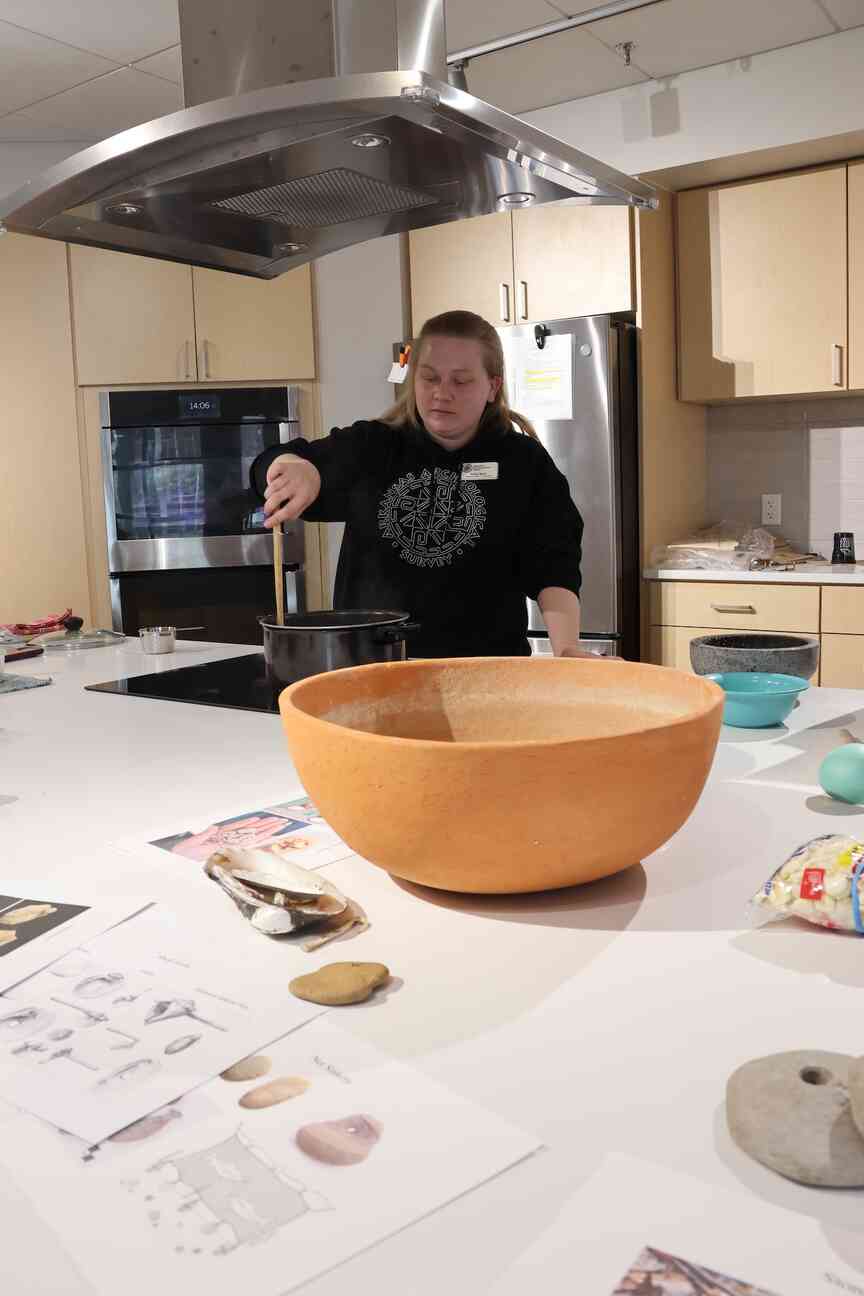 Emily R. Bartz, right, Ph.D., an archeologist with the Arkansas Archeological Survey at the University of Arkansas at Pine Bluff Research Station, stirs the soup. (Special to The Commercial/Deborah Horn)
 Tibor Hollmann, left, a student at Arkansas Tech University, drove from Russellville to attend the Arts and Science Center for Southeast Arkansas’s Second Saturday Family FunDay demonstration. He pours the nut liquid through a strainer while Emily R. Bartz, Ph.D., an archeologist with the Arkansas Archeological Survey at the University of Arkansas at Pine Bluff Research Station, helps. (Special to The Commercial/Deborah Horn)