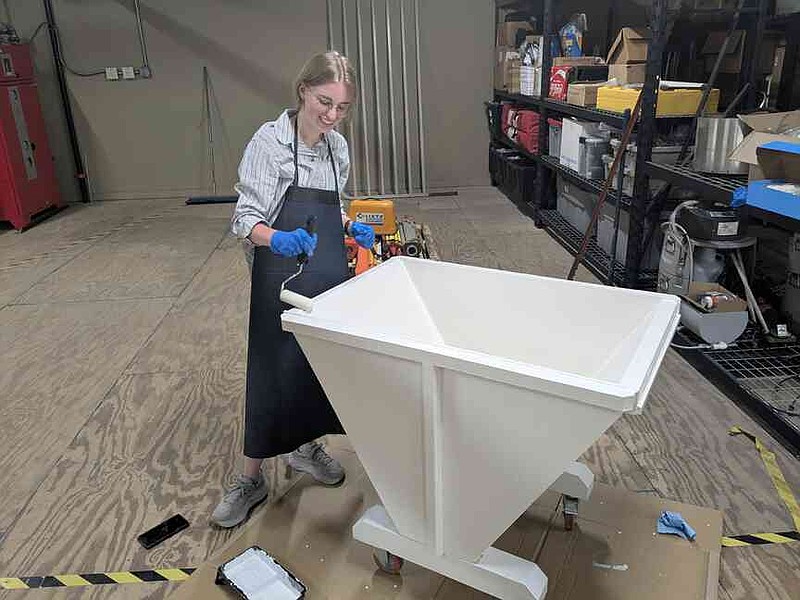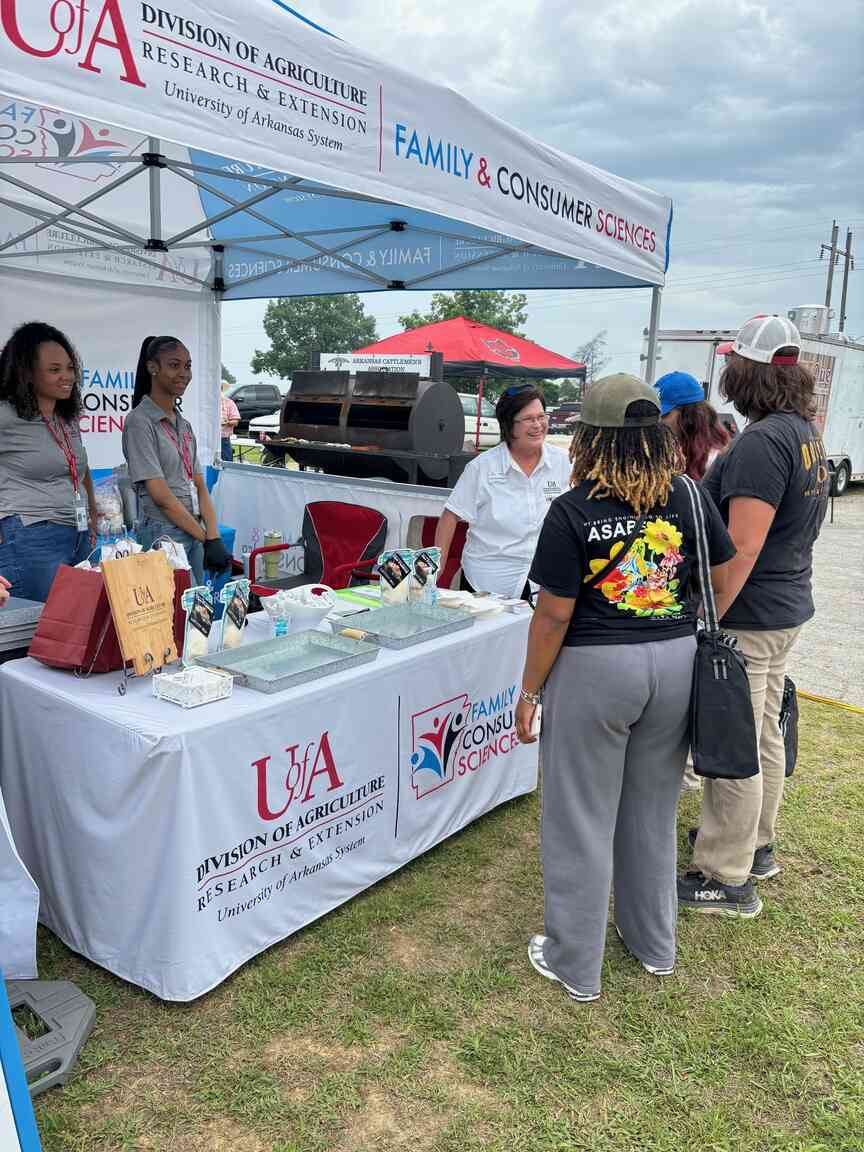
For undergraduate juniors and seniors pursuing careers in water and soil conservation, health and nutrition, or community and economic development, the Experiential Scholars Program offers an opportunity for valuable mentorship and hands-on learning in a paid, nine-week summer internship.
“If you want to strengthen your resume, explore career options and make a difference in Arkansas communities, this program is for you,” said Kayla Machen, extension Arkansas leadership program technician for the University of Arkansas System Division of Agriculture.
The Experiential Scholars Program (ESP) is conducted by the Cooperative Extension Service, part of the Division of Agriculture. The program is supported by funding from the U.S. Department of Agriculture National Institute of Food and Agriculture.
ESP began in 2024. Interns for the 2026 class will receive $4,500 for the nine-week program, during which they will shadow extension professionals, lead their own project and gain leadership and technical training. Applications are now open, and the deadline to apply is Jan. 31, 2026.
The program will begin May 18, 2026, with a three-day orientation at the C.A. Vines Arkansas 4-H Center in Little Rock. The program will culminate on July 17, 2026.
Independent reporting for Pine Bluff & Jefferson County since 1879.
Machen said ESP gives juniors and seniors “the chance to turn their classroom knowledge into meaningful, real-world impact.”
“The program’s structured professional development — including leadership seminars, program development training and evaluation practice — ensures students leave with practical job readiness,” Machen said.
Machen said scholars will be placed at extension locations across the state in one of three focus areas: agriculture and natural resources; nutrition, health and food safety; or rural community development. Housing may be available to help with summer living costs, and placement and housing needs will be discussed during the onboarding process.
As part of ESP, students will also participate in the Arkansas Future Ag Leaders tour, a five-day professional development experience that provides insight into employment opportunities in the Arkansas agriculture industry.
MEANINGFUL MENTORSHIP
ESP participants receive mentorship in their focus area from extension faculty, specialists and county agents. Machen said these mentors are a vital part of the program.
“Each scholar is matched with a mentor who helps them set goals, guides them through daily extension work and supports the design and delivery of their independent project,” Machen said. “Mentors also introduce students to stakeholders, model professional leadership and provide ongoing feedback.
Past graduates of ESP have pursued graduate school or extension-related careers directly following their participation in the program. Machen said one goal of ESP is for 10% of scholars to accept extension positions within a few years of completing the program.
“Mentors are essential because they bridge theory and practice, ensuring students both succeed in their internship and carry those skills into their future careers,” Machen said.
Visit the Experiential Scholars Program webpage on the Cooperative Extension Service website to learn more or contact Kayla Machen at kmachen@uada.edu. To apply for the internship, visit bit.ly/apply-esp-2026.
To learn about extension programs in Arkansas, contact your local Cooperative Extension Service agent or visit www.uaex.uada.edu.
Rebekah Hall is with the University of Arkansas System Division of Agriculture.