
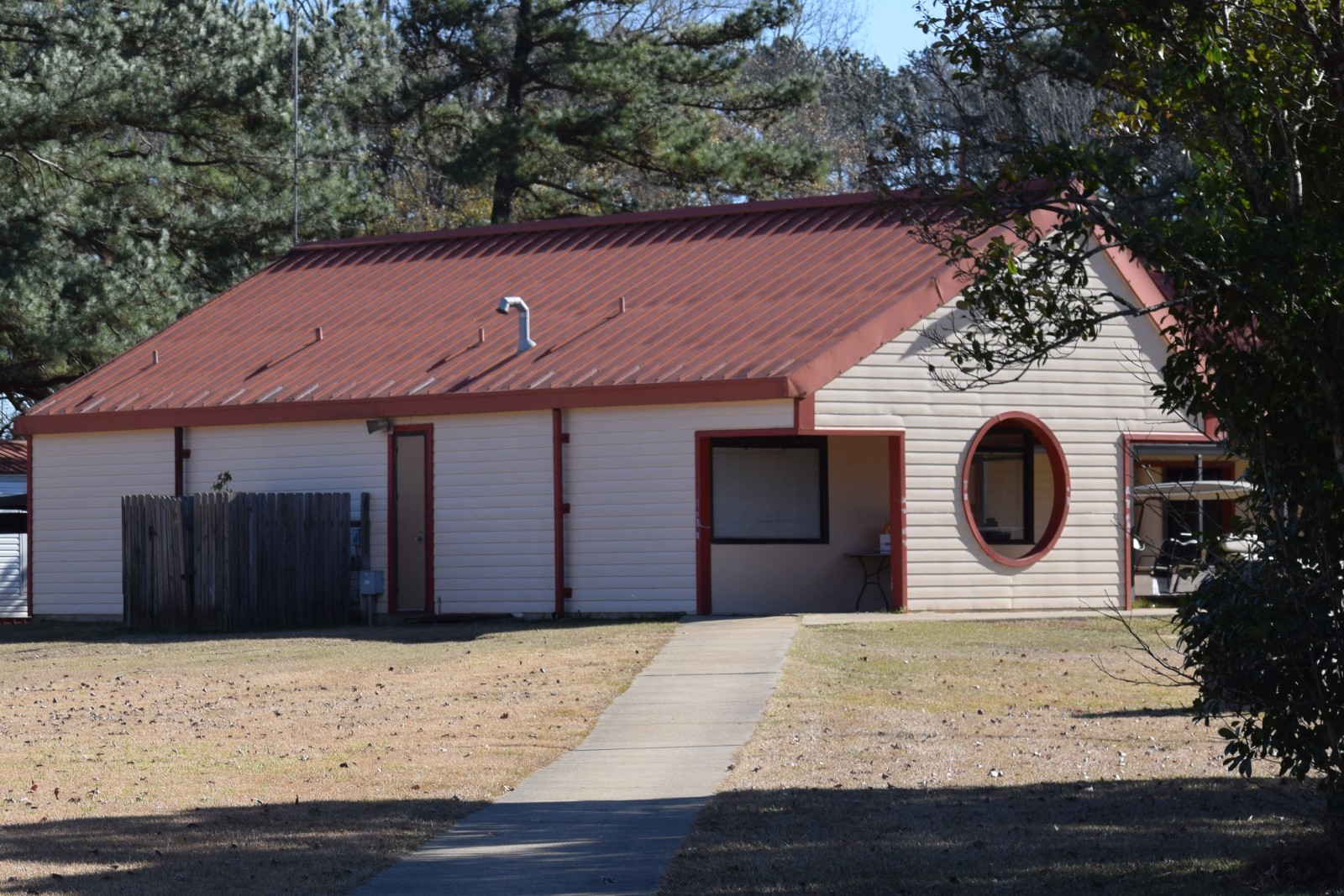
Eleven employees have been placed on administrative leave and another has been terminated resulting from an investigation into the death of an adult resident at the Southeast Arkansas Human Development Center in Warren.
The Arkansas Department of Human Services on Friday released a 148-page report into a “behavior incident” that led to the adult resident’s death Sept. 7. DHS said in a news release that the incident led staff to use physical and chemical restraints and added that a review found that staff did not follow protocol.
DHS did not name either the deceased resident or any of the staff members. It said in the release it is limited in specific information because of ongoing investigations and to respect the privacy of the deceased.
Raven Fuller, the assistant superintendent of the Conway Human Development Center, has been named interim superintendent of the Southeast Arkansas facility, according to DHS communications chief Gavin Lesnick. Mark Wargo was identified as the previous superintendent, but Lesnick told The Commercial via email that the department is “not able to release information about individual employees who have been placed on leave or terminated at this time.”
Independent reporting for Pine Bluff & Jefferson County since 1879.
Contact information for Wargo was not immediately available.
[DOCUMENT: Read the report on the Warren center residents’ death » pbcommercial.com/1019DHSreport/]
“As DHS’ investigation continues, the agency will take additional steps to hold staff who did not follow procedure accountable and to implement recommended changes at this facility,” DHS said in a news release. The department added that recommendations would also be applied to other Human Development Centers in the state “to ensure best practices are followed throughout the system.”
DHS Secretary Janet Mann said in the release: “The loss of one of the residents entrusted to our care at the Southeast Arkansas Human Development Center was wholly unacceptable and is not reflective of the level of care we work to provide Arkansans every day. We offer our deepest sympathies to the individual’s family and are working to both hold accountable those responsible for this incident and make changes throughout our system to prevent future tragedies.”
ABOUT HDCs
DHS also has such centers in Arkadelphia, Booneville, Conway and Jonesboro, according to online information.
Lesnick said Human Development Centers are intermediate care facilities that provide 24/7 care for Arkansans with developmental and intellectual disabilities.
“Residents at the HDCs are placed there because they require significant levels of care and cannot live independently,” Lesnick said. “HDCs are different from the State Hospital, which is an acute psychiatric inpatient hospital that treats patients for mental health conditions including many who are court-ordered to receive mental health restoration or evaluation services.”
The report from DHS includes multiple summary statements of deficiencies. The first summary involved the governing body of the facility, although it is not made clear who was part of the governing body at the time of the incident.
“The governing body must exercise general policy, budget and operating direction over the facility,” the summary reads. “This STANDARD is not met as evidenced by: Based on interviews, record review, facility document review and facility policy review, it was determined that the facility’s Governing Body failed to monitor and revise operating policies ensuring direct care staff were notified of changes to behavioral support plans (BSP), failed to ensure direct care staff demonstrated knowledge and skills to perform a physical restraint and nursing staff demonstrated appropriate medical justification for a chemical restraint.”
IMMEDIATE JEOPARDIES
The report also cited “three immediate jeopardies.”
An ID tag refers to each jeopardy referenced in the summary. ID tag W128, labeled “Protection of Clients’ Rights,” states “… the facility must ensure that clients are free from unnecessary drugs and physical restraints and are provided active treatment to reduce dependency on drugs and physical restraints.” This summary indicates that it was determined that the facility “failed to ensure appropriate replacement behaviors were implemented prior to initiating a personal physical restraint and a medical justification for administering a chemical restraint to manage a behavior and inhibit movement for 1 (Resident 1) of 3 (Resident 1, Resident 2, and Resident 3)” residents reviewed for restraints.
W193, labeled “Staff Training Program,” states “it was determined the facility failed to demonstrate staff adequately administered interventions written in a heavier support plan to address inappropriate behaviors and failed to administer physical and chemical restraints in accordance with the facility’s training program, CPI nonviolent interventions for 1 (Resident #1) of 3 residents reviewed for physical and chemical restraint.” CPI stands for Crisis Prevention Institute.
Among the findings indicated in the summary:
A face sheet indicated that the facility admitted Resident No. 1, or R1, “with diagnoses that included severe intellectual disability, autism spectrum disorder, seizure disorder, 9P Syndrome (a neurological disorder) unspecified disruptive, impulse control, and conduct disorder.” Citing a social history intake dated Feb. 12, 2025, the summary states R1 had a “functional language age equivalent to 2 years.”
The summary listed behaviors such as aggression (biting, scratching, pulling hair, kicking or hitting), property destruction (flipping furniture if frustrated) and self-injury (hitting oneself) as those the resident exhibited.
A 30-day review was scheduled for March 18, but one was conducted March 5, according to the summary, by a clinical psychologist. The review reportedly revealed R1 “had a significant problem with biting and causing significant injury to those bitten.”
R1 reportedly wore a helmet during the day to prevent the resident from biting others. The clinical psychologist recommended that the interdisciplinary team initiate a BSP “with the target behavior of physical aggression,” the summary states.
The BSP, with a review date of March 13 and implementation date of March 20, revealed R1 “was a severe (biter) and had bitten the resident’s own mother’s thumb off and the side of a peer’s face from the eyebrow to jaw,” according to the summary.
Description of the camera footage from the Sept. 7 incident is found in pages 55-66 of the 148-page report. It concludes, however, that three certified nursing assistants failed to ensure R1 had his helmet, considered an adaptive device, in place, according to review of the video footage captured at 6:35 p.m. that day. According to the report, a video surveyor observed R1 attempting to bite one of the CNAs.
“A review of the debriefing form for the behavior report dated 09/07/2025 indicated Resident #1 received a personal and chemical restraint due to aggression directed towards staff and to prevent escalation again,” the report states. “In the ‘possible actions by staff to decrease future necessity of restraint’ there was no documentation. In additional comments section there is documentation immediately after the chemical restraint medical took charge.”
Geodon, a brand name for a medication used to treat schizophrenia and bipolar disorder, was reportedly administered for the chemical restraint.
The report states that facility staff had no idea at what point the patient stopped breathing and lost pulse. Emergency medical staff attended to the patient, who was listed as 5 feet, 8½ inches and weighed 206 pounds in August.
He was reportedly pronounced dead by ambulance crew through a medical doctor at 7:30 p.m.
The administrator was reportedly notified at 7:59 p.m.
During an interview with a maltreatment investigator Sept. 10, the investigator stated that staff did not do the restraint correctly, according to the report. A quality assurance coordinator was interviewed 5 minutes later and reportedly confirmed that finding.
W249, labeled “Program Implementation,” stated it was determined that “the facility failed to implement the Individual Program Plan (IPP) including Behavior Support Plan (BSP) by placing adaptive equipment on resident to prevent biting and failed to ensure direct care staff were informed of changes to BSP for 1 (Resident #1) of 3 residents reviewed for implementation of IPP including BSP.”
Mann concluded in her statement that DHS is “working to implement reforms so our residents receive the proper and safe care they deserve.”
Read the report on the Warren center resident’s death at pbcommercial.com/1019DHSreport/.