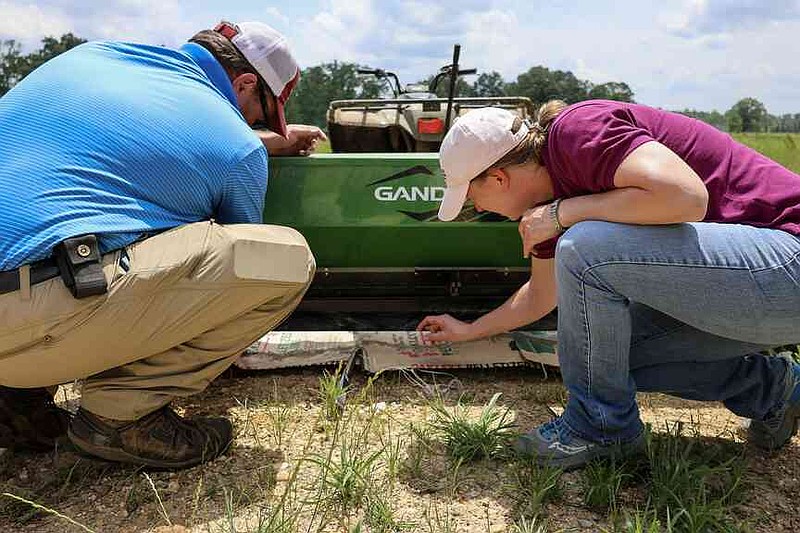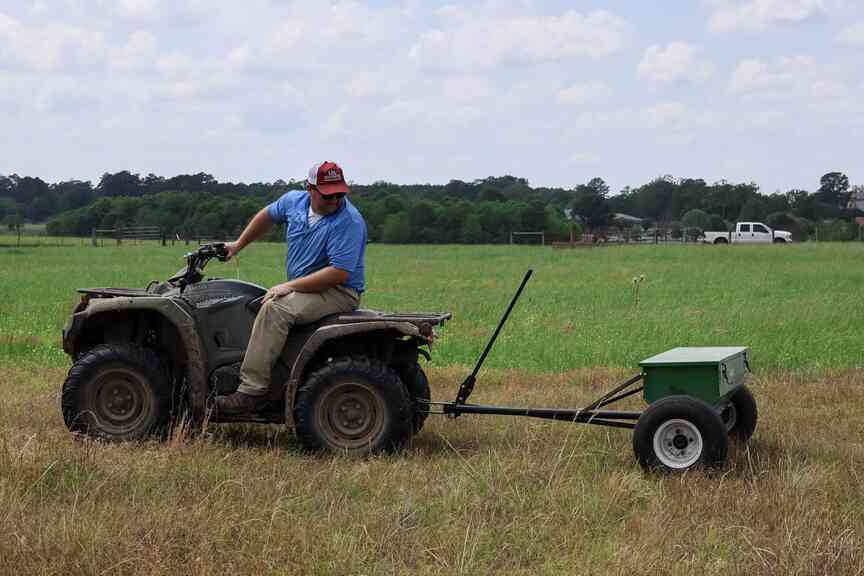
Several weeks of dry, warm weather followed by potential severe weather could go either way for ranchers trying to get their cool-season annuals planted.
The National Weather Service at Little Rock said that “confidence continues to increase for strong to severe t-storms on Saturday. Primary hazards at this time are damaging winds and large hail, but a few tornadoes cannot be ruled out.”
The storms would follow several weeks of very dry weather. As of Oct. 9, more than 45% of Arkansas had some form of drought, with less than 20% of the state not having any drought, according to the Drought Monitor.
“The best time to get cool-season forages in is basically now,” said Jonathan Kubesch, extension forage specialist for the University of Arkansas System Division of Agriculture. “We’re in our most reliable window for fall plantings.”
“Dry weather has been a challenge for those cool-season plantings,” he said. “I personally planted annual ryegrass last weekend with the goal of catching a rain this week or next.
Independent reporting for Pine Bluff & Jefferson County since 1879.
“For seed that’s already in the ground or seedlings coming up, this weekend might be the start or the end of things,” he said. “Earlier plantings may have worse odds than what’s been recently planted.
“We’ve left our window about mid-September, where we would have planted in the fall to get something this side of January,” Kubesch said. “If we delay our planting, we’re going to delay our grazing next spring.
“Now, everything that we’re going to seed now is something we’re going to start using toward the end of winter into next spring,” he said.
How severe weather might affect a newly seeded area will depend on local conditions, especially where the ground is so dry that it might repel water instead of absorb it.
“Know your soil. If we’re looking at a lot of surface runoff — if the ground’s not going take it up, that would be something for concern,” Kubesch said. “But for a lot of us, it’d be good to have seed securely in the soil ahead of the rain.”
To learn about extension programs in Arkansas, contact your local Cooperative Extension Service agent or visit www.uaex.uada.edu.
Mary Hightower is with the University of Arkansas System Division of Agriculture.