
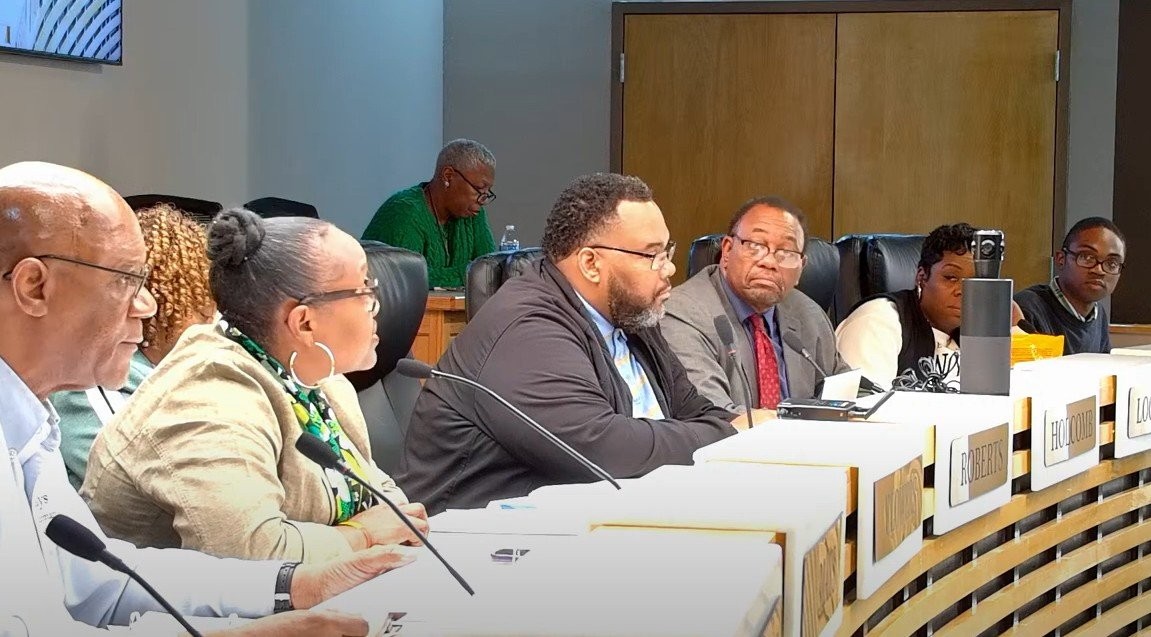
The Pine Bluff City Council’s administration committee met last week to discuss two key ordinances: one authorizing electronic payments and another prescribing protocols for handling confidential funds.
The first agenda item, an ordinance amending a section of the city’s code of ordinances to authorize electronic payments, was brought back to the committee after failing to pass in a previous meeting. Pine Bluff Mayor Vivian Flowers opened the discussion, acknowledging past reservations and expressing confidence in gaining support this time. She noted that two primary issues had been raised previously: concerns over language in an attached “best practices” document and the inclusion of policies and procedures language directly within the ordinance.
Regarding the “best practices” document, Flowers clarified that concerns about language related to cellphones were not specific to electronic payments and had been addressed by the city attorney. She emphasized that the document explicitly requires electronic payments to be made on city computers within city buildings, not on laptops or phones.
The more significant debate centered on the inclusion of policies and procedures within the ordinance itself. Flowers argued against this, stating, “policies and procedures are typically beyond something that’s excluded in your legislative language across the spectrum of government.” She explained that policies and procedures are typically handled through a simpler administrative process, because they involve day-to-day implementation. She cited the city’s ongoing transition to new cloud-based software as a reason to avoid highly specific legislation that might quickly become outdated.
“It’s not knowing what that will do,” Flowers said of the software transition. “It’s a good reason why we don’t want to push specifics around this or anything else, and to get in legislation?”
Independent reporting for Pine Bluff & Jefferson County since 1879.
She also pointed to the city’s experience with the covid-19 pandemic as an example of how rapidly circumstances can change, making rigid legislative policies counterproductive. Flowers revealed that the existing accounting policies and procedures manual, dating back to 2016, is maintained by the finance department, specifically by Director Gina Devers, who originally prepared the document.
The proposed ordinance, Flowers highlighted, would shift responsibility for defining electronic payment procedures from solely the finance department to a three-person panel: the city treasurer, the city clerk and the finance director.
Council Member Lanette Frazier said her main concern was ensuring that the current payment processes would remain in place until new electronic payment procedures were finalized and a new system implemented. Flowers assured her that the clerk’s office, as per the existing code, would remain responsible for accounts payable.
A motion was made to send the electronic payments ordinance to the full council with the mayor’s proposed amendment. This amendment would direct the city treasurer, city clerk and finance director to craft electronic payment policies and procedures, ensuring that state and local record-keeping rules are followed and that these procedures are then added to the accounting policies and procedures manual. The motion was seconded and passed to move on to the full council for September’s meeting.
The second agenda item, an ordinance prescribing protocols for processing and paying confidential funds, was also discussed. The clerk explained that there is no existing policy for distributing confidential funds and that the new legislation would outline how the clerk’s office would handle these funds. Currently, payments are made directly to individuals. The proposed change would direct payments to a specific department or division, such as the Pine Bluff Police Department and the clerk’s office would work with a financial institution, likely Relyance Bank, to identify individuals authorized to cash checks for that division.
This new protocol would make the process “cleaner” and will address auditor concerns about payments being made to individuals.