
The Pine Bluff City Council approved two resolutions Tuesday that will improve the city’s quality of life and affordable conditions.
Held by Zoom due to the inclement weather and road conditions, the council members unanimously authorized Mayor Shirley Washington to enter into a real estate sales contract with Southeast Estates L.P. for property along Ohio Street and purchase real property for the Delta Rhythm and Bayous Project.
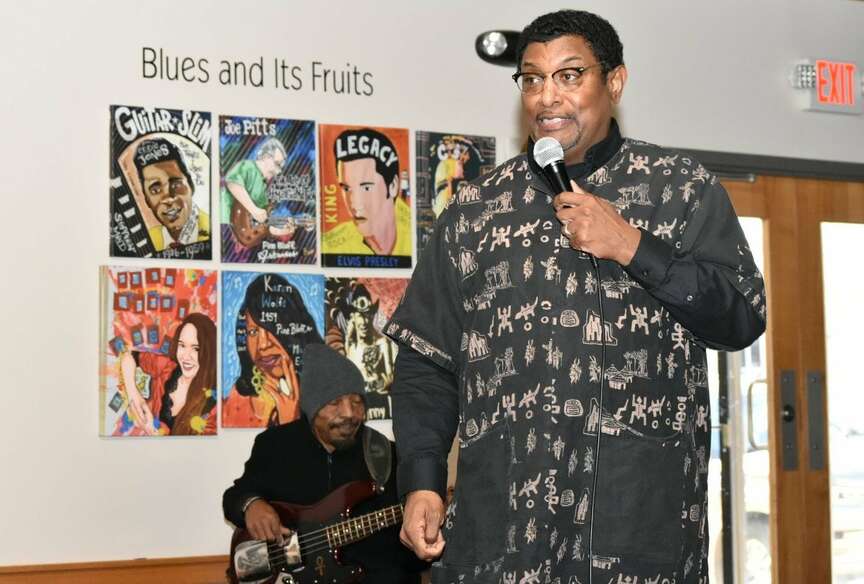
Much discussion was held concerning the Delta Rhythm and Bayous project, an initiative led by Jimmy Cunningham Jr. According to the resolution the purchase would be for downtown properties owned by Elvin and Sharon Moon.
Those properties include 219 and 221 Main St. for $66,000 and 225 Pine St. for $36,000 and would be purchased with previously appropriated funds for land acquisition for the project by the city council.
Council Member Steven Shaner questioned how much money Cunningham had raised toward the completion of the project beyond the purchase of the land, considering the money is coming from the 2017 Go Forward sponsored tax, which will expire in September.
Independent reporting for Pine Bluff & Jefferson County since 1879.
“The way I’m seeing this, we don’t really need to buy land and then this project not go through because we don’t have the funds and then the city is stuck with vacant properties downtown, kind of like the Bank of America building downtown,” said Shaner.
The city will have to acquire several vacant properties downtown that were purchased by the Urban Renewal Agency as part of its stabilization project, which was aimed at recruiting investors, as well as all projects and properties acquired by the Urban Renewal Agency, according to council member Bruce Lockett in a follow-up interview with The Commercial.
“In the legislation that creates the Urban Renewal Agency, all properties revert to the city since the tax will expire in September,” said Lockett, who said it will include a vacant hotel as well. “Once Urban Renewal no longer exists, unless the city comes up with another responsible entity, everything becomes city property because they will no longer have a source of funding and a means of developing property.”
In May of 2019, the Urban Renewal agency purchased all parcels between Walnut and Pine streets from Fourth to Third avenues, consisting of approximately 170,300 square feet for $672,000. Subsequently, the agency began to buy property between the Third and Fourth blocks of Main Street. One purchase was for eight parcels on the west side of Main Street for $297,000, an additional 24,877 square feet on the same block for $70,000, and a third in the area for $137,000 totaling $1,176,000 to acquire approximately 239,000 square feet of property.
In a previous release, Urban Renewal Executive Director Chandra Griffin explained those property acquisitions were essential to implement the Re-Live Downtown plan or any plan for the area.
“Before we do this, we need to find out where the funding is coming from for that project and postpone this,” said Shaner in regards to the Delta Rhythm and Bayous project.
Council Member Glen Brown Sr. said the money for the acquisition of the property for the Delta Rhythm and Bayous project was already appropriated for the project, which the council had approved unanimously last year.
Council Member Lanette Frazier said she also attended a meeting where Greenville, Miss., is partnering with the initiative and all are working collaboratively to solicit grants.
“What we need to do is have site control in order to apply for the amount of money that we are applying for in tandem with Greenville, Miss.,” said Cunningham. “We met last month and had a very good meeting with Greenville.”
Cunningham said part of the process is a regional initiative and they have banded together in collaboration to apply for the Mellon Foundation Monument Grant.
“They have a grant that is tailored for what we are doing,” said Cunningham, who said he has reached out to the foundation. “They had $250 million in place for four years for that grant; however, we did not apply because we didn’t have site control.”
According to Cunningham, he has been working with an engineer to map out some additional changes and modifications to the model so an updated cost can be submitted.
“We need to say we have site control in order for them to say ‘you guys have taken a significant step’ in addition to providing funding for it,” said Cunningham.
Cunningham said he is also working with the property owners on the purchase of parcels they will need behind the Masonic Temple and the old Burt’s store for future phases of the project.
“Trust me, I am for this. I would love for this to happen downtown — because I definitely think we need this for downtown — so I don’t want anyone to think I’m against it by all means,” said Shaner. “I just would feel a whole lot better if we had the money. It’s kind of like building a house and not having the money there yet and then going to the bank and saying, ‘I’m going to have the money but I don’t have it yet.’ I think it’s premature, even for site control, until we know. You’re talking about a $6- to $8-million project.”
Cunningham explained to Shaner that those costs would be for the other phases and not for the phase he is currently trying to build out, which is the wellness component.
“We are not looking at the total district,” said Cunningham. “We are looking at one piece of one venue in the district.”
Larry Matthews of Community Development also explained to Shaner that the site in question was the main site and that it would feed into all the other parts.
“We have enough money along with grants that we have already on the books that we can make this site happen,” he said. “We’ll take the other sites as they come along.”
After further clarification from Cunningham, Shaner said he understood.
“I was just thinking about the whole project as a total,” he said. “I just hate for the city to start buying land and then something happens or we didn’t get the grants or the money that we needed — then we’d be stuck with all this other property. I think every council member knows we really don’t need any more properties to have to maintain and take control of.”
Concerning the resolution approving the Real Estate Contract, Southeast Estates L.P. will develop housing on land owned by the city at 2001 S. Ohio St. for $0 contingent on obtaining low-income housing credits from Arkansas Development Finance Authority to close on construction.
“The developers explained with this property we are moving over to them they are going to apply for a $20- to $22-million grant to build 60 units for low income and 60 units for the elderly,” said Lockett. “The city has $1 million invested in the property. With the Southeast Estates developing the property, we’ll get the value of the $20 million grant that they will receive. I think that’s a great investment — the city invests a million dollars and gets a $20 million return.”
The proposed development will consist of 60 fourplex units for seniors 55 years of age and older, and 60 two-story apartment buildings ranging from one to three bedrooms. According to Mayor Washington, the area will need to be rezoned, and the matter will be addressed in the upcoming Planning Commission meeting.