Just the announcement alone of Graphyte coming to Pine Bluff was enough to draw the attention of several widely respected publications, such as The Wall Street Journal and The Washington Post.
The story of a small company backed by tech giant Bill Gates’ investment firm whose mission is to reduce carbon dioxide emission at one-fourth the average cost of other companies has caught the attention of business reporters across the country. Even Politico has picked up on the story and released an article Tuesday with the headline “Exclusive: World’s largest carbon removal plant is about to open.”
“It’s really gaining national attention for something within Pine Bluff and Jefferson and Grant counties, something so small compared to the world,” Graphyte plant manager Nathan Davis said. “That’s happening in Jefferson and Grant counties. That’s a big thing.”
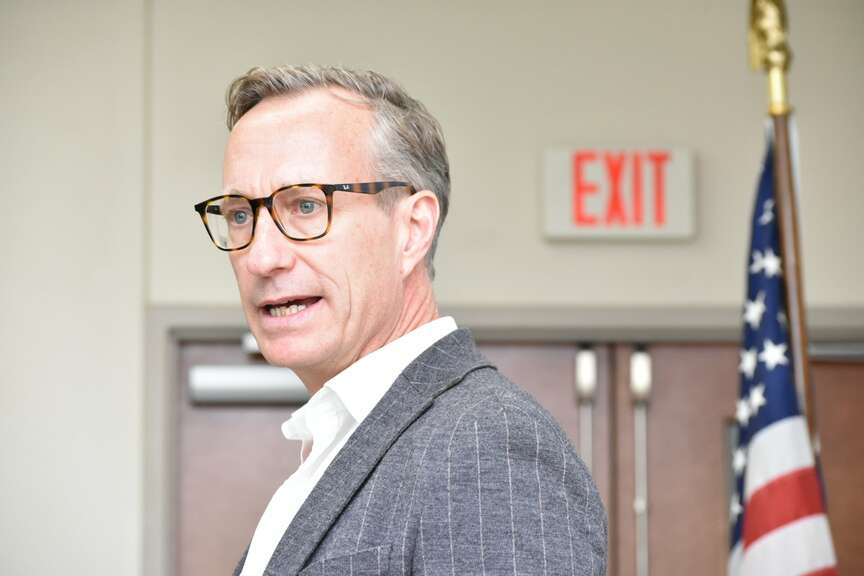
Barclay Rogers, Graphyte’s CEO, announced the Politico story Tuesday during a Lunch & Learn session hosted by the Pine Bluff Regional Chamber of Commerce at the Donald W. Reynolds Community Services Center.
“The world needs carbon removal solutions,” Rogers said. “I think that is becoming abundantly clear, particularly ones that are affordable. When Graphyte has entered the market, it’s like, ‘Wow, those guys are doing it in a way that’s permanent, affordable and scalable, and the fact that literally this is their first project out of the gate is bigger than anything else — and we’re just getting started — I think it’s that overall story that’s grabbing people’s attention.”
Independent reporting for Pine Bluff & Jefferson County since 1879.
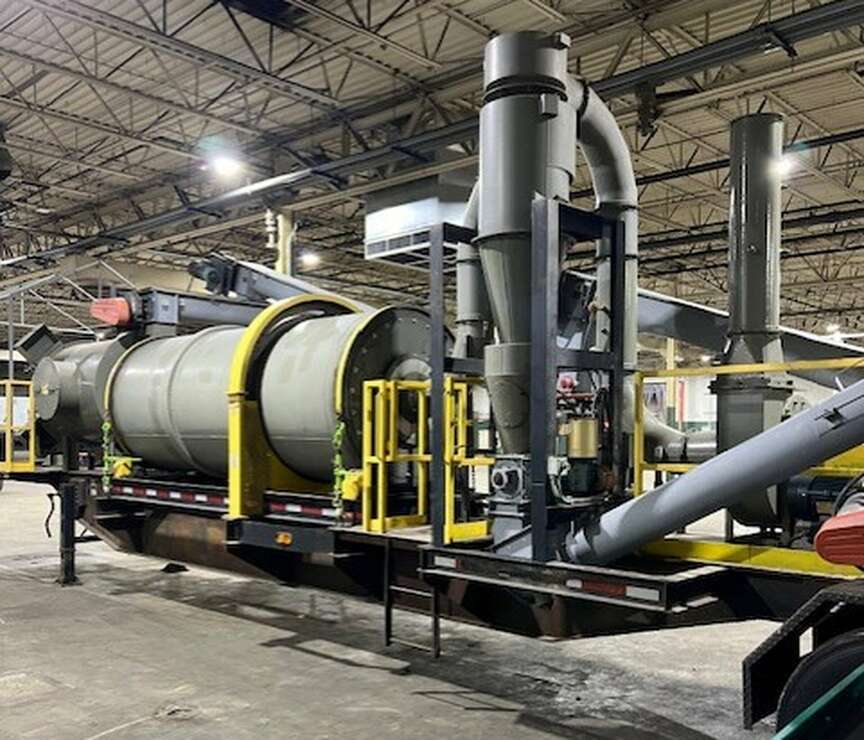
Rogers announced Graphyte’s arrival in Pine Bluff last November. The company has set up a processing site at the Jefferson Industrial Park and calls it its Loblolly Facility in honor of the widely planted pine tree in Arkansas. Graphyte has also established a storage site of more than 70 acres outside of Sheridan to store carbon blocks it makes to capture the carbon dioxide before it is emitted into the atmosphere. That land will be repurposed for high-value uses, according to a presentation Rogers gave community leaders Tuesday.
The proprietary process Graphyte uses is “carbon casting.” The first carbon blocks from agriculture and timber residues will be produced by Friday, Rogers said.
According to Politico, climate scientists suggest scaling up carbon removal and slashing greenhouse gas emissions to avoid the worst impacts of global warming.
Citing information from the World Resources Institute, Rogers says the market demand is at least 75 million tons of carbon removal by 2030. That is 150 times the capacity at which all carbon removal companies are operating today. Graphyte charges $100 per ton.
“Today, the market is supplying on the order of 200,000 tons per year, so we have to go from 200,000 tons to 75 million tons in six years,” Rogers said. “That’s rapid growth.”
Graphyte is starting at 15,000 tons per year and is expected to scale to 50,000 tons by 2025, with the goal of increasing to 500,000 tons per year.
More than half of the 2,000 largest publicly traded companies have set a carbon target, and many industry experts believe this will create a $1 trillion market opportunity for carbon removal, according to Graphyte. American Airlines has agreed to pay for most of the tonnage Graphyte plans to remove in 2024, Rogers confirmed.
In addition, the list of local businesses who outsource their biomass for Graphyte to cast the carbon is quickly growing. Most of the market for carbon removal in southeast Arkansas comes from the timber and agriculture industries that provide the wood biomass and rice hulls, among other products.
“We’re taking other people’s trash and turning it into treasure,” Rogers said.
Graphyte’s goal is to hire 10 full-time employees at the Loblolly Facility and be fully operational by July. Rogers expressed the desire to hire students and graduates from local institutions such as the University of Arkansas at Pine Bluff.
“We have a great plan in place,” Davis said. “We have great investors and a team. Everyone on this team are all stars, so to speak, and we plan to add more. We feel great about achieving all of our goals.”
The progress Graphyte has made has been a year in the making, from ordering supplies and arranging contracts with biomass suppliers.
“There a million things that needed to happen, but I think the fundamental one is — and I’m really serious about this — that we need to move fast,” Rogers said. “The market is looking for scale. So, we’re constantly looking at, how do we move efficiently and how do we get to scale quickly?”