At 10 a.m. on a clear, cool Friday morning, a large gray Ford travel van pulled to the curb outside 310 Center St. in Little Rock. From the driver’s door, a tall gentleman emerged, warmly dressed and carrying a plastic bag filled with harmonicas.
His brisk, youthful gait belied a 92-year-old frame. Crossing the one-way street, he entered the front door of a nondescript office front hidden in the shadow of tall buildings on either side.
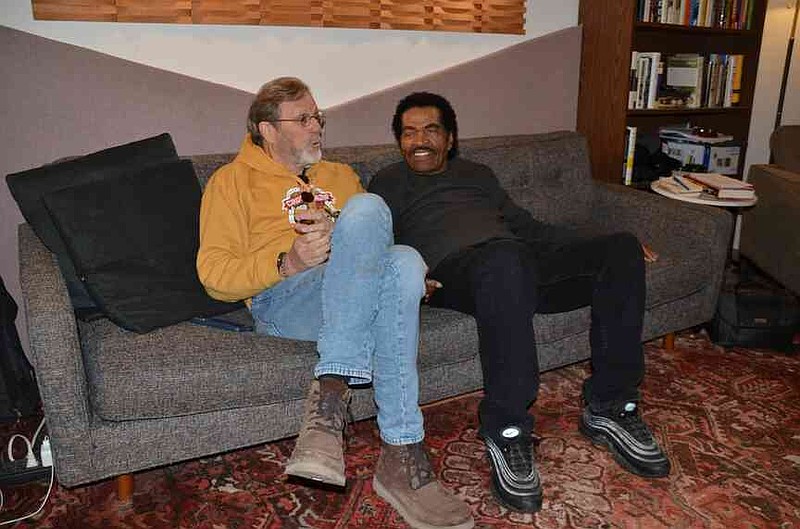
Waiting in the 8,000-square-foot Fellowship Hall Sound recording studio were music producer Jason Weinheimer and singer/songwriter Billy Jeter. No introductions were necessary, since the trio had worked together to turn out “Hambone Stomp,” the hit single that has continued to receive daily airplay on XM radio channels since Sept. 9, 2024.
Bobby Rush plopped down on a comfortable couch in the control room and relaxed after an early morning drive from his home in Jackson, Miss.
A true American treasure and Arkansas icon, Rush’s family moved from Homer, La., to Sherrill, Ark., in 1947 when Rush was 14 years old. At 16, he began his storied music career on Third Avenue at Jittie Bugs juke joint in downtown Pine Bluff.
Independent reporting for Pine Bluff & Jefferson County since 1879.
Rush, who turned 92 on Nov. 10, is a three-time Grammy winner who recently received a fourth nomination for his duo work with Kenny Wayne Sheppard on their record “Young Fashioned Ways.” He shared how the pair are collaborating on a second LP that should see them in Sheppard’s new Nashville studio within 60 days. If things go according to plan, they’ll spend another two months laying down tracks for a mid-summer release of their second effort.
His busy schedule includes gigs in the Austin area Jan. 26-27 and launching a tour of Japan on Jan. 30, followed by two weeks in China during the month of January. Rush said, “I’ve played Tokyo since 1963. This is my 12th or 13th time to Japan.” He’ll be returning to Los Angeles for the Feb. 3 Grammy Awards.
He took time out from his world travels to join his good friend Jeter to provide some background harmonica and vocals on two new compositions, “Shuga” and “Hard Times.”
Before recording began, Little Rock native videographer Allen Mays, who now resides in Washington, D.C., arrived to document the historic occasion. He captured the “process” of Rush at work.
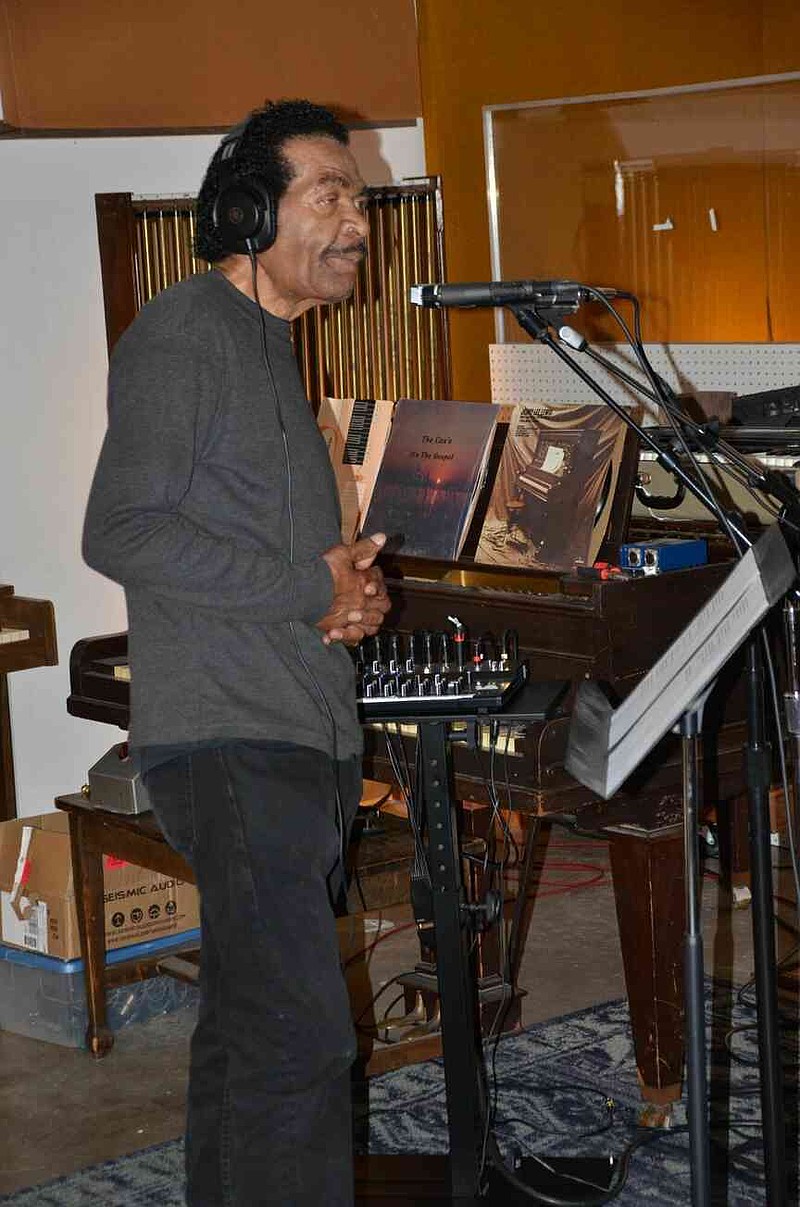
Standing at the mic, headphones donned, Rush asked for the prerecorded guitar, bass, drum and vocal tracks to be played for him to get the feel of the number. During the run through, he added harmonica highlights at appropriate intervals. Following only two practice plays, he told Weinheimer to roll tape. Listening to the playback, the pair of consummate professionals, Rush and Weinheimer, knew at the same instant where to change the arrangement. Returning to the mic, Rush nailed it on the next attempt.
During the playback, all agreed, “What else can you do with that?” At that point, this was the song Jeter expected to earn radio play.
On the second number, the process involved a genesis of genius. He asked Jeter, “This is about hard times, right?” The songwriter agreed.
Rush listened to the playthrough, searching for a fresh feel to the song. Sharing his thoughts afterward, he said, “When I heard it, I was looking for the sound to fit it. A lonesome kind of sound, like working on a chain gang.”
Listening to playback of a perfectly fitting harmonica overlay, Rush surprised everyone, saying, “Let me add something.” As the song unfurled in his headphones, Rush didn’t raise a harp to his lips but added spoken word and harmonies at selected spots. Following another playback, Rush told Weinheimer, “Okay, now capture this.” Back at the mic, he added overdub harmonies to his own vocals, taking the entire thing to a higher level. Under Rush’s tutelage, the second offering quickly elevated above the first as an obvious hit.
With the project in the can, Jeter handed Rush a Harmony acoustic guitar for him to autograph as part of the ongoing Arkansas River Delta Blues Trail fundraiser. ARDBT is a statewide 501(c)(3) nonprofit. Their initial project is called “Arkansas Originals” and intends to honor four important blues artists with memorial plaques erected in their hometown. The first honorees include Rush, Big Bill Broonzy of north Jefferson County, James Yancey “Tail Dragger” Jones of Altheimer and “Queen Sylvia Embry” Lee Burton of Wabbaseka.
After signing the guitar front, Rush flipped it over and regaled a rapt audience with off-the-cuff guitar and vocals for several minutes, proving his talents as not only a harmonica and vocal virtuoso but a master of the six-string as well.
Before departing Little Rock, Rush told Jeter, “I’m doing this because we’re good friends and I appreciate your work with the (Arkansas River Delta) Blues Trail, but most of all because you and I are the last two recording artists left standing in Jefferson County north of the Arkansas River.” Jeter projects his current long play project to reach completion and appear on shelves in early October 2026 prior to the King Biscuit Blues Festival.
Following Friday morning spent at the microphone, Rush drove to Pine Bluff, where he spent the night before joining in the “Bobby Rush Giveaway” at the University of Arkansas at Pine Bluff. In collaboration with Walmart, the annual Christmas occasion saw 159 bicycles gifted to children.
Explaining how he first became involved with Walmart, Rush said, “I was driving from Memphis to Little Rock in 1967 when my van broke down on I-40. I started walking to a station to find a payphone when a limousine stopped and offered to help. I climbed in the back seat between these two gentlemen I didn’t know. They had a car phone, and this was way before cellphones. I’d never seen anything like it. They asked if I needed assistance with the repair, and I told them I just needed the part. I could fix it myself.”
Rush told how one fellow said it was near closing time, but he thought they could help him out. His host called ahead to a Walmart, where the auto department had the part waiting when he arrived.
“Before they left, he gave me his card that I stuck in my pocket,” Rush said. “When I tried to pay for it, the cashier said, ‘It’s already paid for.’
“When I got back to my van, a tow truck was already there and had it raised up to do the repair. When he finished I asked the mechanic what I owed and he told me, ‘It’s all taken care of.'”
Rush said, “When I found the card in my pocket and read it, it was Sam Walton with his friend J.B. Hunt. Old Sam knew me from his dealings with Stax Records, but I didn’t know him at the time.”
Rush concluded, “When I started working with children, Walmart began donating all these bicycles.”