
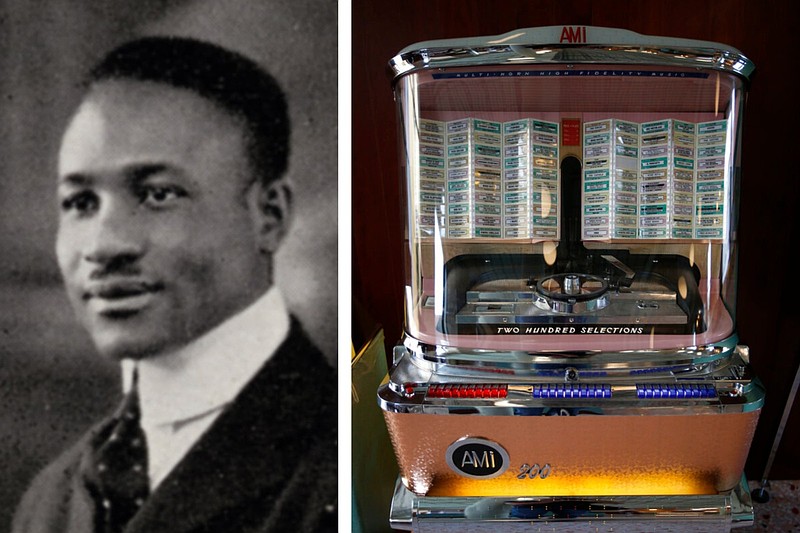
The Blues Junction Experience monument, set to be unveiled in 2027, will prominently honor J. Mayo “Ink” Williams, a Pine Bluff native whose contributions to blues history are documented in recording archives and recognized by the Blues Hall of Fame.
Williams became the first African American producer at a major record label (Paramount Records and later Decca) and played a pivotal role in commercial recording of blues and “race records” during the 1920s-1930s.
Williams discovered, recorded and produced legendary blues artists including Big Bill Broonzy, Blind Lemon Jefferson, Ma Rainey and Tampa Red. His work as producer, talent scout and industry pioneer helped shape the sound and business of blues music, representing the bridge between Delta blues origins and the commercial recording industry that spread the blues nationally.
“J. Mayo ‘Ink’ Williams deserves recognition alongside the great names in blues history,” said Jimmy Cunningham Jr., tourism development director for the Pine Bluff Advertising & Promotion Commission.
Independent reporting for Pine Bluff & Jefferson County since 1879.
“He didn’t just play the blues — he recorded it, produced it and built the infrastructure that allowed Delta blues to reach mass audiences. His contributions are documented in recording archives and the actual recordings that still exist today.”
Williams’ Blues Hall of Fame induction cements his place in music history. Blues Junction brings that recognition home to Pine Bluff.
INTEGRATION WITH DRB CULTURAL DISTRICT
Blues Junction enhances the Delta Rhythm & Bayous Blues & Wellness Plaza, which opened Feb. 27 as the nation’s largest outdoor gallery dedicated to Delta music and culture.
Together, the plaza and Blues Junction create a comprehensive cultural heritage experience spanning Civil War and emancipation history, Trail of Tears acknowledgment, Delta blues heritage, the University of Arkansas at Pine Bluff’s educational legacy, civil rights infrastructure and contemporary cultural programming.
“The DRB Blues & Wellness Plaza established the foundation,” explained Sheri Storie, A&P executive director. “Blues Junction adds an iconic landmark that will become synonymous with Pine Bluff’s cultural heritage.”
ECONOMIC IMPACT
Blues Junction is designed as an economic development tool leveraging heritage tourism. Strategic advantages include heritage trail positioning, photographic appeal for social media sharing, multi-site integration with other Pine Bluff attractions and educational depth through interactive content.
Heritage tourists average $200-400 per visit on lodging, dining, shopping and entertainment.
Blues Junction is projected to attract 10,000-25,000 additional annual visitors, generating significant economic impact for Pine Bluff businesses.
“Cultural heritage tourism is sustainable economic development,” said Michael McCray, A&P public relations and cultural development specialist. “Unlike extractive industries, our heritage can’t be depleted or moved. Blues Junction leverages permanent assets to create ongoing economic benefit.”
DOCUMENTED AUTHENTICITY
Every claim about Pine Bluff’s heritage significance can be verified through primary sources:
• Geographic facts — U.S. Geological Survey confirms bayou measurements;
• J. Mayo Williams — Blues Hall of Fame records and recording archives document his career;
• UAPB history — Institutional records prove its 1873 founding;
• Civil War events — Federal military records and battlefield archaeology;
• Trail of Tears routes — Steamboat manifests and tribal records;
• Civil rights leaders — Court records and NAACP archives; and
• Federal Writers’ Project — Library of Congress houses the largest collection of freedom-seeker testimonies.
“Every interpretive marker at Blues Junction will cite primary sources,” Cunningham said. “Every claim can be verified. That’s the foundation for heritage tourism that endures.”
Information for this article was provided by the Pine Bluff Advertising and Promotion Commission.