
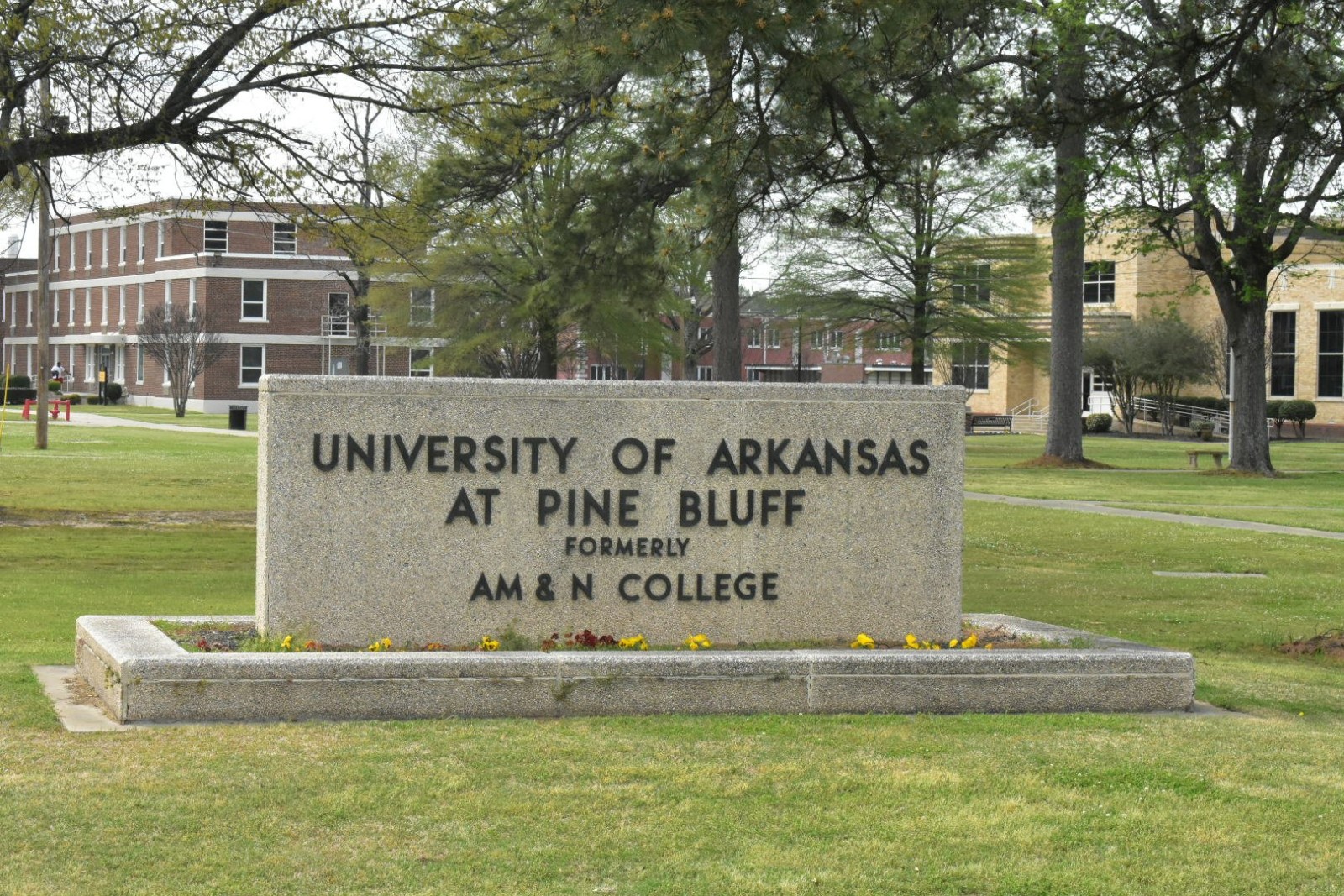
The Arkansas Research Alliance awarded 25 ARA Impact Grants to researchers from labs across the state, including Pine Bluff.
The research campuses that received grants include the University of Arkansas at Pine Bluff, the University of Arkansas, Arkansas State University, the University of Arkansas at Little Rock, the University of Arkansas for Medical Sciences and the University of Arkansas System Division of Agriculture.
The grants, which totaled $1,868,910, were distributed to scientists across research institutions to collaborate with Arkansas companies and generate innovative solutions that meet pressing industry, market and economic demands, according to a news release.
The grants provide funding of up to $75,000 for 12-month scientific and engineering research projects that involve facilities and that support one or more of seven growth opportunity areas profiled in ARA’s report, Enabling an Innovation-Led Future for Arkansas: University Research Competencies Aligned with Innovation Growth Opportunities.
The grants are reinforced with matching contributions and other support from the state’s private sector. Companies large and small, including Walmart, Lexicon, JB Hunt, Hytrol, Riceland, NuShores Biosciences and CelluDot, are partnering in the projects.
Independent reporting for Pine Bluff & Jefferson County since 1879.
“Among ARA mandates is to bring deeper collaboration between the state’s research community and industry,” explained Bryan J. Barnhouse, ARA president and CEO. “The demand for the Impact Grant program is proof of concept that when applied research is paired with the vested interest of industry across targeted sectors, it fuels innovation that leads to the development of new technologies and economic advancement of our state.”
The growth opportunity areas include:
1. Population Health Innovations & Clinical Research,
2. Power Electronics, Advanced Packaging & Grid Management Systems,
3. Next Generation Transportation & Logistics Systems,
4. Materials Engineering Applications,
5. Precision Agriculture,
6. Food Production & Integrative Health, and
7. Supply Chain, Retail & Consumer Analytics.
RECIPIENTS
The researchers receiving ARA Impact Grants include:
Grace Ramena, UAPB, AI-driven feed strategies for sustainable Largemouth Bass production;
Yathish Ramena, UAPB, Artemia-based feed alternatives for aquaculture sustainability;
Laurent Bellaiche, UA, Materials Design for Advanced Devices;
Robert R. Beitle, UA, Biologics Manufacturing and Bioseparations;
Yue Zhao, UA, High-Efficiency SiC-Based Solid-State Circuit Breaker for DC Systems;
Min Zou, UA, Innovative Low-Friction Graphite Coatings for Conveyor Systems;
Sarah Hernandez, UA, Barge Detection for Situational Awareness and Commodity Monitoring;
Chase Rainwater, UA, Smart Robotics Arm for Packaging;
Leonard Harris, UA, Combination Cancer Therapy Prediction Using ML and Mechanistic Modeling;
Alegandro Martin Gomez, UA, Melanoma Detection Using Low-Cost Total Body Photography Systems;
Xiangbo Meng, Commercialization of High-Energy Lithium Metal Batteries;
Karthik Nayani, UA, Up-Concentration Technology for Lithium Extraction;
Prashanth Ravishankar, UA, Sustainable Aeroponic Vertical Farming of Milk Thistle for Nutraceutical Applications;
Morgan Broberg, UA, Steel Fabrication and Structural Testing;
Janeth Gabaldon, UA, Cold Supply Chain Efficiency with IoT;
Anthony Gunderman, UA, Precision Agriculture Robotics for Blackberries;
Fabricio Medina-Bolívar, A-State, Phenolic-Rich Nutraceuticals for Healthy Aging;
Mariya Khodakovskaya, UA Little Rock, Sustainable Nanotechnology in Urban Agriculture;
Tansel Karabacak, UA Little Rock, Antibacterial Stainless Steel for Food Safety;
Alex Biris, UA Little Rock, Safety and efficacy study of NuCress™ Bone Void Filler for ACL repair;
Gyan Sahukhal, UAMS, Biofilm Control for Medical Devices;
Dongyi Wang, UASDA, Precision Sow Management with Intelligent Vision Systems;
Jin-Woo Kim, UASDA, Cellulose Nanocrystal-Based Probiotic Encapsulation Systems;
Aranyak Goswami, UASDA, Harnessing Genomics and Machine Learning to Combat Poultry Pathogens; and
Ali Ubeyitogullari, UASDA, Upcycling Rice Processing Byproducts into Advanced Packaging Materials.
THE PROJECTS
Two UAPB researchers’ projects were among those funded by grants.
PROBIOTIC THERAPIES TO SUSTAIN ARKANSAS AQUACULTURE
Principal Investigator: Yathish Ramena.
Campus: University of Arkansas at Pine Bluff.
Summary: This initiative develops probiotic treatments to combat Edwardsiellosis, a costly bacterial infection threatening Arkansas’ $700 million aquaculture industry. This approach reduces dependency on antibiotics, enhances fish health and supports sustainable farming practices. By training students and fostering collaborations between universities and industry leaders, the project strengthens Arkansas’s aquaculture industry and offers a path to global market leadership in probiotic health solutions for fish.
AI AND INNOVATIVE FEEDS TO BOOST BASS FARMING
Principal Investigator: Grace Ramena.
Campus: University of Arkansas at Pine Bluff.
Summary: This project leverages artificial intelligence to optimize fish feeding strategies, significantly reducing feed waste and improving growth and health in largemouth bass farms. Additionally, it promotes affordable production of Artemia, a nutritious live feed, through backyard culture methods ideal for rural Arkansas farmers. Testing at demonstration farms statewide will validate these solutions, potentially reducing costs, enhancing fish health and supporting rural aquaculture businesses across Arkansas.