
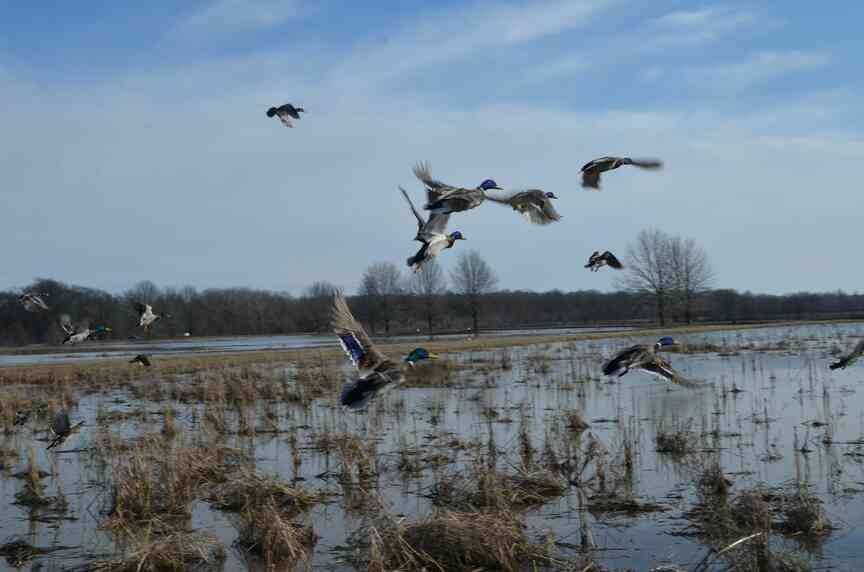
Following some initial delays in conducting the first Arkansas Game and Fish Commission aerial survey for the 2025-26 waterfowl season due to technical issues with the survey program and aircraft maintenance, the Wildlife Management Division had an opportunity to fly Dec. 10-23.
Arkansas Delta mallard population estimates are up 344,741 over December 2024, and more than a quarter million specklebelly geese were recorded during the survey.
The report was released Jan. 1.
“December 10 in southwest Arkansas estimated 7,960 ducks with 3,710 of those being mallards,” according to the report. “From December 15-23 in the Delta estimated 498,164 mallards and 1,458,354 total ducks. Arctic goose population estimates totaled 2,992,914 light (lesser snow and Ross’s) geese and 285,292 greater white-fronted geese in the Delta.”
It further stated, “The Delta mallard population estimate was 344,741 mallards above the December 2024 estimate and 35,154 mallards below the 2009-2024 December long-term average. Total duck population estimates were 407,455 birds above the long-term average and 928,377 birds above last December’s estimate. On average, mallards account for about 49% of all ducks in the Delta during December surveys. During this survey period, mallards made up only 34% of the total duck estimate.”
Independent reporting for Pine Bluff & Jefferson County since 1879.
The report qualifies the results as potentially skewed due to the lack of surface water on the landscape.
“During periods of drought, estimates may be biased high or low due to the clumped distribution of birds around limited water sources, introducing greater uncertainty into our estimates. Consequently, confidence in these population estimates is lower than typical surveys,” according to the report.
The survey broke down individual locales for clustered birds.
“Biologists estimated over 50,000 mallards in four survey zones: Bayou Meto-Lower Arkansas, Big Creek, Cache, and L’Anguille. These survey zones accounted for 79% of the MAV-wide (transect based survey) mallard estimate and 76% of the total duck estimate. In addition, the Black-Upper White survey zone had a relatively high total duck estimate of 106,953. Most notably, the Big Creek zone had 429,157 total ducks which made up 29% of the total duck estimate,” the survey said.
It also addressed the effect of weather on the season.
“The Delta has faced very dry conditions this fall without any substantial rainfall, with the majority of the region currently classified as moderate to severe drought conditions,” according to the report.
Due to lack of widespread surface water, hunters experienced success where fields were pumped up early. Large flights of both ducks and geese filled the sky, providing ample opportunities for harvest. However, following the first split from Nov. 22 to Dec. 1 and the second split from Dec. 10-23, Jefferson County hunters have seen harvest numbers drop dramatically. Reports are spotty, seeing full bag limits one day while experiencing little success the next. This is largely thought the result of no new ducks being pushed into the region by cold fronts from the north, making the waterfowl in the area who have been hunted every day more wary and difficult to decoy.
Additionally, without significant rainfall, surface water has steadily evaporated or run off, reducing the size and depth of flooded fields without continued pumping.
The third and final split of the annual 60-day season began Dec. 27 and runs through Jan. 31.
Highly Pathogenic Avian Influenza, or bird flu, made a strong reappearance in December with multiple dead and sick snow geese dotting roadside fields. This species proves more susceptible to the disease from the stress of their long migration, their large numbers and close crowding feeding together in fields. Indications of specklebelly geese suffering the ailment in Arkansas are rare while sick duck reports are practically nonexistent.
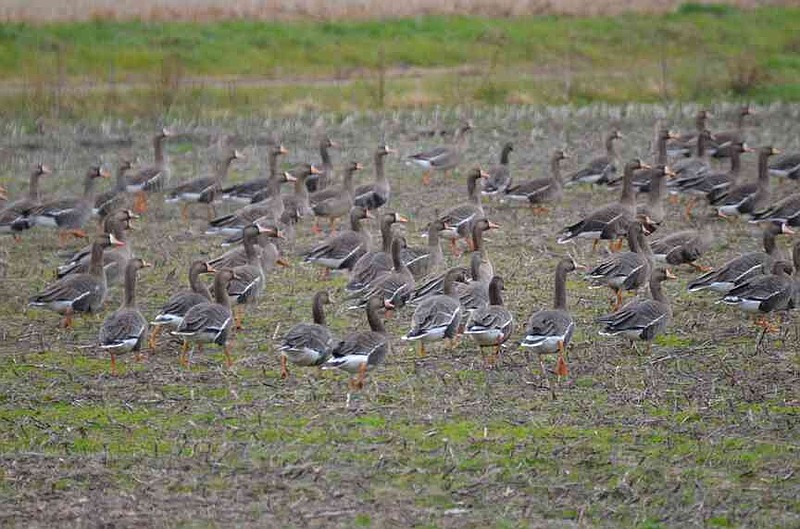
specklebelly geese in the Delta during the latter half of December. (Special to The Commercial/Richard Ledbetter)