
Kyle Hunter announced last June he would not seek a fifth term as prosecuting attorney in the 11th West Judicial Circuit, which comprises Jefferson and Lincoln counties.
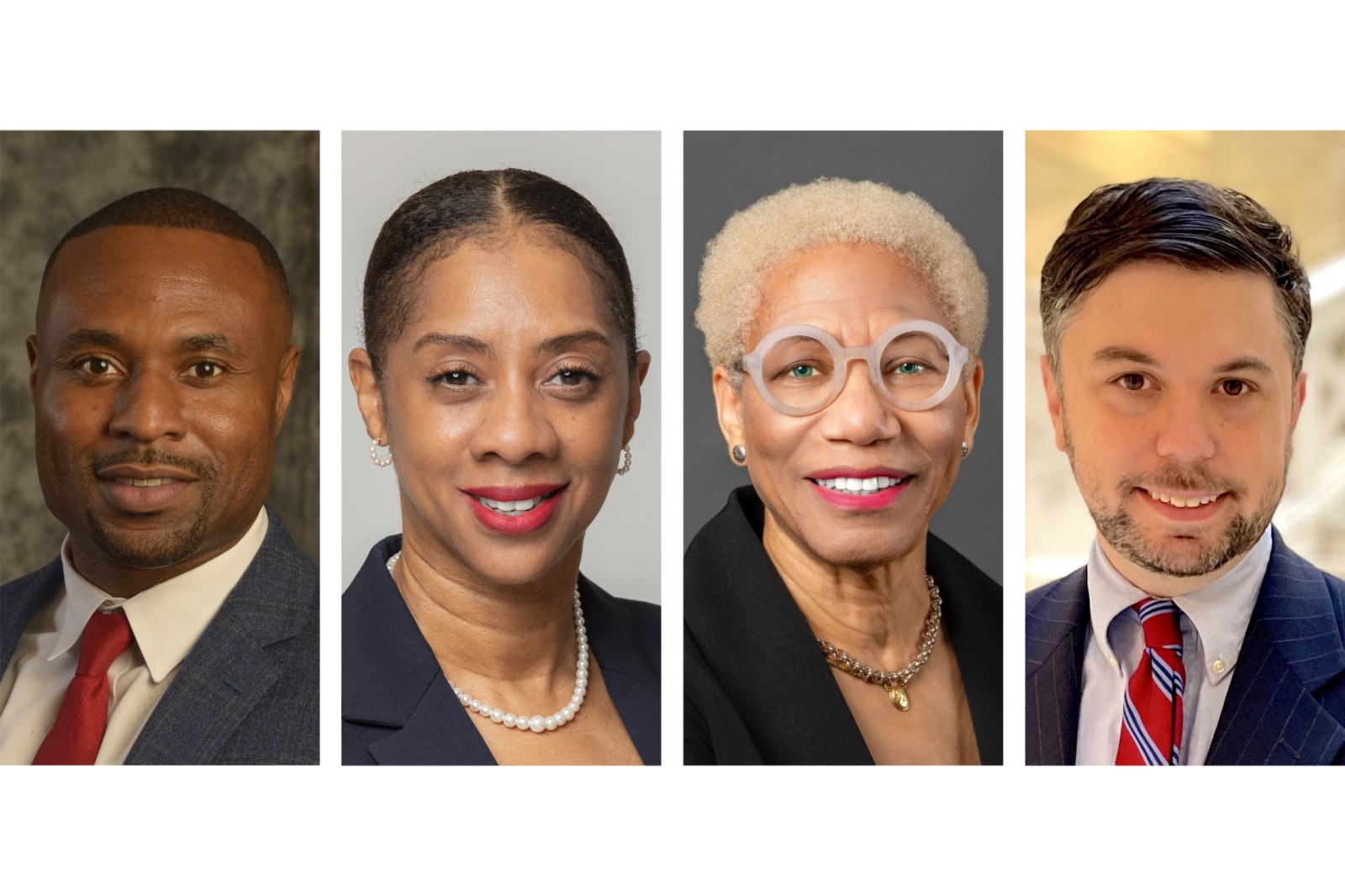
That means for the first time since 2011, the two counties will have a new chief prosecutor. Mircha King, Karres Manning-Center, Evelyn Moorehead and Joe West have all put their names in the hat to succeed Hunter.
Each candidate responded to the following six questions:
1. What makes you the best qualified candidate to head this office?
2. How will you ensure fair, non-biased use of discretion?
Independent reporting for Pine Bluff & Jefferson County since 1879.
3. When would you charge a youth as an adult versus a juvenile?
4. What specific programs will you implement for rehabilitation and to reduce recidivism?
5. What is your philosophy on “tough on crime” versus rehabilitative justice?
6. What personal experiences or motivations drive your commitment to public service as a prosecutor?
Here are their responses, some of them trimmed down for brevity:
MIRCHA KING
1. I am the best qualified candidate because I understand that a prosecutor’s office must do three things well: protect the public, maintain the integrity of the criminal justice system and run an efficient operation. This district needs leadership that is decisive on violent crime, transparent in its decisions and organized enough so that justice is not delayed. Delays such as inconsistent filings and unclear policy standards frustrate law enforcement and erodes the trust that the public has in the prosecutor’s office.
I bring a clear management plan: prioritize violent crime, streamline case review, establish consistent charging standards and improve communication with law enforcement and the community.
2. Prosecutorial discretion should never be arbitrary or biased. Prosecutorial discretion must be principled and consistent. I will implement written charging guidelines so similar cases are treated the same. This will reduce the risk of bias and increase predictability. I also support regular internal case reviews and data tracking to ensure decisions are consistent across race and socioeconomic backgrounds.
Transparency is critical. When the public understands why a case was filed, declined or resolved through a plea agreement, trust increases. Fairness does not mean leniency. It means applying the law evenly and thoughtfully, without favoritism or prejudice.
3. Charging a youth as an adult should only be reserved for serious, violent offenses or repeat violent conduct where public safety demands it.
In many cases, rehabilitation within the juvenile system produces better long-term public safety outcomes, which is why the juvenile court system exists. Young people are different from adults in terms of brain development, impulse control and capacity for change. However, when a juvenile commits homicide, aggravated violent offenses, or demonstrates a pattern of escalating violence, the community’s safety must come first. Those decisions will be made on a case-by-case basis, and those decisions will rest upon the severity of the offense, prior history and risk to the public.
4. Public safety improves when repeat crime decreases. We already have programs in place that offer deserving defendants alternative forms of punishment, but I will expand access to these programs especially to nonviolent offenders who are deserving of a second chance. This includes:
Less restrictive entrance requirements for drug court candidates;
Supervised probation for nonviolent defendants who can demonstrate that they have been positively contributing to the community through employment, being enrolled in school and community service in its many forms; and
Reentry planning for convicts which will connect them with employment and counseling resources.
For drug-related offenses, we must distinguish between traffickers and users. Traffickers will face firm prosecution. Users who demonstrate willingness to engage in treatment should have structured opportunities to do so under supervision.
5. This is a false choice.
Being tough on crime means stiff prison sentences for violent offenders and repeat dangerous criminals. As the elected prosecuting attorney, I will send a clear message to those who threaten the safety of the members of this community. That message is that prosecution will be strong and prison sentences will be long.
Rehabilitative justice recognizes that not every offender is the same. Addiction, mental health struggles and poverty-driven offenses require a smarter approach if we want long-term reductions in crime.
My philosophy is simple: Be firm where public safety demands it. Be strategic where rehabilitation reduces repeat crime.
6. My commitment to public service is rooted in both purpose and experience.
I earned my bachelor’s degree in legal studies from the University of Massachusetts Amherst because I believed then, and still believe now, that the law is one of the most powerful tools we have to protect people and create order in society. For me, this has never been just a career. It has always been a calling. As a defense attorney, I see how the system impacts individuals and families. As a deputy prosecutor, I saw the devastation violent crime brings to victims and entire neighborhoods. That dual perspective keeps me balanced. It reminds me that justice requires fairness, courage and accountability.
KARRES MANNING-CENTER
1. I believe my 25 years of “prosecutorial” experience, commitment to justice and transparency, and community focused justice vision make me the best qualified candidate to head the prosecutor’s office. The elected prosecutor should have significant prosecutorial experience trying violent felonies to protect the public. I currently serve as chief deputy prosecutor, handling, at times, duties of the elected prosecutor.
In addition to my 25 years of prosecutorial experience, I am committed to fair and transparent policies for bond recommendations, charging decisions and sentencing recommendations. The office will utilize email and online platforms to keep victims and the community informed. Thirdly, my community focused justice vision will target violent crime offenders, partner with community drug, veterans and mental health programs to reduce crime, and work to restore community trust.
2. I believe establishing transparent policies for evaluating cases will ensure fair, non-biased use of prosecutors’ discretion. As the chief deputy prosecutor, my responsibilities include reviewing criminal investigations to determine whether to pursue charges and what appropriate sentence should be recommended.
These decisions can be difficult depending on the facts and circumstances. The Arkansas Sentencing Standard Grid is used by Arkansas prosecutors to ensure that sentences are imposed fairly. Arkansas does not have a similar standard for evaluating whether to pursue charges in a case. Thus, I will consider among other things the 16 factors provided by the American Bar Association ABA Standard 3-4.4, including: “(i) the strength of case; (ii) prosecutor’s doubt that accused is guilty; (iii) extent or absence of harm caused; (iv) impact of prosecution or non-prosecution on public welfare; (v) background and characteristics of offender;” etc.
3. The decision to charge a youth as an adult would be made on a case-by-case basis based on the seriousness of the crime, the youth’s age, and their criminal history as authorized under A.C.A. 9-35-412 (c). I strongly believe in the rehabilitative goals of the juvenile court system, and I support the GVI program and other rehabilitative efforts that Judge Brown and his staff are using to reduce youth crime.
However, the Prosecutor must balance the rehabilitative goals of a juvenile while also ensuring the safety of the public. To ensure this aim fairly, we will examine the maturity of each juvenile, the offense seriousness and potential for rehabilitation when determining whether to charge a youth as an adult versus a juvenile.
4. I believe educational and community programs such as GVI, drug court, veterans court and mental health court can help with rehabilitation and to reduce recidivism. I believe Judge Brown and his staff at Juvenile Court are the authority on what rehabilitative programs are needed for juvenile rehabilitation and to reduce recidivism. The Juvenile Court’s GVI program is a great success. The office will collaborate with the adult GVI program for rehabilitation and to reduce recidivism. I plan to develop educational plans that will involve educating the community on how to seal convictions, how to restore driver’s license, etc. We will educate young people in school about the consequences of breaking the law. We will host moot court events to inspire youths to seek careers in the law. The office will work with the City Youth Summer program and provide job opportunities for youths. This office will collaborate with community partners including drug rehabs, mental health programs, veterans program to reduce recidivism.
5. I support a blended approach that combines punishment with rehabilitation. I do not support rehabilitative justice for habitual offenders. I believe to ensure public safety habitual offenders, particularly violent offenders, must be punished for accountability and to reduce crime. However, I am in support of rehabilitative justice for first time offenders who have drug or mental health problems and who have committed nonviolent offenses. I believe this serves our community if such an offender can get the help he or she needs to become a productive member of this community. It also reduces criminal court cases and the financial cost to the public.
6. As a young girl, I saw my aunt physically assaulted by her husband and a childhood friend disclosed to me that her stepfather was molesting her. I became a prosecutor to be the voice for victims like them. As a prosecutor who handles domestic battery and child abuse cases, I know how difficult these cases are to prosecute. That is why I am committed to ensuring that these cases receive the attention they deserve. This is my calling and I am proud to have served this community for the past 25 years as a prosecutor fighting for victims and prosecuting criminals.
EVELYN MOOREHEAD
1. My training, experience and commitment to fairness uniquely qualify me to serve as the next prosecuting attorney for Jefferson and Lincoln counties.
I graduated as valedictorian of Wabbaseka High School, earned a B.A. in Economics, Political Science and African American Studies from Yale University, and obtained my Juris Doctor from the University of Arkansas School of Law, where I served as the law school’s first Moot Court Board Chairman.
My professional experience includes clerking for the Arkansas Supreme Court under Chief Justice Jack Holt and Associate Justice Steele Hays; serving as a paralegal instructor for the University of Arkansas Continuing Education Department; interning for the Army Corps of Engineers; working as a law associate for John Walker, P.A.; serving as a correspondent resolving citizen complaints for former New Haven Mayor Frank Logue; and practicing as a sole practitioner for 40 years.
2. For 40 years, I have advocated for equal treatment of my clients regardless of race, religion, economic status or personal connections. That same principle will guide my administration.
I intend to implement an internal charging grid for the majority of offenses, with clearly defined exceptions and deviations that apply uniformly. This process will be developed in consultation with staff attorneys, judges, law enforcement, members of the local bar and other key stakeholders. It will be reviewed regularly and refined as necessary, but adherence to it will be required of all attorneys in the office.
To ensure accountability, we will establish periodic internal case reviews and data monitoring to evaluate consistency in charging decisions. Transparency and measurable oversight will be central to maintaining public trust.
This system will ensure that decisions are based on evidence and consistent standards — not influence, status or personal connections.
3. Charging a juvenile as an adult will drastically alter the remainder of their life, making this decision very serious. Such action requires careful consideration of multiple statutory factors under Arkansas law. These include the seriousness of the offense, the youth’s prior record, the level of planning or intent involved, the potential threat to public safety, victim impact and the youth’s demonstrated maturity.
A transfer to adult court would be considered only when the law and the facts clearly indicate that the youth possessed the knowledge, intent and level of responsibility comparable to that of an adult, and when public safety requires such action.
Developmental science, rehabilitation potential and community safety must all be weighed carefully. Each case must be evaluated individually, with attention to both accountability and the opportunity for reform.
4. First, we will evaluate the programs currently used in other prosecuting attorneys’ offices. Programs such as Group Violence Intervention (GVI) will be continued and evaluated for expansion, including consideration of services for older populations where appropriate.
Research indicates that literacy challenges are significant among incarcerated individuals. Addressing literacy — for both youth and adults — is essential to reducing recidivism. I plan to partner with community organizations, schools, adult education providers and local institutions to strengthen literacy initiatives in Jefferson and Lincoln counties.
We will establish measurable goals to ensure that programs are effective and that public funds are used responsibly.
Diversion options, including opportunities for record expungement where appropriate, will be considered as incentives for meaningful participation in rehabilitation. These programs will focus on nonviolent offenders where public safety allows.
5. I do not view being tough on crime and supporting rehabilitation as mutually exclusive. We can be firm in enforcing the law and still support programs that reduce repeat offenses.
The prosecutor’s office serves the community best when it exercises discretion appropriately and consistently. Violent offenders must be held accountable based on evidence and the law. Nonviolent offenders, where appropriate, should be given structured opportunities to correct their course.
When charging decisions are consistent and fair — without regard to financial status or social influence — public confidence increases. Accountability deters crime, and consistent treatment increases the likelihood that rehabilitation efforts will succeed. Justice requires firmness in protecting the public and fairness in administering the law.
True public safety comes from both accountability and the reduction of future harm.
6. Watching my parents raise seven children with fairness, discipline and consistent principles grounded in Christian ethics instilled in me a lifelong commitment to equity and accountability. We were all taught the importance of giving back to the community.
Throughout my legal career, I have witnessed firsthand how inconsistent treatment and unequal access to justice erode public trust. Those experiences strengthened my resolve to ensure that the law is applied evenly and predictably.
My upbringing taught me that rules must apply consistently and that discipline should be firm but reasonable. My professional experience reinforced that justice must be impartial and grounded in evidence. As prosecuting attorney, I intend to apply those same principles to create a fair and consistent system in the Eleventh Judicial District West.
JOE WEST
1. I’ve been on both sides of the criminal justice system here in Pine Bluff and have been honored to try nearly two dozen trials to the citizens of Jefferson County. I’ve also served as a prosecutor in other communities ranging from small towns to some of the largest cities in Arkansas. I’ve also served on the staff of Governor Asa Hutchinson and as an assistant attorney general. I’ve seen how all of those offices operate and learned the good and bad of all. My varied experiences allow me to know what works about the 11th-West prosecutor’s office and what should be kept, while also making me unafraid to look at other offices for ideas on improvement.
2. I will have an office philosophy that embraces the notion that we are not mere advocates seeking a maximum prison in every situation. Prosecutors are the only lawyer whose sole goal is justice rather than making sure their side “wins.” My deputies will seek the best solution in all cases, not always striving for the harshest sentences. Some cases will require strict punishment, but others are prime candidates for probation or other diversions. My office will always strive for just and fair results over stacking up trial statistics.
3. Every situation will be taken on its own merits, but a few factors will be taken into consideration on every case. The seriousness of the charge (violent vs. nonviolent) weighs the most. The presence of juvenile history or lack thereof will also play a key role in the decision.
4. Right now Jefferson County already has two good programs in place to fight recidivism: Judge Earnest Brown’s Group Violence Intervention and the drug courts supervised by Judge Brown in juvenile court and Judge Alex Guynn in adult court. I will work on continuing to grow those programs but will look at the possibility of adding other specialty courts like mental health or veteran’s courts.
I’d also encourage my deputies to utilize drug rehabilitation programs as part of probation pleas with first-time drug or property crime defendants when appropriate. Additionally, as the Arkansas Department of Corrections has such a large presence within both Jefferson and Lincoln counties, I would gladly partner with the department on any local implementation of their many reentry programs.
5. I reject the notion that you must pick between those two. Every case has its own circumstances from the impact on victims and society to the criminal history and background of the defendant. Some cases will require a harsh prison sentence while others lend themselves to probation and other rehabilitative methods. A good prosecutor will look at each case and defendant on its own merits to find a just and fair result rather than try to fit everything into a “one size fits all” approach.
6. I’ve been a public servant my entire career, and I take the service aspect of that seriously. I am looking to give back to the community that my family calls home. My office will be one that will be open and transparent by letting the community know what it’s doing to serve them. Major decisions will not be announced by a brief press release with no follow-up. Victims and witnesses will be informed and protected. Law enforcement partners and other elected leaders will be greeted with an open door as we look to find solutions to help our community. Defense counsel will be treated with respect. Above all, it will serve the citizens of this community intended to serve, not the office’s own self-interests.