
Many of you who read my articles know that I sometimes use real stories to convey my ideas. My intentions are to take you on a journey that starts with a familiar story that gradually intertwines with a biblical one. Hopefully this writing captures what the Spirit gave me in regard to reflections.
Recently, and without warning, a young bird has been flying into our house window pane. Although it’s not an everyday event, the frequency of the occurrence prompted me to wonder what might be causing it. Initially, I dismissed it as a simple mistake, recalling a time when I accidentally walked into a clear glass pane, mistaking it for an open door. However, with repeated bird incidents, I decided to research the issue.
On the internet, I learned that birds sometimes mistake reflections in a window for the outdoors. For instance, if they see a tree’s reflection, they might fly towards it, colliding with the window because they can’t distinguish between the reflection and the actual tree.
This incident made me wonder about human perspectives. Although humans are smart enough to identify a reflection of themselves, there are occasions when we can observe something more. As an example, suppose you are a supervisor and said offensive words to an employee during a heated discussion. If you looked in the mirror, would you see unkindness staring back at you?
Independent reporting for Pine Bluff & Jefferson County since 1879.
Perhaps you lied on your resume to land your dream job. If you looked in the mirror, would you see a dishonest person? And lastly, are you more likely to treat a poor person differently if you were raised in a wealthy home?
There are different sides of who we are. The complexity of our make-up is a mixture of many experiences, values, teachings, and traditions. The outer version or reflection of ourselves can be influenced by what others expect and the pressures around us. Sometimes this version reflects good behavior and other times bad.
In contrast, the holistic you is all about being true to yourself and what you believe, embracing both your strengths and weaknesses. This version finds a balance between mind, body, and spirit. While the outer version of yourself might aim for a perfect image, the holistic you understands that flaws are part of what makes us human and dependent on God.
Like the bird that didn’t recognize that his reflection was a reverse image of himself, we sometimes forget that we bear the reflection of God’s likeness.
“Let Us (God, the Son, and the Holy Spirit) make mankind in Our image, according to Our likeness” (Genesis 1:26.)
That’s why, one bad day doesn’t reflect the sum of who we are and will become. It merely captures a small moment in time. God sees the entirety of your journey. His comprehensive view includes the past, present, and future. He sees the setbacks and comebacks. From His perspective, no single incident has the power to change the trajectory of your destiny in Christ.
When you forget what’s behind and work toward what’s ahead, you have decided to remain committed to becoming a better version of yourself. Living this way, guided by the Holy Spirit, empowers us to transcend beyond our mistakes. So, why go back? Instead, seek forgiveness and return to the One who loves you unconditionally. His arms are open wide, ready to reshape your image.
The task of reframing one’s perspective can be daunting. It requires a deliberate choice and a willingness to embrace something new. It may necessitate expanding your mindset to accept a different way of living.
This was the case in Acts 15. The Bible gives an example of a group of believers changing their perspective in Acts 15:8-9: “God, who knows the heart, bore witness to them, by giving them the Holy Spirit just as he did to us, and he made no distinction between us and them, having cleansed their hearts by faith.”
Later, James said in Acts 15:19: “It is my judgment, therefore, that we should not make it difficult for the Gentiles who are turning to God.”
At first, it was hard for me to make the connection God was giving me. In this story, two groups are referenced: “us” referring to the Jews and “them” referring to the Gentiles (non-Jews.)
The Jews traditionally did not associate with Gentiles, viewing the Gentiles as unholy and unclean. Jewish law even forbade such associations. They argued that “If you’re not circumcised in the Mosaic fashion, you can’t be saved (Acts 15:1).” Unfortunately, the Jews only saw their own circumcised reflection in the Law, not non-Jews. But soon, they would come to understand that God shows no partiality.
However, convincing them didn’t come easy. It involved a tag team heated discussion that included Peter, Paul, Barnabas, and James. Peter argued that God gave the Gentiles the Holy Spirit just as He gave the Jews, and it would be foolish to test God in that way. Since God purified their hearts through faith, He did not discriminate between “us and them.”
During this encounter, Peter and the others succeeded in changing those Jews’ perspective, showing them a new way of living characterized by spiritual renewal by faith. It was no longer about “us versus them” but about all people — women and men, Jews and Gentiles, uncircumcised and circumcised — being seen through the lens of God’s love and grace.
They emphasized that the innermost image God is looking for when He gazes upon us is a heart covered by the blood sacrifice of Christ for all that believes in Him. In the end, if we allow our inward most image to control our outer there will be no more confusion about what’s real and what’s a reflection.
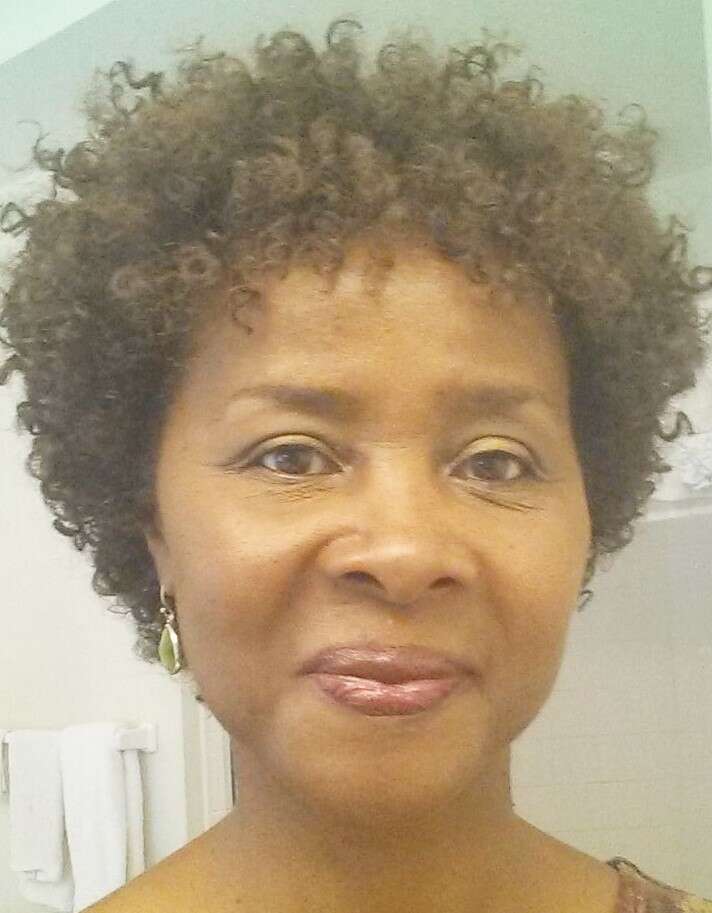
Brenette Wilder, formerly of Altheimer, Ark., is a blogger at wordstoinspire105953116.wordpress.com and author of Netted Together, https://nettedtogether.org.
Editor’s note: Pastors, ministers or other writers interested in writing for this section may submit articles for consideration to shope@pbcommercial.com or shope@adgnewsroom.com. Please include your phone number and the name and location of your church or ministry. Writers should have a connection to Southeast Arkansas.